The Commercial Key Control Playbook: Restricted Keyways, Patent Lifespans, and Modern Access Strategy


Published: Sep 24, 2026 | Updated: Sep 25, 2026

For facility managers and business owners, key duplication anxiety is a quiet but costly drain on operational peace of mind. Every time an employee leaves, a contractor finishes a project, or a key is unaccounted for, you face a frustrating dilemma: absorb the security risk or pay for expensive rekeying.

Many rely on a stamped do not duplicate key to protect their perimeters. However, these stamps offer only an illusion of security. Studies show standard keys with warning stamps are duplicated up to 80% of the time at self-service retail kiosks, which do not scan for warning text, and retail workers are under no legal obligation to refuse them.

To achieve real key control, you must upgrade from standard keys to a restricted keyway system. This guide provides a strategic decision framework to help you navigate physical security levels, legal patent limitations, and modern administrative challenges.
What is a Restricted Keyway? (And the Four Levels of "Restriction")


A restricted keyway utilizes specialized key blanks and lock cylinders designed to prevent unauthorized key duplication. The blanks are not sold to the general public or standard retail hardware stores.

To determine the right level of access security for your business, you must understand the distinction between basic physical restriction and advanced mechanical protection. If you want to stop unauthorized access, choosing a qualified commercial locksmith to design your system is critical.

Understanding the four levels of lock restriction will help you avoid overspending on features you do not need:

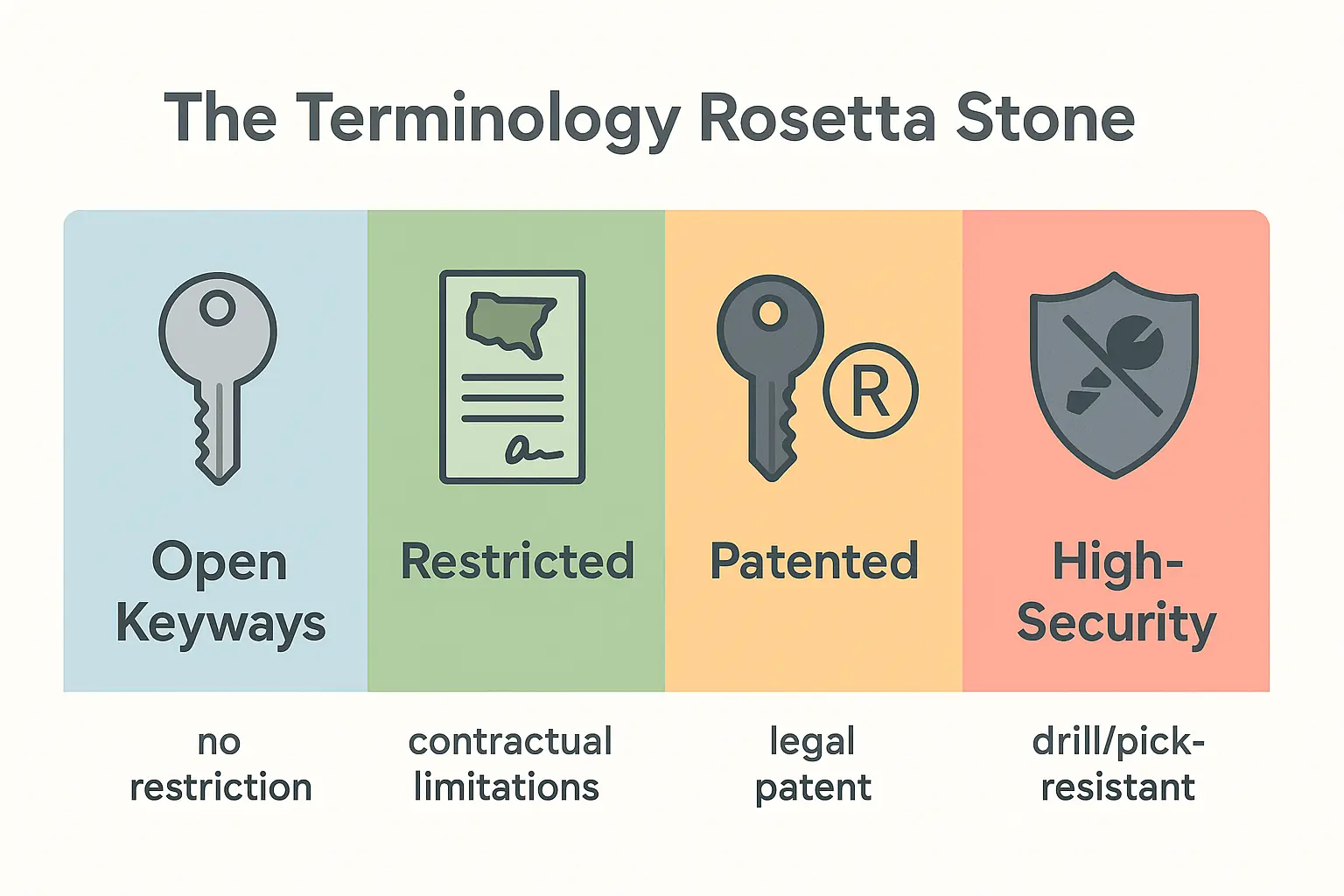
  • Level 1: Open Keyways: Common brand-specific keys. They are readily available to anyone at local hardware stores and kiosks.
  • Level 2: Restricted Keyways: Key blanks distributed under strict regional or dealer agreements. While duplication requires physical authorization, these do not carry active patent protections.
  • Level 3: Patented Keyways: Keys legally protected under U.S. Patent Law. Manufacturing compatible blanks without permission is a federal violation, meaning only authorized lock dealers can acquire them.
  • Level 4: High-Security Keyways: These combine legal patent protection with physical design upgrades like drill, pick, and bump-resistance. They are ideal for securing highly sensitive commercial zones with high-security office locks.

This Terminology Rosetta Stone diagram clarifies the key differences between restricted, patented, and high-security keyways, illustrating levels of legal and physical protection to help businesses choose the right security option.

The 20-Year Patent Expiration Trap: Is Your System Still Legal?


Under U.S. Patent Law, utility patents on keyways expire exactly 20 years from their filing date. When a patent expires, third-party aftermarket manufacturers can legally mass-produce compatible key blanks. Overnight, a highly secure patented system reverts to a basic restricted keyway, rendering your strict duplication protections legally obsolete.

Furthermore, some local locksmiths utilize proprietary restricted keyways registered exclusively to their shop. This locks your business into a single provider, preventing you from shopping around for competitive service rates.

If security personnel turnover or key loss occurs, standard rekeying costs average $75 to $150 per cylinder. A facility with 50 doors can easily face a $5,000 bill to secure the space after losing a single master key.

To protect your budget, look for an ic lock setup. Interchangeable Core (IC) systems allow you to replace a lock cylinder in five seconds using a specialized control key, entirely bypassing the high labor costs associated with traditional commercial rekeying.

Mechanical Key Control vs. Electronic Access: The Hybrid Blueprint


While electronic access control offers real-time audit trails and instant credential deactivation, the upfront installation costs are often too high for comprehensive facility coverage.

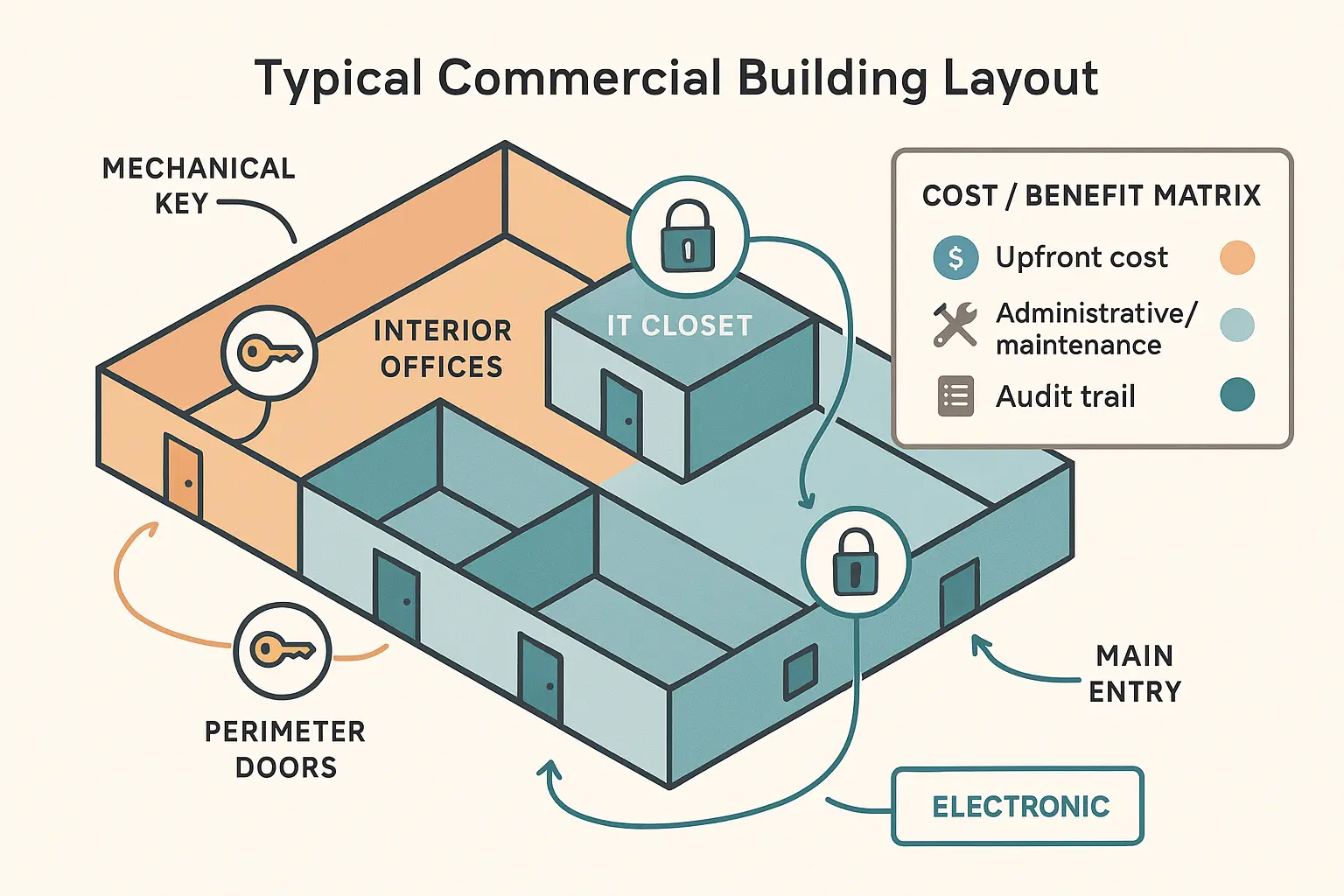
Rather than choosing between mechanical keys and electronic systems, modern enterprises should implement a hybrid model. This matches high-security mechanical keyways with smart electronic access to balance your physical security budget.

  • Electronic Access Control: Install a physical proximity access control system or digital readers on high-traffic main entryways, server rooms, and primary IT closets.
  • Restricted Mechanical Systems: Use patented mechanical keyways for lower-traffic interior offices, storage areas, padlocks, and perimeter gates.

Evaluating different types of access control systems will help you scale security zones efficiently without overstating your capital expenditure.

This Hybrid Security Blueprint infographic educates businesses on combining restricted mechanical keys and electronic access for cost-effective, scalable security tailored to different building zones.

Solving the Spreadsheet Burden: How to Track Your Restricted Keys


Buying restricted keys is only half the battle; tracking them is where many operations fall short. Most businesses fall into the “spreadsheet burden,” trying to manually track physical keys across disorganized files.

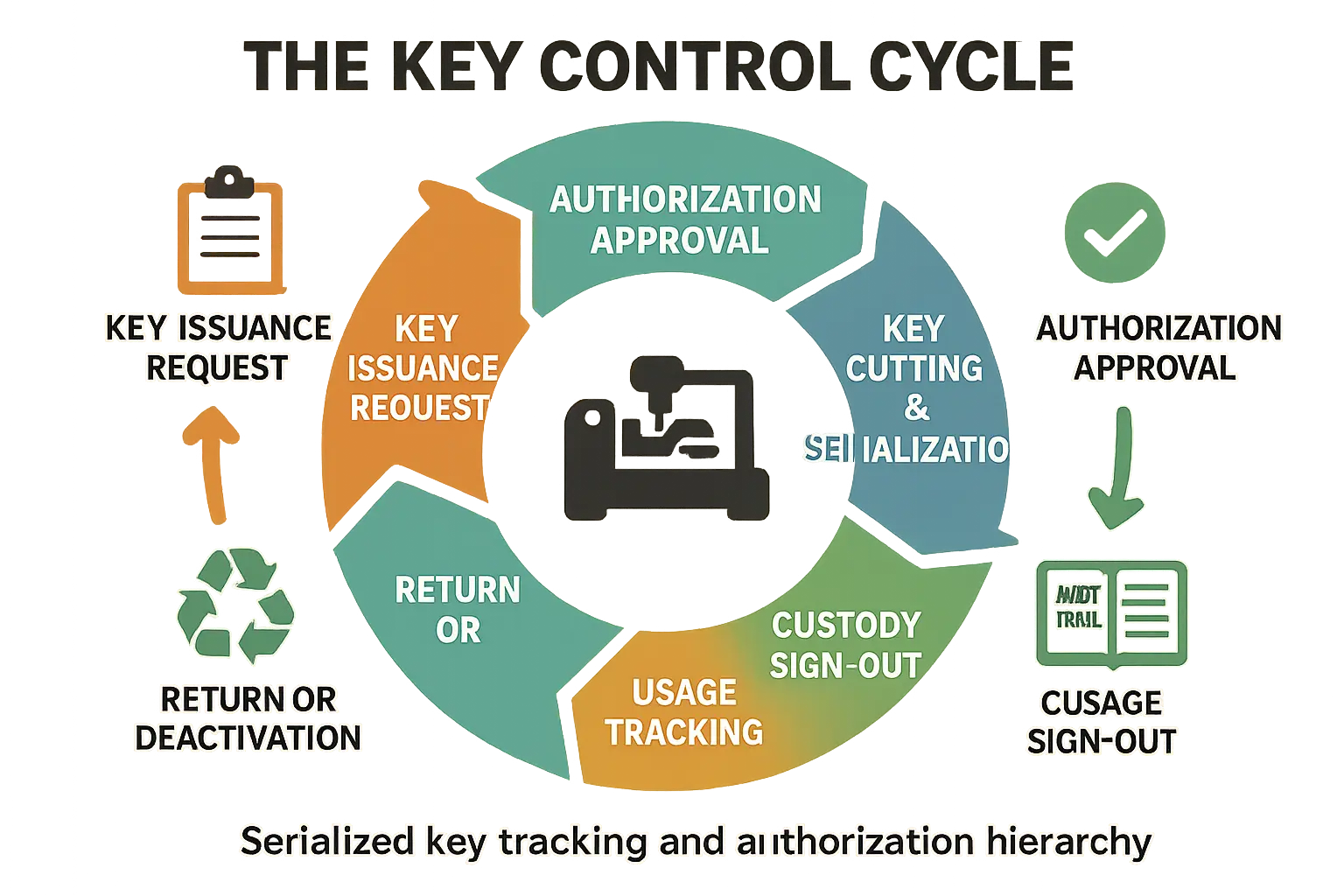
True security requires a structured key control cycle. This involves serializing every key with unique identifier codes and establishing a strict authorization hierarchy that dictates who can request additional copies.

If you are coordinating a complex corporate environment, you must also carefully map out how restricted keys fit into a master key hierarchy to avoid security conflicts. Balancing a master key vs keyed alike business model ensures clear operational access.

This Key Control Cycle mnemonic visually anchors the essential steps of managing restricted key authorization and tracking to reduce administrative burdens and prevent unauthorized duplication.

Frequently Asked Questions


What happens when a restricted keyway patent expires?

When a patent expires, the legal protection preventing other manufacturers from making matching blanks is gone. Third-party manufacturers can legally produce generic blanks, allowing unauthorized parties to copy your keys at hardware stores or automated kiosks.

Can any locksmith copy a restricted key?

No. Licensed locksmiths must adhere to strict legal and dealer agreements. If a keyway has an active patent, only authorized dealers with proof of identification and signature authorization can order or cut duplicates.

How much does it cost to implement a hybrid physical security model?

A hybrid model keeps costs manageable. While a full electronic system can cost thousands of dollars per door, a hybrid setup allows you to secure primary doors with electronics while spending a fraction of that amount on restricted mechanical locks for the rest of your facility.

Choosing a System: Key Questions to Ask Your Commercial Locksmith


Before signing a contract for a new keyway system, ask your commercial locksmith these critical questions:

  1. How many years of active utility patent protection remain on this keyway? Avoid buying a system with a patent expiring in the next 1 to 5 years.
  2. Is this keyway restricted to your specific locksmith shop or is it open to any authorized dealer? Avoid “dealer lock-in” so you maintain freedom of service choice.
  3. Can we implement this restricted keyway using Interchangeable Cores (SFIC or LFIC)? This ensures fast, low-cost internal rekeying down the road.

Need more information? Get a free quote

Call us now

Get A Free Call From Our Experts!

Floating Button Form