The Business Owner’s Guide to High-Security Office Locks And Duplication Prevention


Published: Aug 18, 2026

Every business owner or facilities manager eventually faces a silent security vulnerability: the standard key. While many rely on stamping “Do Not Duplicate” on business keys to control facility access, the reality is that a standard do not duplicate key has zero legal enforceability under US federal law. Anyone can walk into a local hardware store or use an automated retail key kiosk to copy standard SC1 or KW1 keys without verification.

True physical security requires robust, legally protected infrastructure. To protect sensitive business zones, operations directors must transition to professional key control systems and specialized hardware designed to prevent unauthorized key cloning. Below, we break down how advanced mechanical systems secure your workplace, optimize operating costs, and eliminate the risks of unauthorized duplication.
The Physics and Law of Restricted Keyways


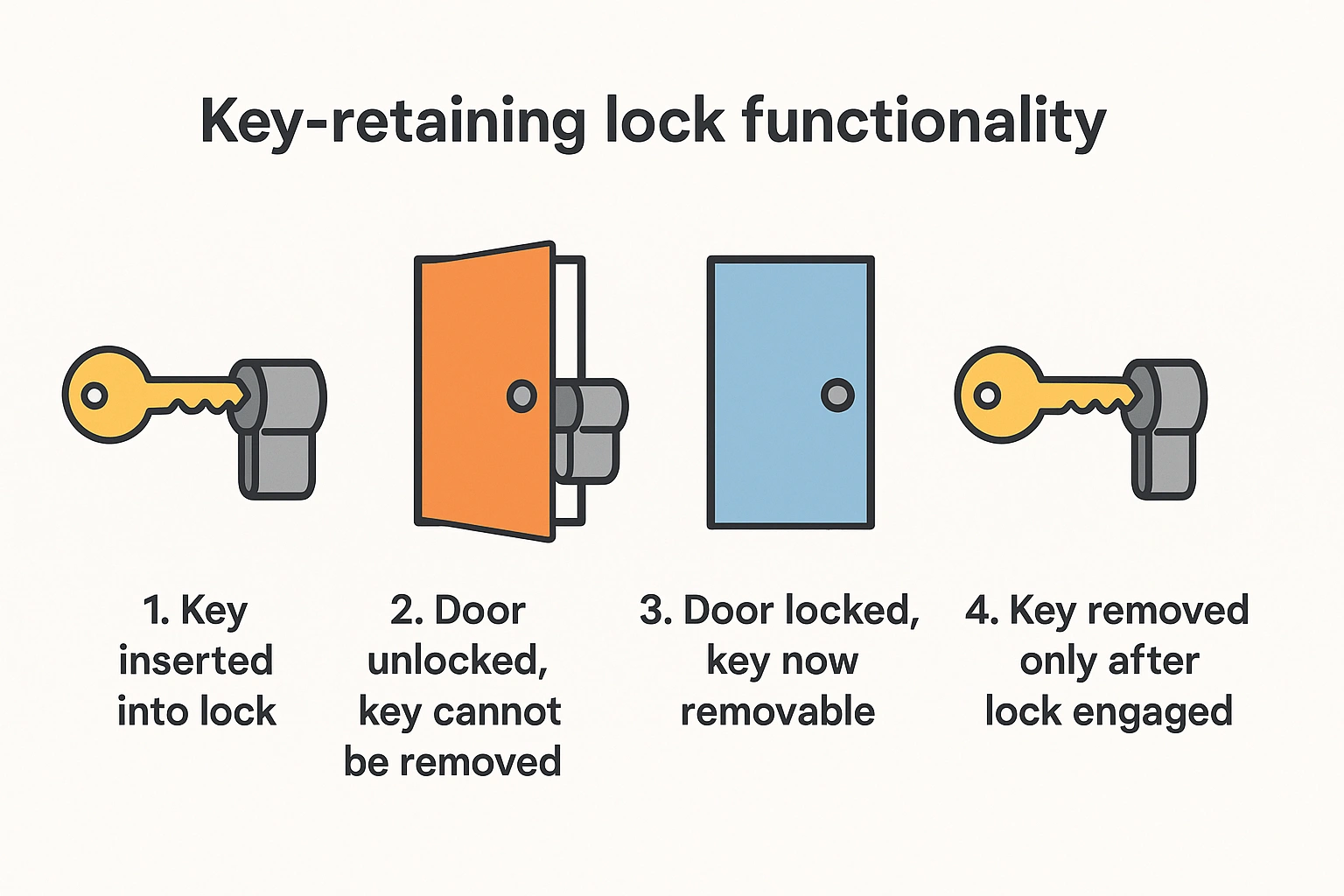
Key-retaining locks physical policy enforcement

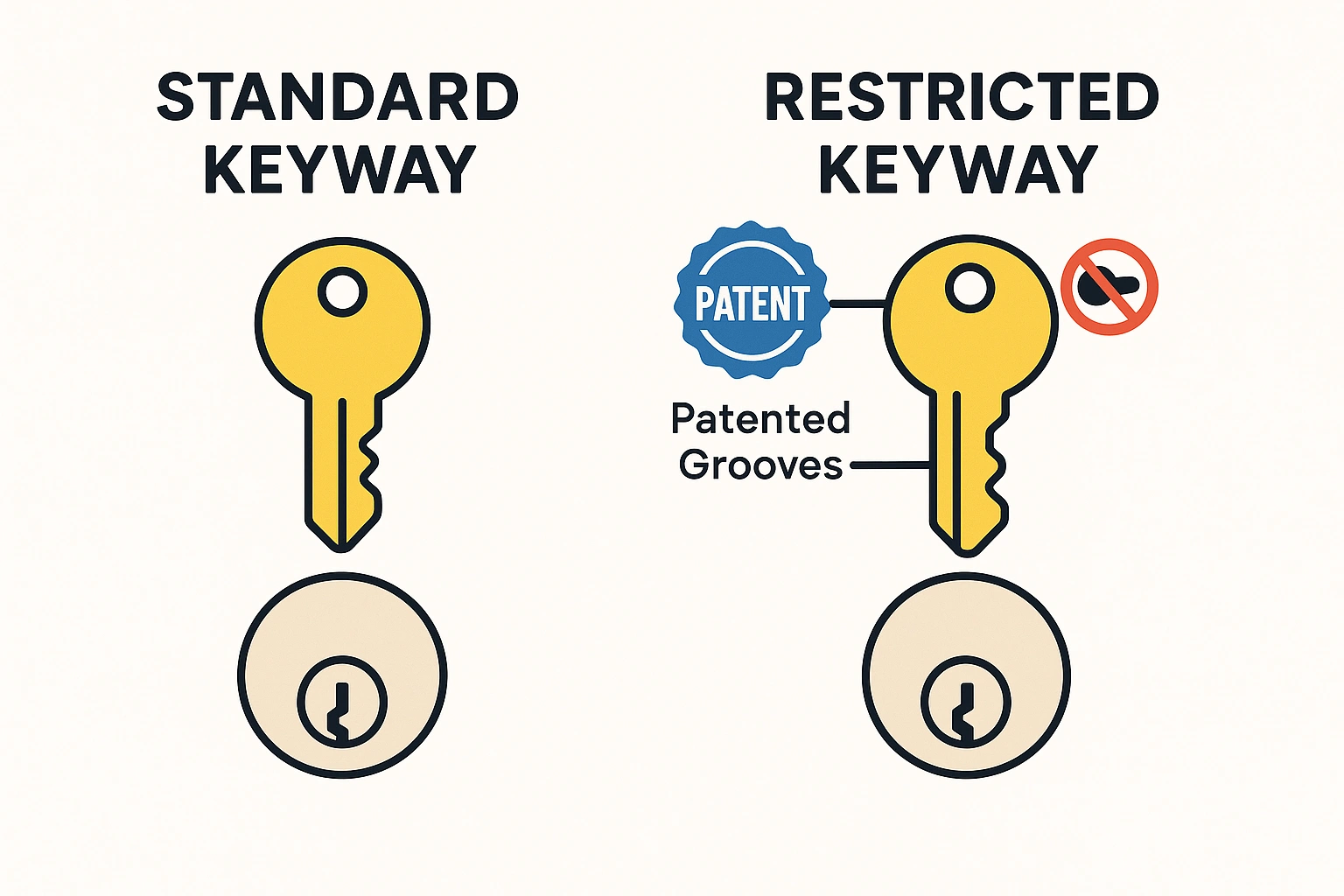
Restricted keyway systems establish security through two layers: physical design and federal law. Physically, restricted cylinders utilize intricate, proprietary keyway profiles that standard key blanks cannot enter. Legally, these designs are protected by active utility patents.

Under patent law, it is a federal civil offense for third-party manufacturers to produce or distribute unauthorized key blanks of a patented design. These patents run for 20 years from the date of filing, ensuring that you maintain complete control over who can acquire blanks. When you implement high security door locks, keys can only be duplicated by authorized locksmith co-ops after verifying your signature registry card or secure credentials. While there are virtually no keys that cannot be copied under any circumstance, restricted keys cannot be duplicated without explicit, authorized permission.

Why Your Office Lock Won't Let You Remove the Key


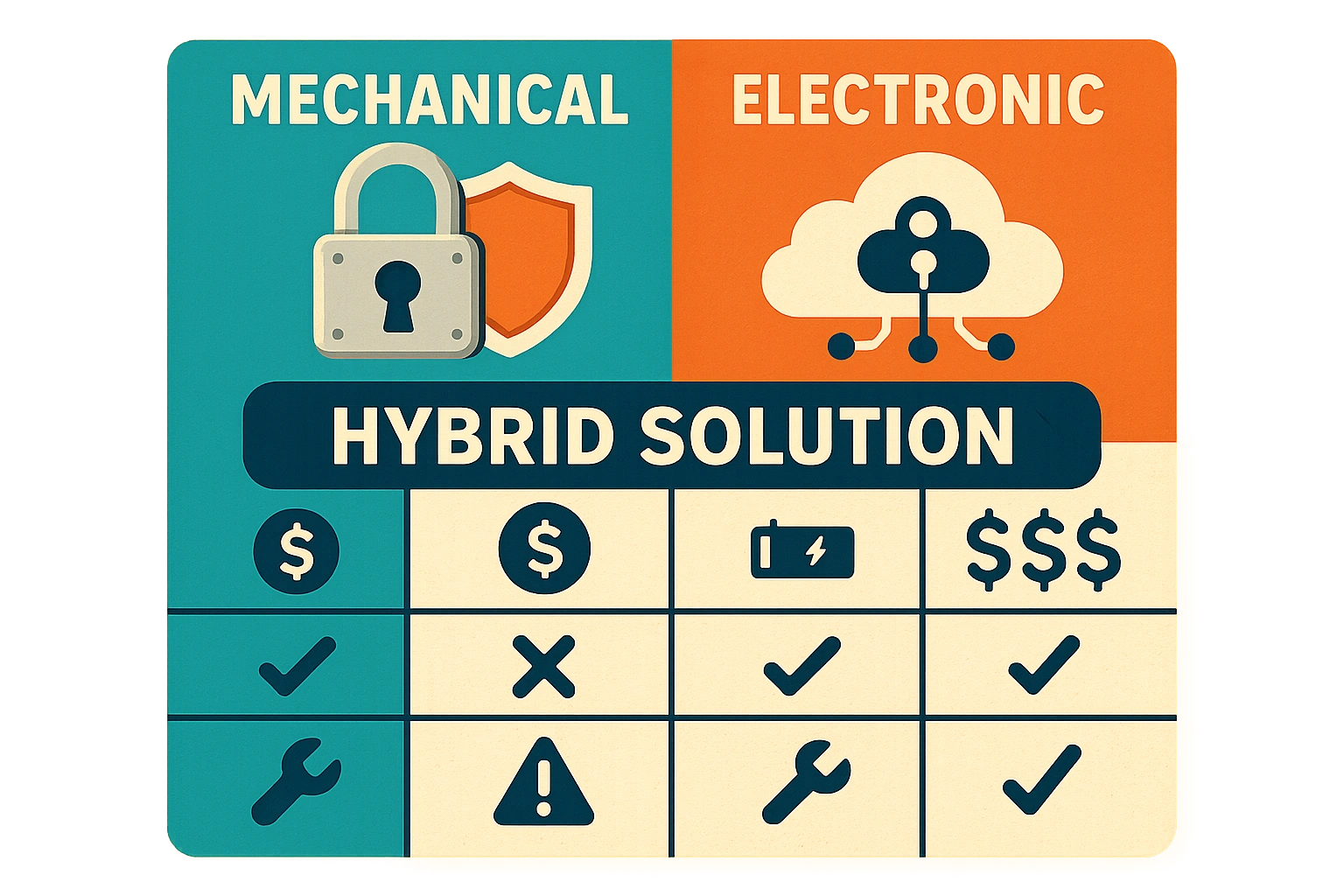
Mechanical vs smart locks comparison

A common operational query in facilities management is why a key gets stuck in a door lock. While a door lock where you can’t remove the key can sometimes point to mechanical issues like a misaligned central cam or dry pins, high-security systems often use this phenomenon intentionally.

This deliberate design feature is known as a key-retaining (or captive key) cylinder. In high-security environments—such as cash rooms, server facilities, or perimeter gates—key-retaining cylinders lock the key inside the cylinder whenever the door is unlocked. To retrieve the key, the keyholder must throw the bolt back to the locked position. This mechanical enforcement prevents employees from leaving high-risk areas unlocked or leaving their keys dangling in the door.

If you experience this issue with a standard commercial cylinder, however, it is likely a mechanical malfunction that warrants a professional rekey lock cylinder service to correct internal wear.

Commercial Deadbolts vs. Smart Access Control


Restricted keyways prevent unauthorized duplication

When upgrading commercial properties, decision-makers often weigh heavy-duty mechanical hardware against cloud-based electronic access control.

Mechanical systems built to ANSI/BHMA Grade 1 standards offer unmatched physical resilience. Grade 1 deadbolts are tested to withstand 10 hammer blows and 250,000 cycles, compared to lower-grade residential locks that fail far earlier under physical duress.

While electronic locks provide real-time auditing, they require significant upfront investments, ongoing software subscription fees, and backup power configurations. A smart lock with backup key overrides must still rely on a secure physical cylinder, otherwise, the mechanical bypass remains an open vulnerability. Many organizations find that a hybrid strategy—combining high-security mechanical deadbolts on perimeter doors with electronic readers on high-traffic internal doors—delivers the highest ROI.

Before deciding on an upgrade, it’s wise to review the types of commercial door locks available to match the specific door frame and structural requirements of your facility.

Frequently Asked Questions


Can retail key kiosks duplicate a patented restricted key?

No. Automated retail kiosks and local hardware stores lack both the physical key blanks and the optical scanning profiles required to duplicate patented restricted keys.

What is the ROI of installing a restricted keyway system?

A restricted keyway stops unauthorized duplication, meaning you do not have to pay for a costly commercial lock rekey every time an employee departs. The system quickly pays for itself by eliminating redundant service calls.

How do key-retaining cylinders enforce security?

They physically prevent a user from removing their key until the lock is turned to the fully locked position, ensuring that security-sensitive areas are never left unlocked by accident.

Ready to secure your business with advanced mechanical cylinders? Contact Sure Lock & Key to develop a tailored key control plan for your organization.

Hardware Brand Evaluation & Decision Framework


Choosing the right hardware ensures long-term protection. When selecting high-security cylinders, consider these top-tier systems:

  • Medeco 4 (M4): Highly regarded for angled key cuts, pick resistance, and a modern utility patent lifespan. Its active patent ensures key blanks are legally protected, making it an excellent defense against unauthorized duplication.
  • Mul-T-Lock MT5+: Uses telescopic pinning systems and a unique mobile duplication card, requiring a physical card presentation before any key can be duplicated.
  • Schlage Primus XP: Ideal for retrofitting existing Schlage systems, allowing you to upgrade critical doors to high-security levels while keeping standard keys for low-risk zones.

If your current cylinders rely on expired patent designs (such as older Medeco3 systems), standard lock rekeying may no longer stop duplication. Transitioning to a modern patented keyway or establishing a coordinated master key system is crucial. Understanding how does a master key work will help you structure multi-level access zones efficiently.

Need more information? Get a free quote

Call us now

Get A Free Call From Our Experts!

Floating Button Form