Demystifying Mobile Locksmith Operations & Local Service Areas


Published: Nov 27, 2026

A mobile locksmith is a field-dispatched security technician operating out of an equipped service van that delivers on-site key cutting, lock repairs, rekeying, and emergency entry directly to a customer’s property or vehicle. Unlike stationary brick-and-mortar shops where customers must bring hardware in, mobile units travel to the job site stocked with key-duplication machines, replacement cylinders, and diagnostic equipment to resolve security issues in a single visit.

When searching for assistance during an urgent lockout, understanding how legitimate mobile locksmiths operate and structure their local coverage zones helps distinguish verified local providers from unvetted lead aggregators. True local operations rely on three core standards:

  • Self-Contained Field Vans: Fully outfitted service vehicles act as portable workshops staffed by trained technicians, allowing either a single van or a coordinated fleet to cover defined local radii without relying on third-party subcontractors.

  • Comprehensive On-Site Capabilities: Certified technicians resolve residential, commercial, and automotive lockouts, extract snapped keys, rekey or swap lock cylinders, and install or service both mechanical and smart-lock hardware on location.

  • Real-Time Dispatch & Territory Routing: Because lockouts and urgent repairs happen unpredictably, local dispatchers assign the nearest available unit using live technician locations, traffic conditions, and established coverage zones to balance emergency calls with scheduled appointments.
Demystifying Mobile Locksmith Operations


A professional mobile locksmith operates a full security workshop on wheels, removing the necessity of visiting a traditional storefront. Equipped with specialized tools and calibration machinery, these fully equipped mobile vans deliver immediate on-site solutions ranging from emergency residential lockouts to high-security commercial installations.

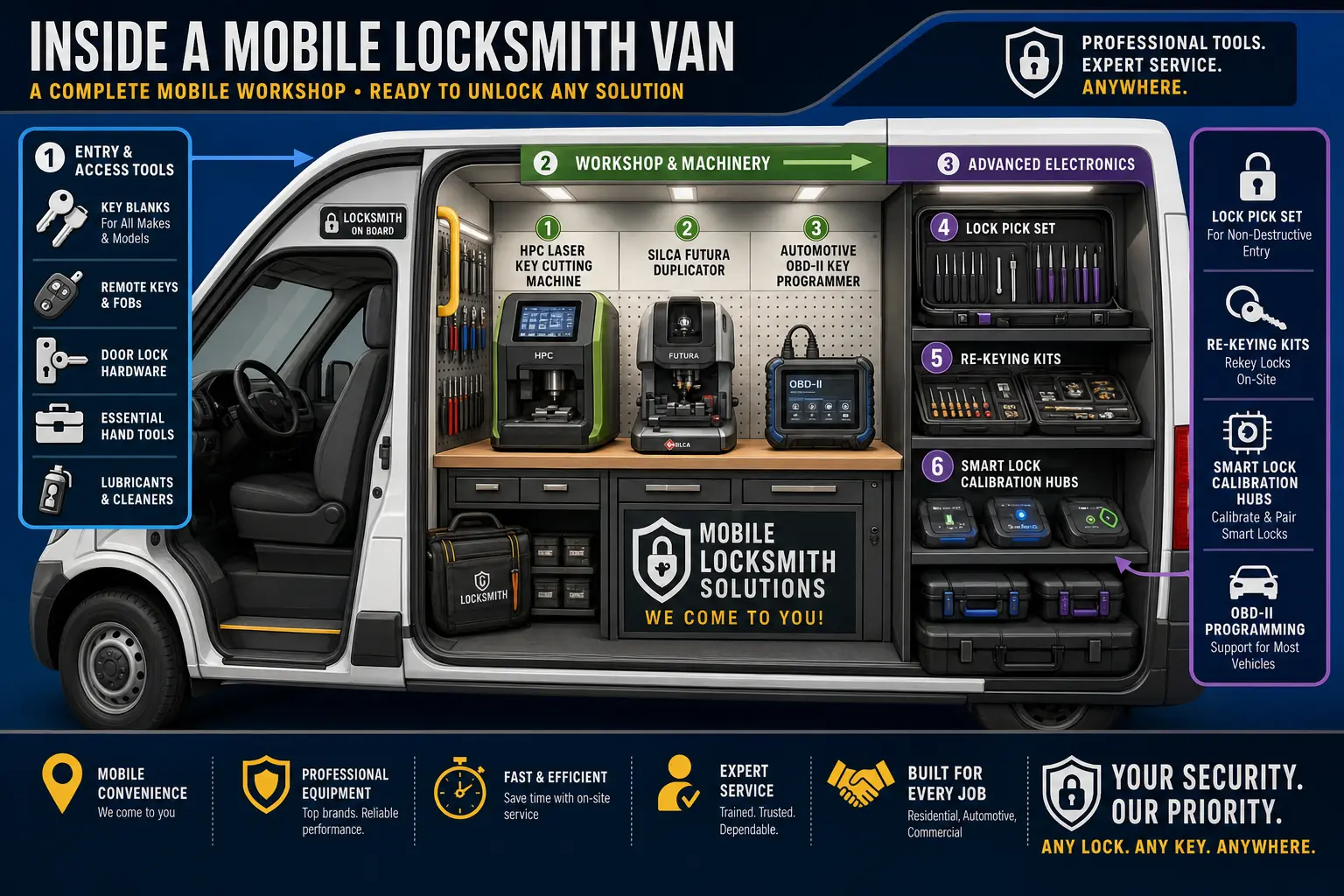
Modern mobile units house high-precision key cutting and duplication equipment, such as the Silca Futura and HPC Laser series, alongside extensive rekeying kits, lock picks, impressioning tools, and mortising jigs. As U.S. smart lock installations rapidly expand from 17.46 million units to a projected 39.03 million units, mobile workshop requirements have evolved beyond traditional physical key blanks. Vans now routinely carry advanced OBD-II ECU key programmers, transponder diagnostic tools, and Bluetooth or NFC calibration devices to configure electronic security systems on location.

Inside a mobile locksmith van: Visualizing the professional tools and specialized technology that enable on-site key cutting, programming, and lock servicing.

Still stuck? Get it fixed today.

Licensed local specialists for residential, commercial, and automotive needs.

Call (855) 909-4011

How Local Service Areas & Radii Are Calculated


Understanding how mobile service areas are structured helps establish realistic response time expectations and clarifies travel pricing models. Driven by increasing urban density and smart technology adoption, the U.S. mobile locksmith market is expanding at a 13% compound annual growth rate (CAGR). To maintain prompt response times, mobile service models typically operate around a primary coverage radius of 15 to 25 miles—spanning approximately 30 to 40 square kilometers per vehicle.

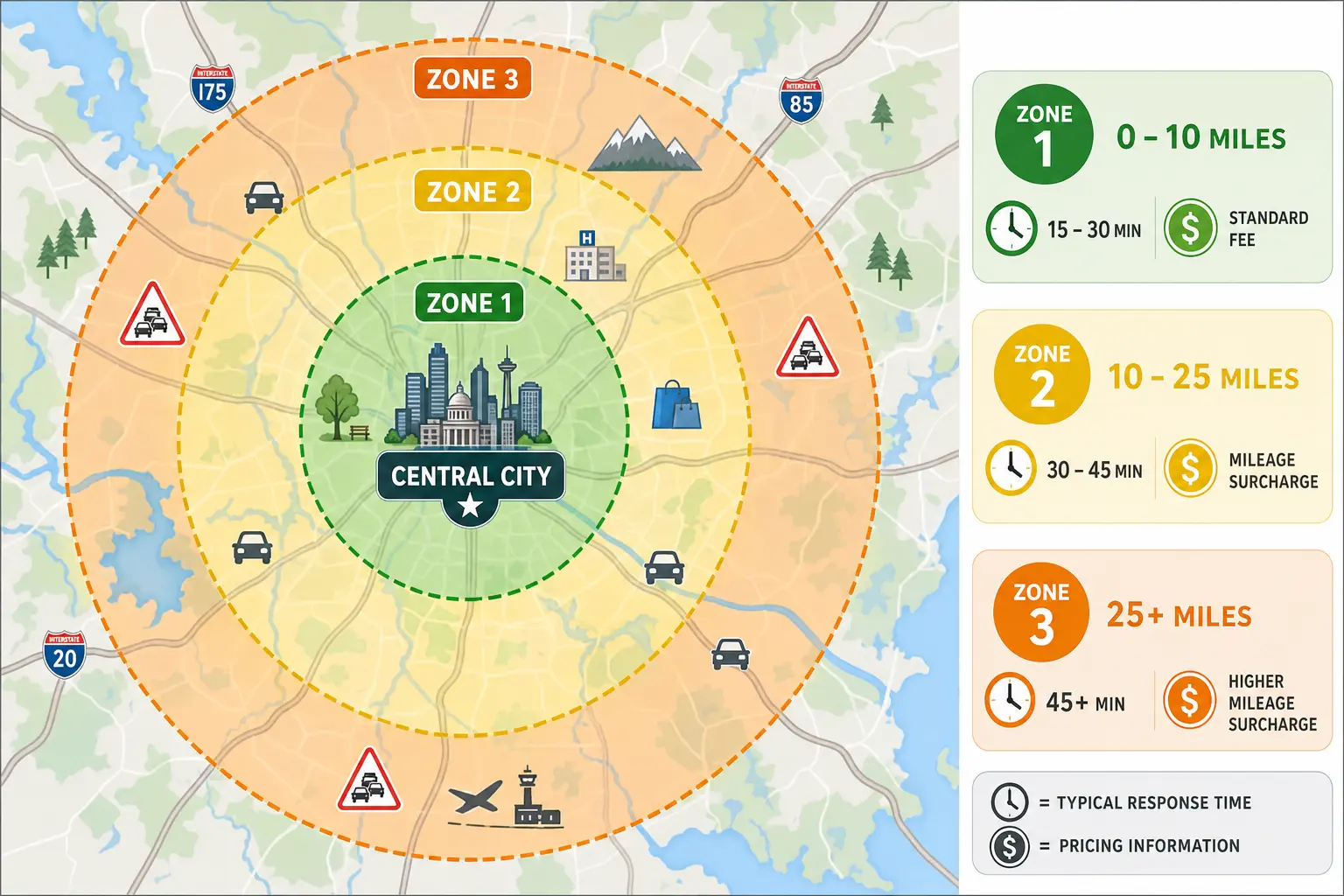
Service areas are generally calculated across three distinct zones:

  • Zone 1 (Core Radius: 0–10 Miles): Rapid priority dispatch areas where urban emergency response times average 15 to 30 minutes under standard traffic conditions, billed at base service rates.
  • Zone 2 (Secondary Radius: 10–25 Miles): Suburban response zones with typical arrival windows of 30 to 45 minutes.
  • Zone 3 (Extended Radius: 25+ Miles): Regional coverage zones where travel windows extend to 45 to 60 minutes and transparent mileage surcharges may apply.

How mobile locksmith service areas and pricing work: A visual guide to typical 3-zone service radii with corresponding response time expectations and fee structure.

Consumer Protection Guide — Real Local Locksmith vs. Call-Center Scam


Navigating online searches requires verifying whether you are speaking with an established local business or a centralized call-center aggregator. Aggregators frequently use generic business names and localized virtual phone numbers to quote unrealistically low service call rates, only to demand inflated sums on-site after claiming the lock requires destructive drilling—a common tactic you can learn to spot in this guide on how to avoid locksmith scams.

To verify a legitimate local service provider, check for these indicators:

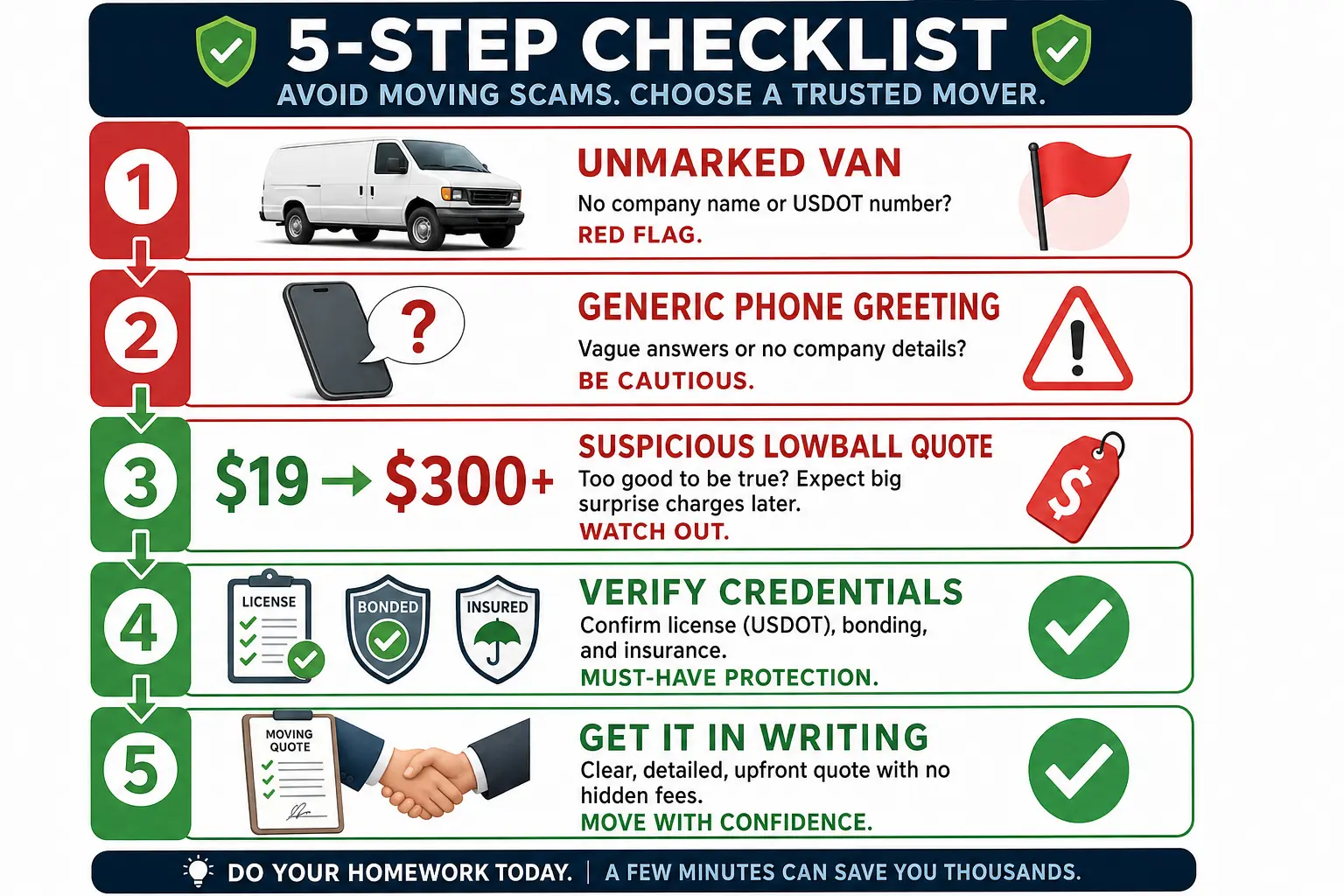
  1. Clear Vehicle Branding: Professional locksmiths arrive in clearly marked mobile service vans rather than unmarked private vehicles.
  2. Proper Licensing & Credentialing: Technicians readily present active state licensing, bonding, and proof of commercial liability insurance.
  3. Upfront Pricing Transparency: Trustworthy providers clearly distinguish between the service call fee and overall job costs.

How to avoid locksmith scams: Five essential verification steps to identify real local locksmiths versus fraudulent call-center dispatch services.

Frequently Asked Questions


What does a mobile locksmith service call fee cover?

The service call fee covers the operational costs associated with dispatching a mobile workshop, fuel, travel time, and the technician’s preliminary on-site hardware diagnosis. Standard rates apply for daytime appointments, while higher rates apply for after-hours or weekend emergency calls, with labor and hardware parts itemized separately.

Can mobile locksmith vans generate and program transponder keys on location?

Yes. Professional mobile vans carry onboard key-cutting machinery, transponder programmers, and OBD-II diagnostic software. Technicians can cut physical key blades, originate lost keys, and program electronic transponders or key fobs directly at your vehicle’s location.

Why do mobile home door locks require specialized locksmith tools?

Mobile home entries feature distinct structural dynamics, including thinner metal door skins, out-swinging hinges, drive-in latches, and custom tumbler setups. Using standardized residential bypass tools risks bending the lightweight frame or damaging the door skin, requiring specialized bypass tools designed specifically for manufactured housing hardware.

Technical Capabilities Across Unique Lock Hardware


A fully equipped mobile locksmith possesses the expertise and specialized tooling required to resolve complex mechanical challenges without inflicting unnecessary damage on door assemblies.

Unlocking Mechanical Combination Locks

Resolving combination locks requires precise mechanical decoding of internal wheel packs rather than destructive force. Certified technicians employ specialized bypass tools or tactile decoding techniques to determine accurate gating sequences, preserving the mechanical integrity of the lock housing.

Mobile Home Door Hardware Mechanics

Manufactured and mobile home entry systems differ significantly from standard residential architecture. Featuring out-swinging door configurations, thinner door profiles, drive-in latches, and specialized pin or wafer tumbler variations, these locks require specific bypass techniques. Applying standard residential prying tools to lightweight mobile home frames can warp aluminum jambs. Fully equipped mobile technicians carry dedicated bypass tools tailored specifically to manufactured home hardware to ensure safe entry.

Need more information? Get a free quote

Call us now(855) 909-4011

Get A Free Call From Our Experts!

Floating Button Form