Preventing Leaks in Bilco Basement Doors


Published: Sep 9, 2026

That sinking feeling when you walk down to your basement after a heavy rain and spot a puddle near the cellar door—it’s a frustratingly common experience for homeowners. You might blame the door itself, but the source of a Bilco door leak is often a mystery. Is it the seals? The foundation? Is the whole thing installed wrong?

Before you start applying random tubes of caulk or buying expensive new weather stripping, let’s take a step back. Most leaks don’t come from a single “bad” part, but from a breakdown in one of three key areas. By understanding how the entire system works together—the door, the frame, and the surrounding drainage—you can stop guessing and start solving the problem for good.
Why Bilco Doors Leak: Understanding the 3 Common Failure Points


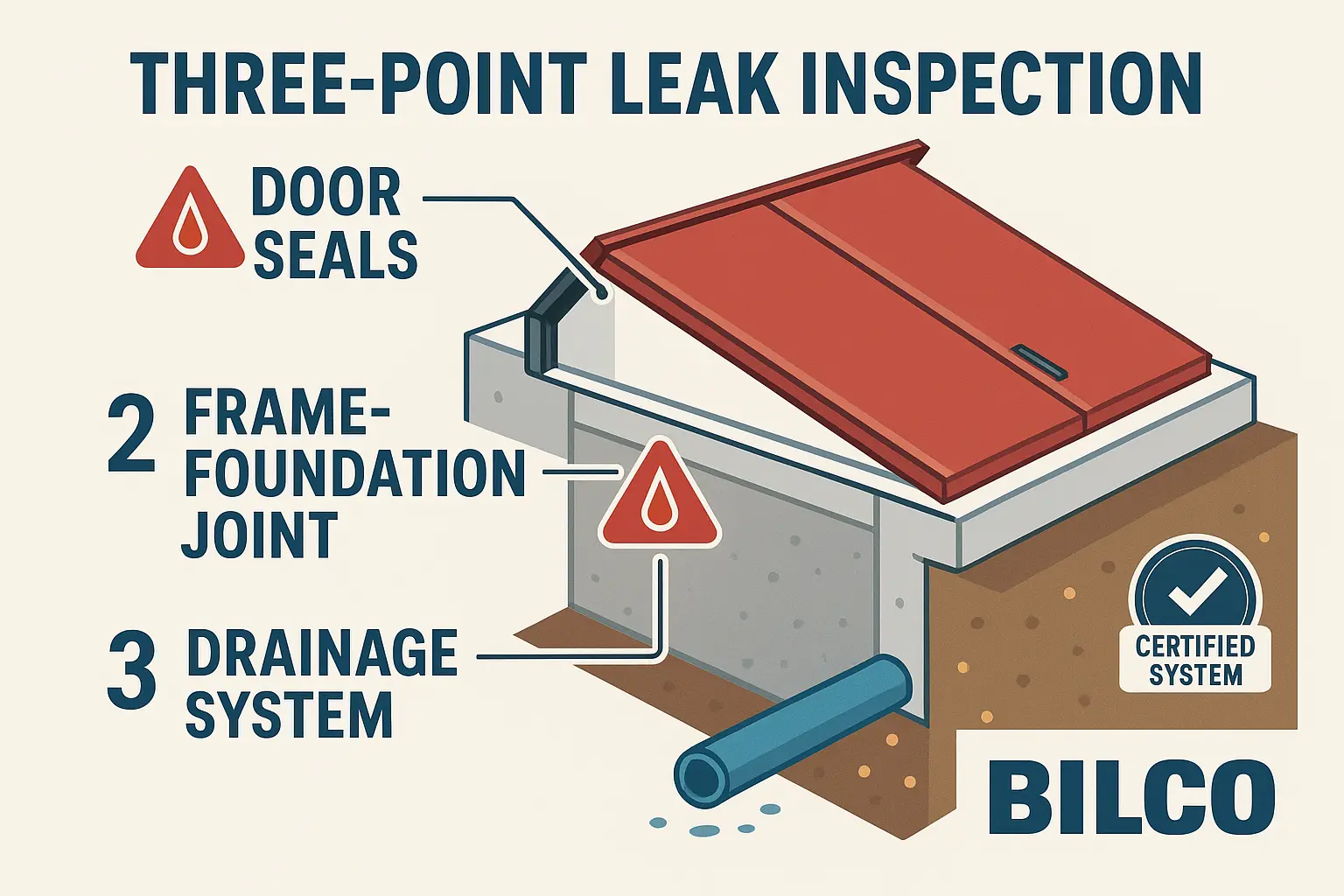
A Bilco door isn’t just a set of metal doors; it’s an integrated system that relies on its connection to your home’s foundation and its ability to manage water. When a leak appears, it’s almost always due to a failure in one of these three critical areas. We call this the “Three-Point Leak Inspection.”

  1. The Door Seals: This is the most obvious culprit. The seals and weather stripping on the door panels themselves are designed to keep direct rainfall out. Over time, this material can compress, crack, or peel away, creating gaps for water to seep through.
  2. The Frame-to-Foundation Joint: This is the hidden troublemaker. The metal frame of the Bilco door is anchored and sealed to your home’s concrete or masonry foundation. If this sealant fails, water that runs down the side of your house or pools against the foundation can slip right under the frame and into your basement, even if the doors themselves are perfectly sealed.
  3. The Drainage System: Every Bilco door installation has an “areaway”—the stairwell leading down to the basement. This area must have a way to drain water that collects in it. A clogged or non-existent drain means rainwater will pool at the bottom of the stairs, building pressure against the basement door and foundation until it finds a way in.

This comprehensive diagram visually breaks down the top sources of Bilco door leaks, empowering you to confidently diagnose and address waterproofing issues.

Your Step-by-Step Diagnostic Guide


Now that you know where to look, you can perform a simple inspection to pinpoint the source of your leak. Grab a flashlight and a garden hose, and let’s investigate.

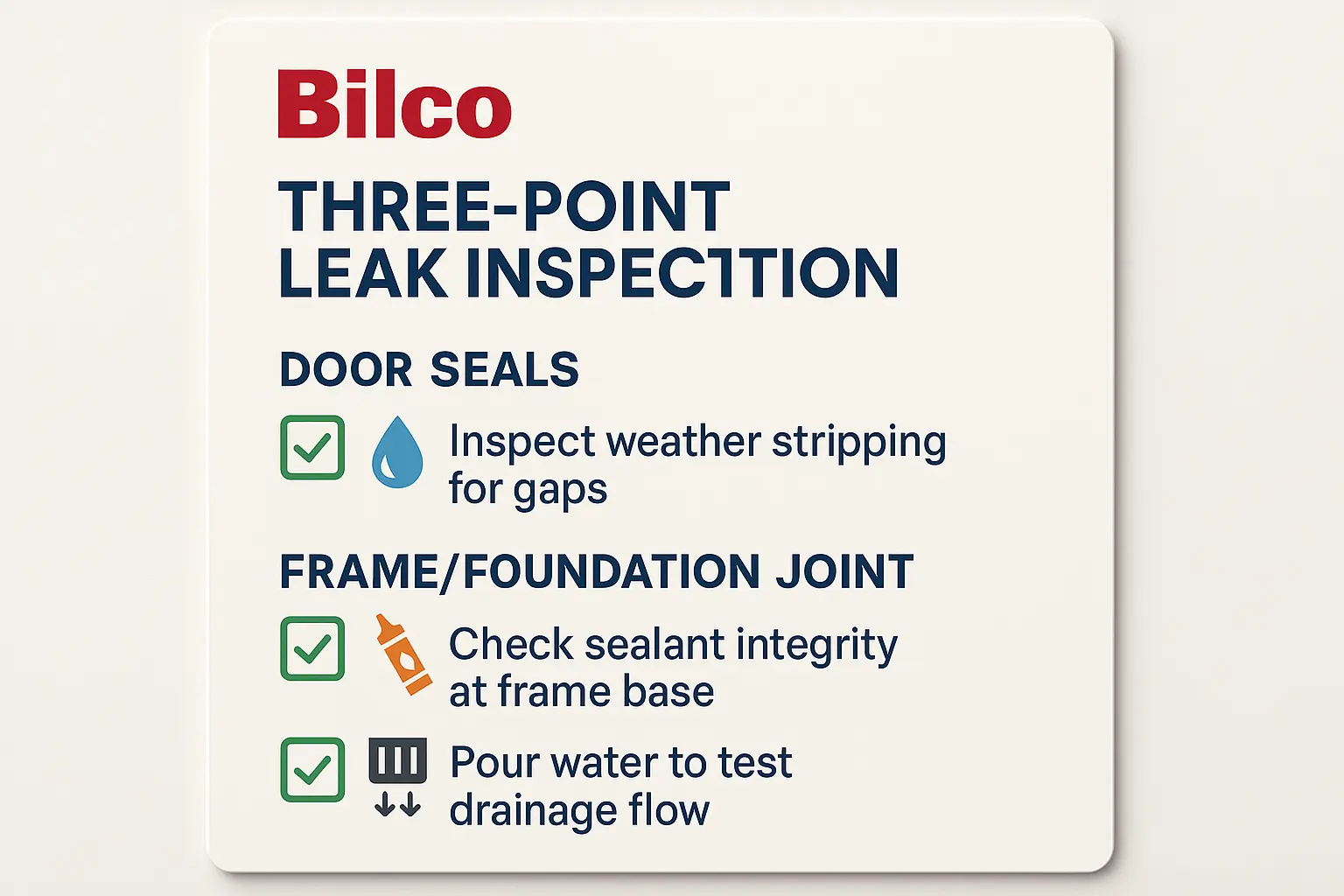
Use this clear diagnostic checklist to efficiently identify the root cause of your Bilco door leak and select the right waterproofing solution with confidence.

Step 1: Test the Door Seals

  • Action: Close the Bilco doors completely. From the outside, run water from your hose over the top and seams of the doors for several minutes.
  • Inspection: Go inside and look for drips coming directly from the door panels or the seam where they meet. Use your flashlight to check the inside perimeter of the door.
  • Diagnosis: If you see water, your weather stripping or seals are failing.

Step 2: Test the Frame-to-Foundation Joint

  • Action: Keep the doors closed. Now, run water along the outside edge where the metal Bilco frame meets your home’s concrete or masonry foundation. Focus on the sides and the top of the frame.
  • Inspection: Go back inside and carefully check the top and side walls of the areaway, right where they meet the Bilco frame. Is water seeping in through the concrete blocks or running down from the sill plate?
  • Diagnosis: If you find moisture here, the sealant between the frame and foundation has failed. This is a very common but often-overlooked source of major leaks.

Step 3: Test the Drainage System

  • Action: Open the doors. Pour a full five-gallon bucket of water directly onto the landing at the bottom of the areaway stairs.
  • Inspection: Watch the drain. Does the water go down quickly and completely? Or does it pool up and drain slowly (or not at all)?
  • Diagnosis: If the water pools, your drain is clogged with leaves, silt, or other debris. If you don’t have a drain at all, any significant rainfall will turn your areaway into a small swimming pool, forcing water under the main entry door.

The Ultimate Waterproofing Toolbox: From Simple Seals to Advanced Drainage


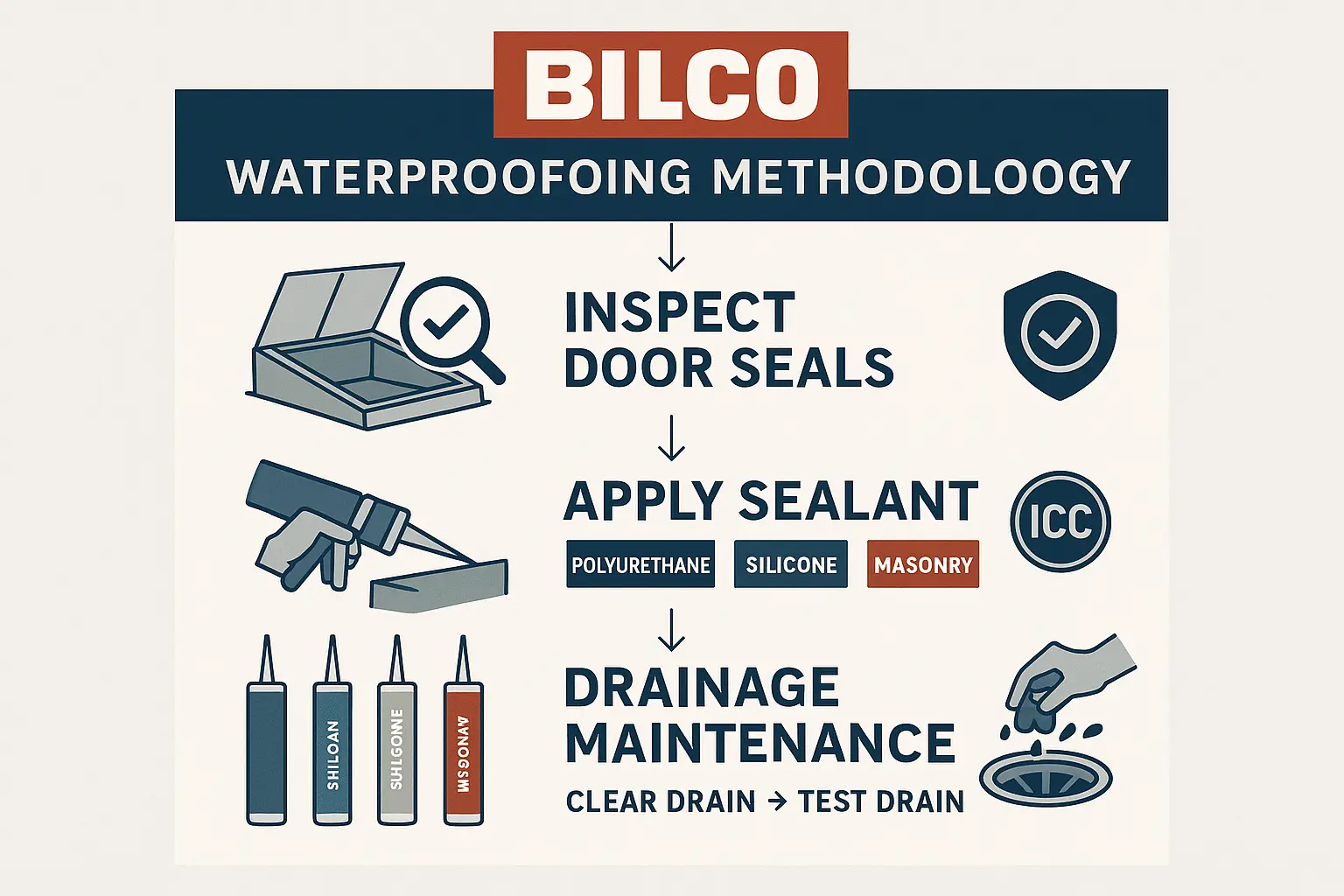
Once you’ve diagnosed the problem, you can choose the right solution. Don’t just reach for any old tube of caulk; using the right materials and methods is key to a lasting repair.

Follow this expert-approved waterproofing methodology to ensure a durable, leak-proof Bilco door installation backed by industry-tested best practices.

Solution for Failing Door Seals

  • The Fix: Replace the weather stripping.
  • How-To: Remove the old, cracked stripping completely. Clean the surface with rubbing alcohol to ensure a good bond. Apply a new, high-quality replacement kit, like the one offered by Bilco, following the manufacturer’s instructions. Ensure the corners meet snugly.
  • Pro Tip: Choose a closed-cell foam or durable EPDM rubber stripping. It will resist compression and last much longer than cheap, open-cell foam.

Solution for a Leaky Frame-to-Foundation Joint

  • The Fix: Remove old sealant and apply new, high-performance caulk.
  • How-To: Use a utility knife and wire brush to scrape away all the old, failed caulk. The surface must be clean and dry. Apply a thick bead of polyurethane masonry sealant into the joint. Why polyurethane? Unlike silicone, it has incredible flexibility and adhesion, allowing it to bond strongly to both the metal frame and the porous concrete while expanding and contracting with temperature changes.
  • Common Mistake: Using cheap acrylic latex caulk. It will crack and fail within a year when exposed to the elements.

Solution for a Clogged or Missing Drain

  • The Fix: Clear the clog or consult a professional.
  • How-To (for clogs): First, scoop out any visible leaves and debris. Then, try using a plumber’s snake or a high-pressure jet from a hose to clear the underground pipe. Pour another bucket of water to test it.
  • How-To (for no drain): If your areaway has no drain, you’re facing a larger issue. The best long-term solutions are installing a new drain that leads to a sump pump or a French drain system around the perimeter. These are complex jobs that often require professional expertise in drainage and masonry.

Frequently Asked Questions


Are Bilco doors supposed to be 100% waterproof?

While modern Bilco doors are designed to be weather-resistant and shed water effectively, no exterior door system can be guaranteed as 100% waterproof under all conditions, especially against pooling water. Their effectiveness depends entirely on a proper installation, a solid seal at the foundation, and a functioning drainage system in the areaway.

My leak is coming from where the concrete floor meets the wall under the door. What causes this?

This is a classic sign that the problem is not the door itself. Water is likely getting in through the frame-to-foundation joint or because the areaway drain is failing. The water pools at the bottom of the stairwell, building up hydrostatic pressure and forcing its way in at the weakest point—the joint between the wall and the floor slab. Focus your diagnostic efforts on the frame seal and the drain.

What is the best type of sealant to use for the metal frame-to-concrete joint?

The best choice is a high-quality polyurethane masonry sealant or elastomeric caulk. Unlike standard silicone or acrylic caulk, polyurethane-based sealants are designed for joints between different materials (like metal and concrete) and remain flexible through extreme temperature changes. This flexibility is crucial for maintaining a watertight seal year after year.

My areaway has no drain. What are my options?

If you don’t have a drain, you have a few options, ranging in complexity. A temporary fix could be a sloped cover over the Bilco door to direct most rain away. The permanent—and correct—solution is to have a drain installed. This typically involves cutting into the concrete, installing a drain basin, and piping it to a sump pump inside or a dry well outside. This is a job best left to a professional.

When to DIY and When to Call a Pro


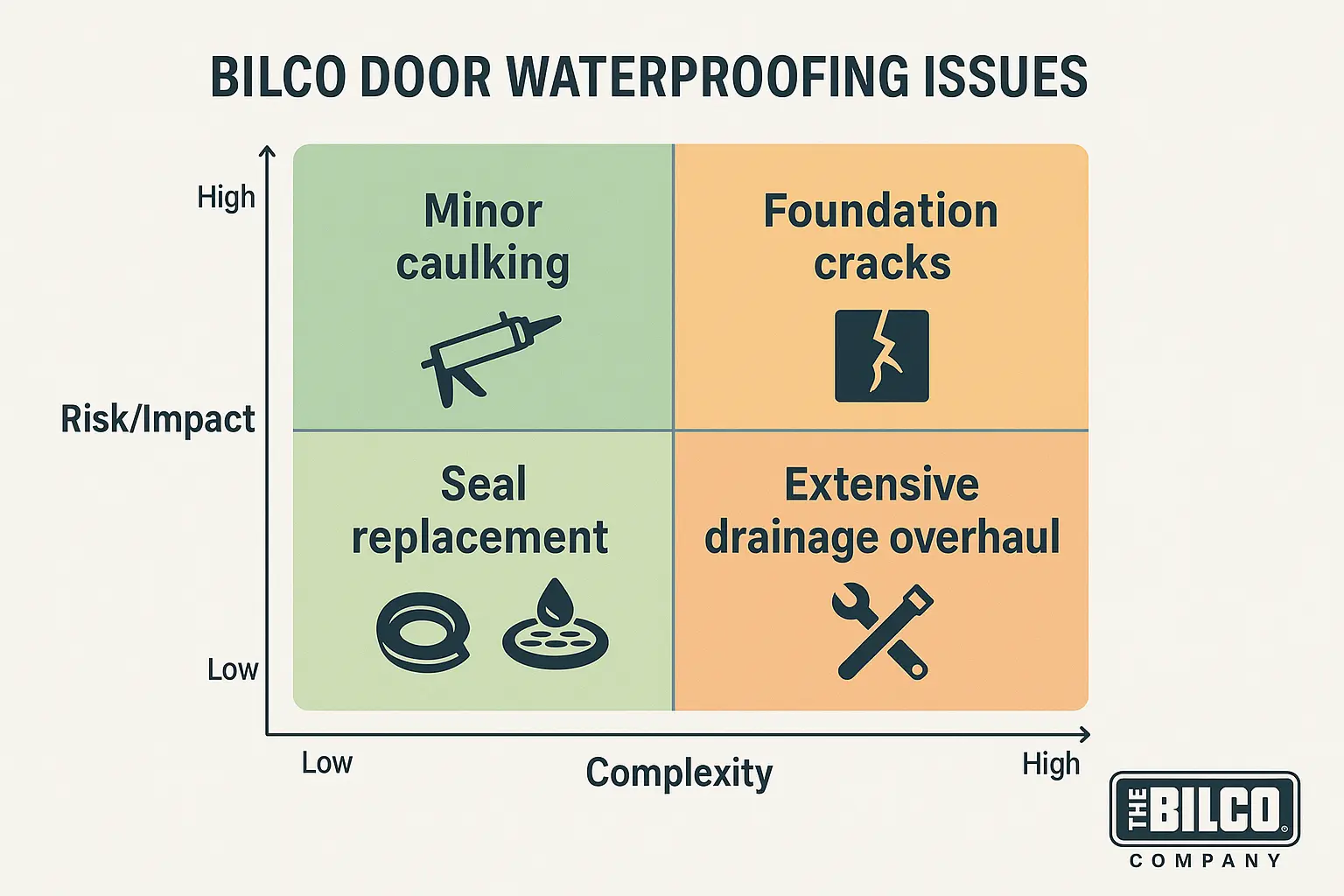
Knowing your limits is key to avoiding a bigger, more expensive problem down the road. This simple chart can help you decide whether to tackle the job yourself or bring in an expert.

Assess your Bilco door waterproofing issue with this decision matrix to know when a simple fix suffices or when professional help is essential for durable results.

If your inspection reveals cracks in the foundation walls themselves or if you’re dealing with major drainage problems, it’s wise to seek professional help. An expert can assess the structural integrity and provide comprehensive solutions that a simple tube of caulk can’t fix. For complex issues that go beyond a simple door seal, a company with experience in other services related to home access and security can offer a more holistic solution.

By systematically diagnosing and addressing the root cause of the leak, you can ensure your basement stays dry and protected for years to come.

Need more information? Get a free quote

Call us now

Get A Free Call From Our Experts!

Floating Button Form