Types and Designs of Hasps: Selecting the Right Fastening


Published: Sep 10, 2026

Selecting the Right Hasp: Designing Physical Security as a System

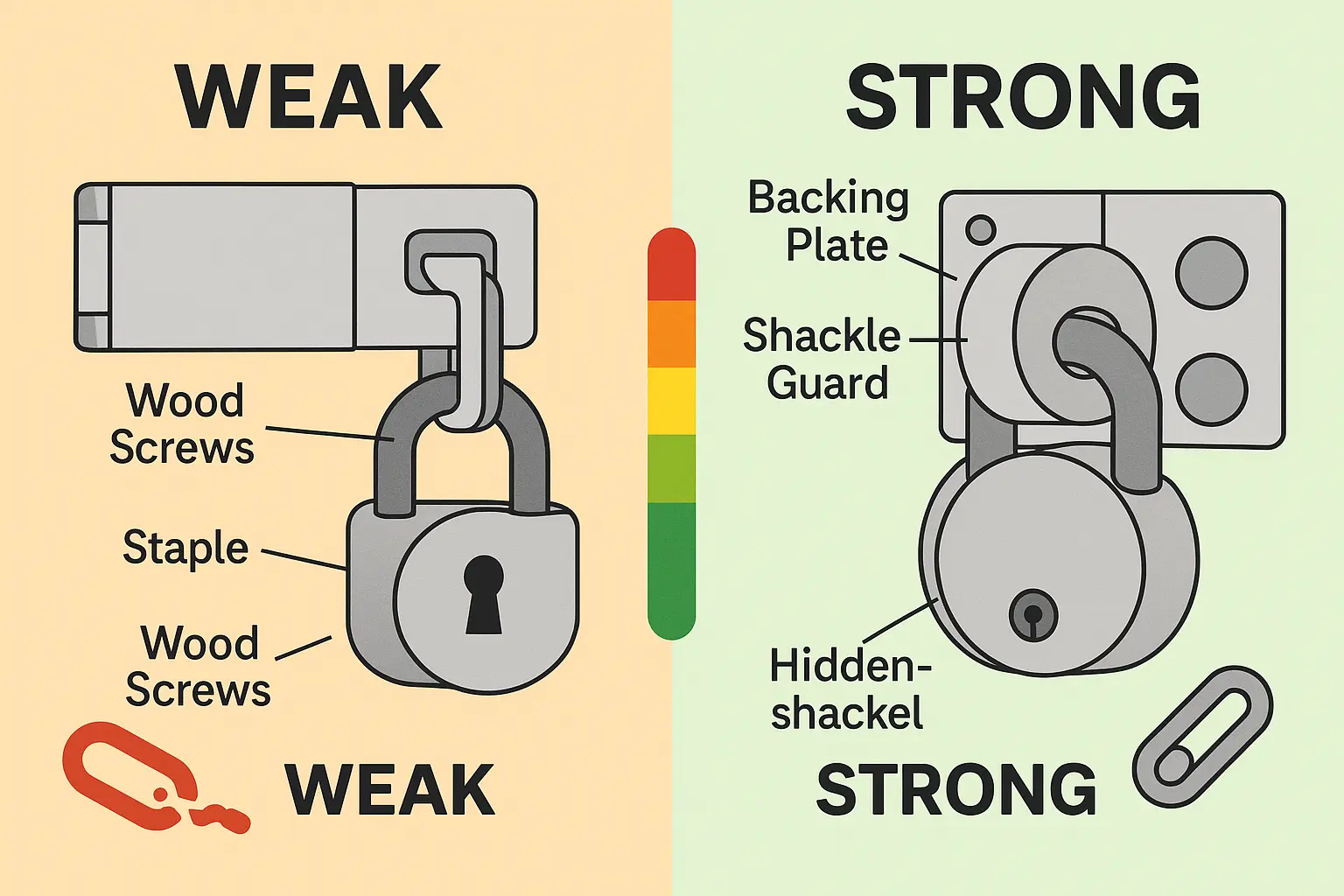
When securing high-value assets, many make the mistake of investing in an expensive, high-security padlock only to pair it with a standard, off-the-shelf hardware store latch secured with basic wood screws. A thief bypasses the padlock entirely by using a simple crowbar or screwdriver to tear the hasp straight out of the frame. To achieve true security, you must understand that physical protection functions as a system.

This diagram illustrates the 'Weakest Link Principle' showing why a strong padlock alone cannot secure a property if the hasp attachment is weak. Proper installation with bolt-through fixing and backing plates creates a robust security system.

The Weakest Link Principle: Redefining Security Hardware


A professional physical defense strategy ensures that every component—from the door frame to the lock cylinder—shares a uniform load-bearing and attack-resistant rating. If you attach a high-end padlock to a flimsy, surface-mounted latch, you invite catastrophic failure.

To prevent this, structural engineering must guide your setup. Rather than relying on self-tapping wood screws, premium security hasps utilize a carriage bolt-through design supported by heavy metal interior backing plates. This transfers physical prying forces across the entire surface area of the door rather than concentrating stress on small wood fibers. Consulting with a professional locksmith helps identify these structural vulnerabilities before they are exploited by opportunists.

Hasp Design Classifications: Finding the Perfect Match


Choosing the right hasp configuration depends entirely on the layout of your entry points and the specific tool-based threats you expect to face.

  • Straight Bar Hasps: The most common design, ideal for flush-fitting double doors or gates where both surfaces sit on the same flat plane.
  • Angled (90-Degree) Hasps: Designed for offset doors, corner joints, or recessed frames where the locking mechanism must wrap around a corner.
  • Hidden Shackle (Puck) Hasps: The gold standard for commercial vans, heavy machinery, and high-risk storage. The hasp completely encloses the padlock body and shackle, removing any gap for bolt cutters, prying tools, or angle grinder blades.
  • Integrated Hasp Locks: Featuring built-in locking cylinders. While highly convenient for light residential use, they generally do not offer the modular, ultra-heavy-duty protection of separate commercial-grade hasps and padlocks.

This diagram categorizes the main types of hasps and shows their ideal use cases and inherent security features, helping readers identify which design best matches their security needs.

Decoding Metallurgy: Material Science in High-Security Hasps


To select a hasp capable of surviving physical attacks, you must evaluate its chemical composition. The core material determines how well the system resists grinding, drilling, or environmental corrosion.

  • Boron Carbide Alloy: Harder than standard hardened carbon steel by up to 50%, boron carbide is nearly immune to manual bolt cutters (which typically fail against materials with a Rockwell C hardness rating above 60).
  • Grade 316 Stainless Steel: Essential for maritime and coastal environments, this alloy contains 2-3% molybdenum. This protects against harsh saltwater corrosion where typical carbon steel would rapidly rust and seize. For high-moisture areas, pairing your hasp with a weatherproof smart lock or a marine-grade brass padlock ensures long-term reliability.
  • Case-Hardened Steel: Offers a hard outer layer to resist sawing and drilling, combined with a relatively ductile core that prevents shattering under sudden impact attacks from sledgehammers.

This infographic demystifies the key materials used in heavy-duty hasps and padlocks, highlighting their strengths and ideal environmental applications to aid confident, informed buying decisions.

To verify real-world durability, check the European EN 12320 or CEN standards:

  • CEN Grade 5 (Extra High Security): Must withstand a minimum pulling force of 70kN (7.1 metric tons) and resist active sawing or drilling for 4 minutes.
  • CEN Grade 6 (Maximum Security): Upgrades defenses to 100kN of pull force (10.1 metric tons) and requires a minimum of 8 minutes of physical attack resistance.

Frequently Asked Questions


What is the difference between a standard hasp and a heavy-duty hasp?

A standard hasp is usually made of thin, pressed mild steel or brass and is designed to accept screws, leaving the hinge pin and mounting hardware exposed to screwdrivers and small pry bars. A heavy-duty hasp features hardened steel or boron alloy construction, concealed hinge pins, protected staple loops, and utilizes bolt-through installation with backplates to resist intense physical attacks.

Why should I choose a hidden shackle hasp?

Hidden shackle (puck) hasps are the most secure choice for commercial vehicles and high-value storage doors because they completely enclose the padlock’s shackle. This design leaves no gap for bolt cutters, crowbars, or hacksaws, leaving the lock body practically invulnerable to manual cutting or prying tools.

Can a thief just unscrew a high-security hasp?

Not if it is installed correctly. High-security hasps feature hidden mounting screw holes that are covered by the hasp arm once it is folded shut and locked. Furthermore, premium setups use carriage bolts that go all the way through the door structure and are fastened on the inside with locking nuts and steel backplates, preventing them from being unscrewed or pried off from the exterior.

Matching Hasps to Real-World Applications


Achieving optimal security means tailoring the hardware to your specific scenario.

Secure Sheds and Outbuildings

Wooden structures are vulnerable to splitting. Never install a hasp with standard wood screws. Instead, opt for a heavy-duty, multi-jointed hasp that wraps around the door frame. Secure it using heavy M8 carriage bolts through the wood, backing it with a steel plate inside. For comprehensive home protection, coordinating these upgrades with premium residential locksmith services ensures no entry point remains vulnerable.

Commercial Vans and Work Vehicles

Mobile tools are prime targets. Rear swing doors and sliding side doors require specialized hidden shackle hasps (puck locks). These eliminate shackle exposure entirely, forcing potential thieves to try grinding through solid block steel, which takes too much time and makes too much noise in public spaces.

Travel and Luggage Defense

While a “heavy-duty” TSA lock cannot stop a bolt cutter, high-quality models utilize zinc-alloy bodies and braided steel cables. Their main job isn’t preventing targeted theft on a job site, but rather surviving the high-impact stress of automated airport baggage conveyor belts without snapping open.

Need more information? Get a free quote

Call us now

Get A Free Call From Our Experts!

Floating Button Form