Understanding Two-Car Garage Door Configurations And Sizing


Published: Sep 18, 2026

Upgrading or constructing a two-car garage is one of the most impactful decisions you can make for your home’s curb appeal, energy efficiency, and security. However, before selecting materials or colors, you must resolve a fundamental design question: Should you install a single, double-wide garage door, or opt for two individual single doors?

Each configuration comes with specific structural demands, spatial dimensions, and functional pros and cons. Understanding these factors ensures your garage is not only visually appealing but also optimized for daily use.
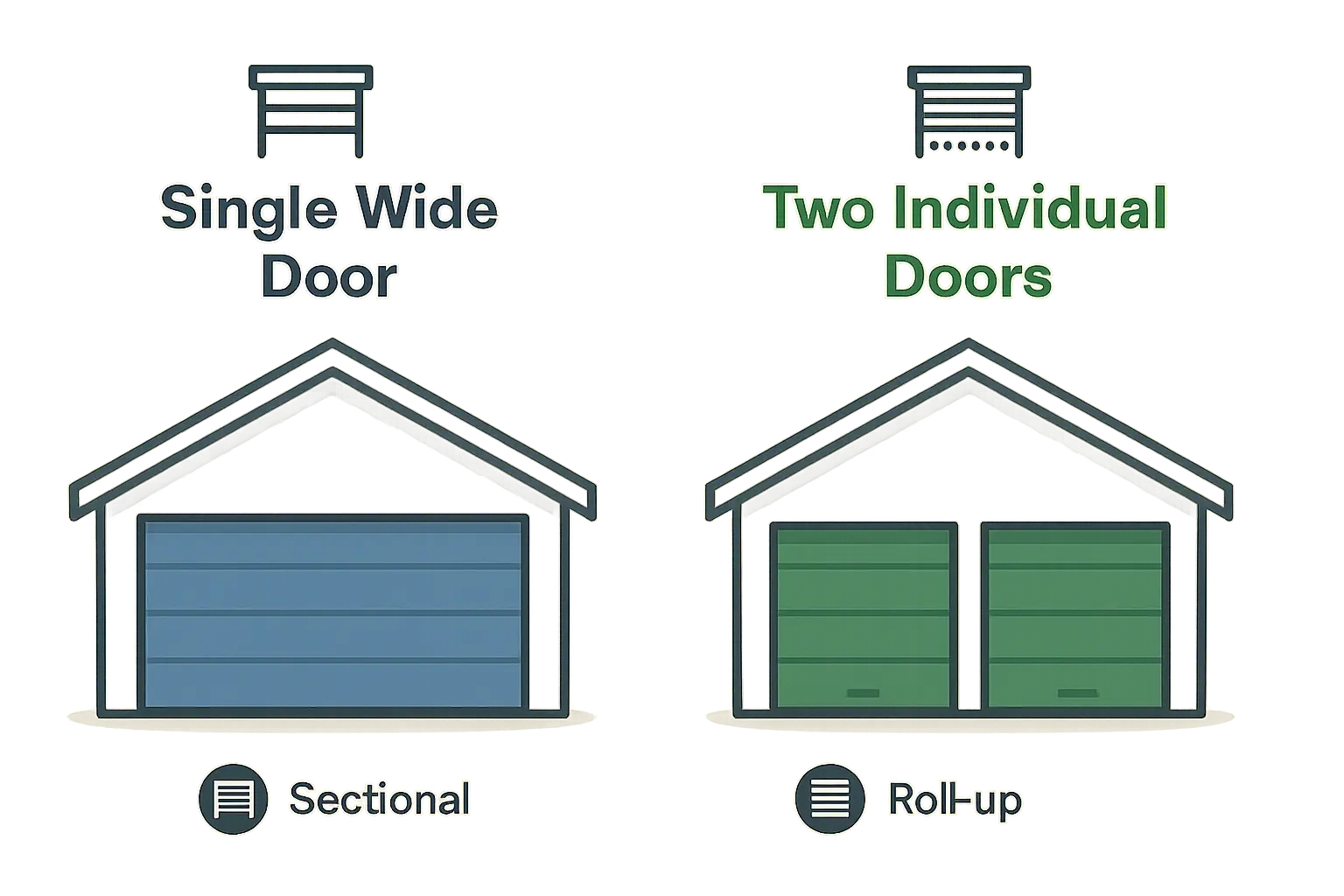
Visual comparison of two-car garage door configurations: single wide door versus two individual doors, introducing layout options and door styles for easier planning.

Comparing Configurations: Single Wide vs. Two Individual Doors


Selecting between a single wide door and two separate doors isn’t just about aesthetics; it changes how you interact with your home daily.

The Single Double-Wide Door (16-Foot Configuration)

A single double-wide door is typically 16 feet wide and 7 or 8 feet tall.

  • The Pros: It offers a wider, more forgiving opening, making it much easier to park larger vehicles, SUVs, or trucks. Because it requires only one automatic opener and one set of tracks, it generally incurs lower initial motorized hardware costs.
  • The Cons: If the opener fails or a spring breaks, both vehicles can easily become trapped inside. Additionally, opening a massive 16-foot door lets out a significant volume of climate-controlled air, reducing thermal efficiency.

Two Individual Doors (Dual 8-Foot or 9-Foot Configurations)

This setup consists of two separate doors divided by a central support pillar (mullion).

  • The Pros: This layout acts as an excellent mechanical safeguard. If one door encounters a mechanical issue, you still have full access to the second bay. It is also highly energy-efficient, as you only expose half of your garage space to the elements at any given time.
  • The Cons: You must navigate around a central pillar when parking, which requires precision. Furthermore, you will need to purchase and maintain two separate garage door openers.

Regardless of your choice, mechanical issues can occur over time. If a system failure leaves your vehicles trapped, knowing can a locksmith open a garage door during an emergency provides peace of mind.


Standard Sizing and Structural Requirements


Standard heights for residential doors are 7 or 8 feet. If you drive a lifted truck, have a roof rack, or own an SUV, choosing an 8-foot-tall door is highly recommended to avoid clearance issues.

Structurally, the load-bearing requirements for a 16-foot opening are much higher than those for two 8-foot openings. A single double-wide door requires a massive, heavy-duty header to span the gap safely without sagging over time. This requires careful structural framing, comparable to the precise load-bearing considerations needed when framing french doors in residential walls.

Additionally, you must decide on the mechanism. Sectional doors are the residential standard, sliding upward on curved tracks to rest parallel to the ceiling. Conversely, roll-up doors coil into a barrel above the opening. While roll-up designs are more common in heavy-duty commercial garage door installation projects, they can occasionally be adapted for residential spaces with limited overhead clearance.


How to Measure Your Space


Before ordering any door, you must take precise measurements of your garage’s rough opening and internal clearance.

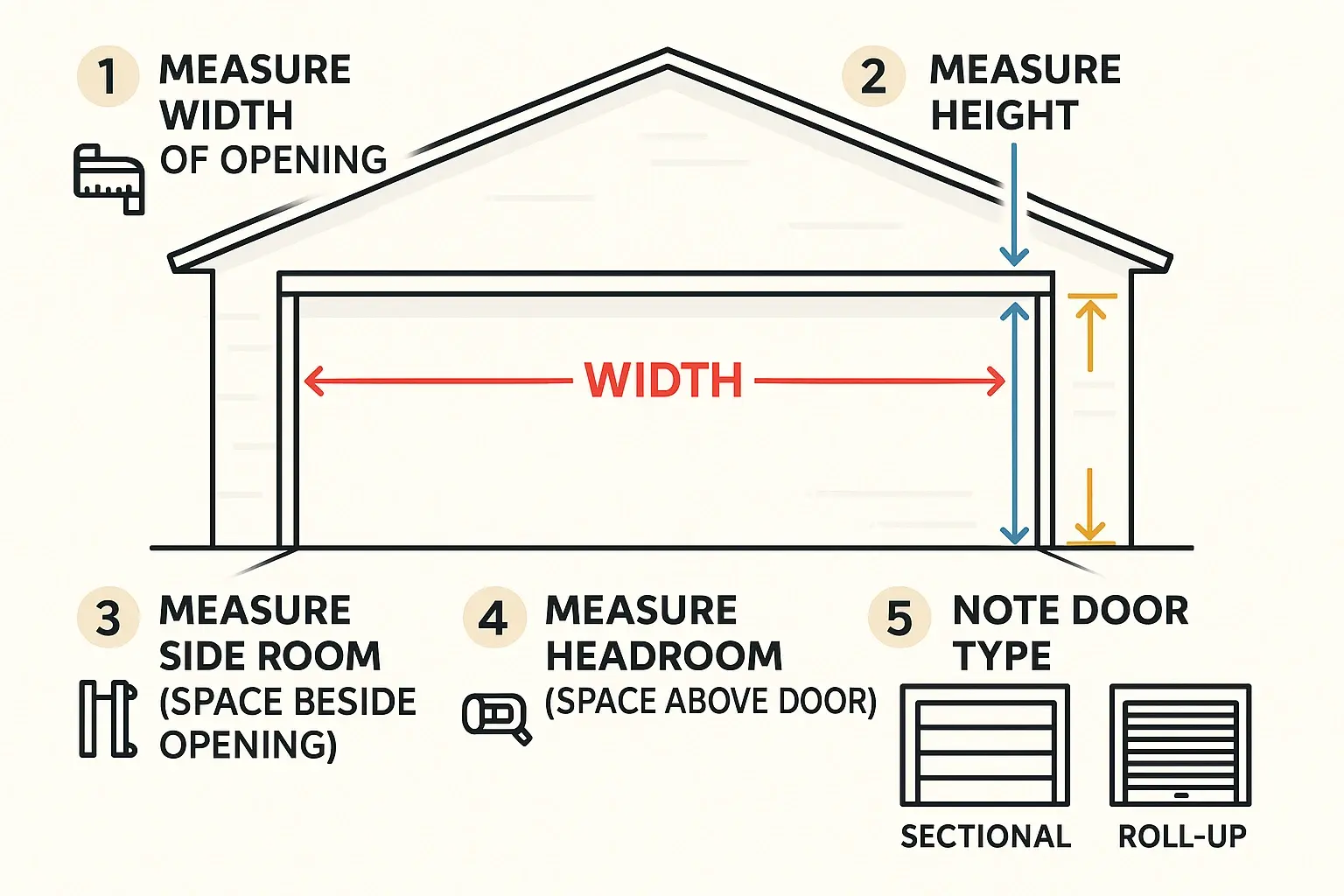
Follow this visual guide to accurately measure your two-car garage door space, ensuring optimal fit regardless of door configuration or type.

To ensure a perfect fit, measure these key areas:

  1. Rough Opening: Measure the exact width and height of the inside of your finished frame.
  2. Sideroom: Measure the distance from the edge of the opening to the wall. Sectional doors typically require at least 3.75 inches on each side for track installation.
  3. Headroom: Measure from the top of the opening to the lowest point of the ceiling or joists. Standard systems require 10 to 12 inches of clearance, while double-car torsion spring systems may require more.
  4. Backroom: Measure from the garage opening to the back wall to ensure the tracks have enough horizontal depth to hold the open door.

During the measuring process, don’t overlook your security layout. Understanding how to lock a garage door securely depends heavily on having adequate sideroom to accommodate slide locks, automatic lock bolts, or side-mount tension openers.


Decision Matrix: Sizing and Configuration Recap


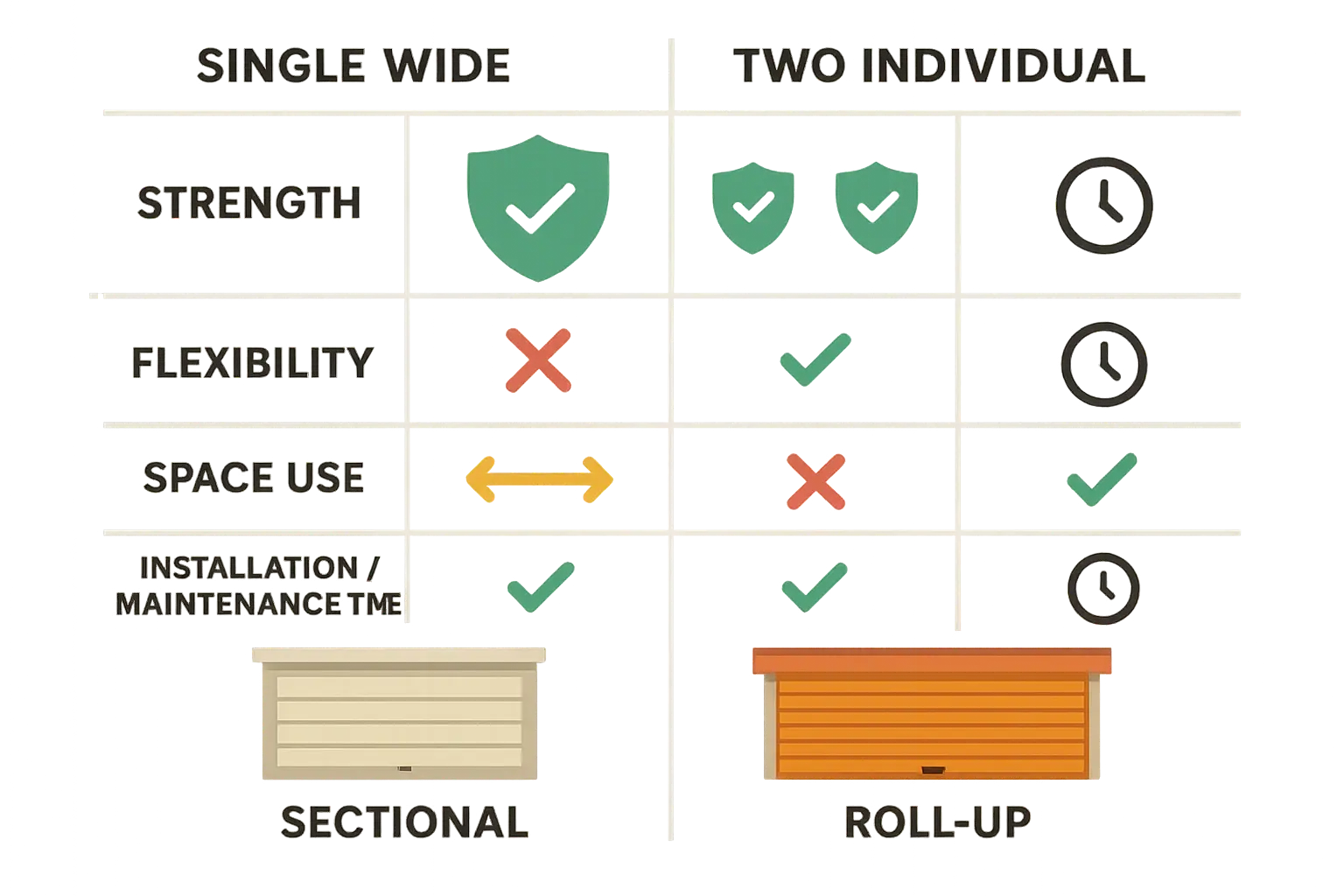
Quick reference chart highlighting key pros and cons of two-car garage door configurations and door types, perfect for handy recall during planning.


Frequently Asked Questions


Is it cheaper to install one double door or two single doors?

Generally, a single double-wide door is more cost-effective. It requires only one opener, one set of tracks, and less structural framing. Two single doors require duplicate hardware, two openers, and a center structural pillar, which increases material and installation labor costs.

What is the minimum headroom required for a double-car sectional garage door?

Most standard sectional doors require 10 to 12 inches of headroom for extension springs, and 12 to 15 inches for torsion springs. If you have low headroom, specialized low-headroom tracks can reduce this requirement to as little as 4.5 to 9 inches.

What should I do if my garage door opener fails and my car is trapped?

You can manually open the door by pulling the red emergency release cord while the door is fully closed. However, if the springs are broken or the lock is jammed, you should call a professional. Reliable locksmiths offer rapid assistance and other services to securely open and repair entry points.


Securing Your New Garage Configuration


Selecting the right configuration is only the first step; ensuring it remains secure is just as vital. Large entry points are common targets for home break-ins. Partnering with a professional security specialist ensures your new garage door is equipped with high-quality locking mechanisms, integrated smart access controls, and emergency bypass systems.

Whether you opt for a grand double-wide door or the symmetry of dual single doors, prioritizing correct sizing, precise installation, and robust locking systems will protect your vehicles and your home for decades to come.

Need more information? Get a free quote

Call us now

Get A Free Call From Our Experts!

Floating Button Form