Transponder, Remote Head, Proximity: Which Car Key Do You Actually Own


Published: Sep 4, 2026 | Updated: Sep 7, 2026

We have all been there. You reach into your pocket, and your car key is either missing, broken, or the buttons have completely stopped responding. According to emergency roadside assistance data, vehicle lockouts and key failures consistently rank in the top five reasons for emergency service calls globally.

When you need a replacement, the temptation is to order a cheap key off Amazon or eBay to avoid dealership pricing. However, choosing the wrong key online or trying to program it with cheap OBD2 dongles can trigger anti-theft lockouts and brick your vehicle’s engine control unit (ECU). To avoid a costly diagnostic error, you first need to identify exactly what technology is inside your key.
Introduction and Master Comparison Matrix


Understanding your key’s anatomy is the first step to securing a cost-effective, stress-free replacement.

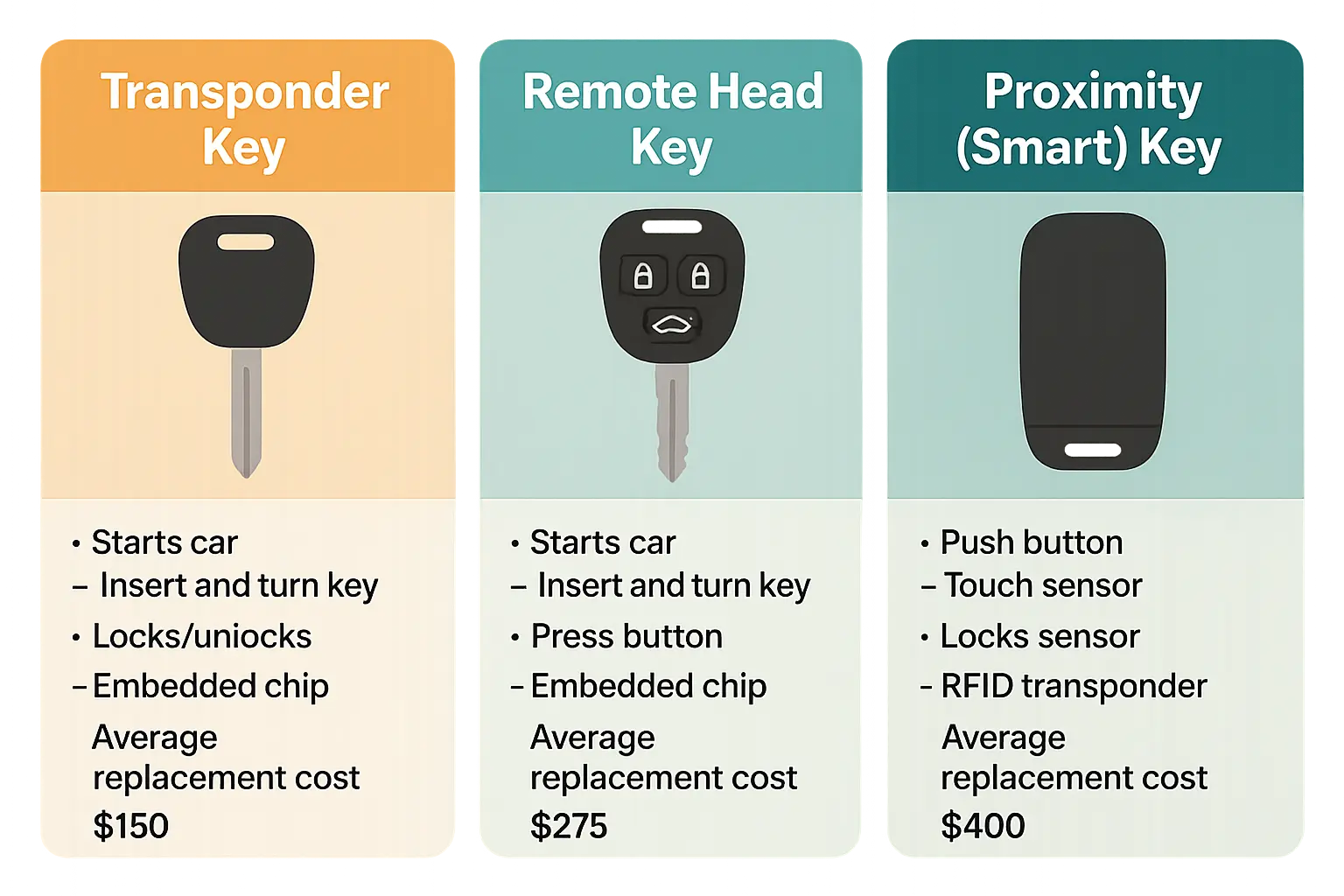
This infographic breaks down the three main car key types, helping identify which key you own by showing physical features and electronic functions in a simple side-by-side comparison.

Diagnostic Feature 1. Transponder Key 2. Remote Head Key 3. Proximity (Smart) Key
What It Looks Like Plastic-molded head, metal blade, no buttons. Buttons integrated directly onto the key head. Sleek plastic fob, no visible permanent metal blade.
How It Starts the Car Turn mechanical key in ignition column. Turn mechanical key in ignition column. Press dashboard “Start” button; fob stays in pocket.
How It Locks/Unlocks Manually turn key in door lock. Press buttons on key head (RF signal). Keyless entry (door handle sensors) or button press.
Internal Technology Passive RFID chip (no battery required). Passive RFID chip + Active RF Board (uses CR2032/CR1620). Active LF/UHF Transceiver (always transmitting, uses battery).
Average Replacement Cost $50 – $150 $120 – $250 $150 – $450+

Deep Dive: The Transponder Key (The Invisible Security Guard)


First introduced in the late 1990s, the passive transponder key revolutionized vehicle security. By embedding an RFID chip inside the plastic head of a physical key, manufacturers ensured that a duplicated mechanical blade could not start the car without the correct digital handshake. This technology single-handedly drove a 60%+ reduction in vehicle thefts globally.

These keys do not require batteries. Instead, when you insert the key, an induction coil surrounding your ignition cylinder emits a electromagnetic field. This field powers the tiny transponder chip inside the key head, which transmits a unique security code back to your car’s immobilizer.

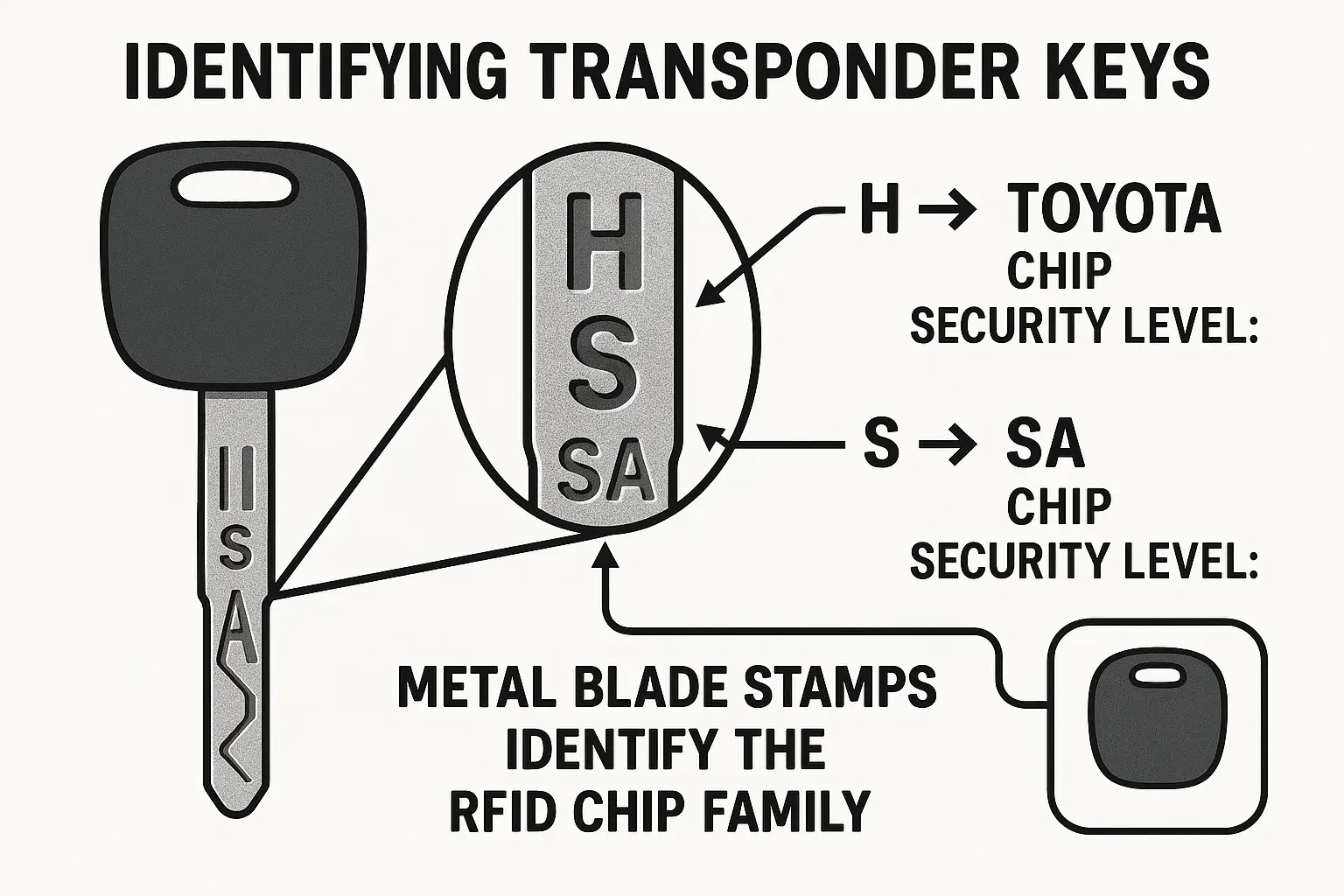
To identify your transponder type, look closely at the metal blade near the plastic head. Manufacturers stamp specific letters here to indicate the RFID chip family:

  • “H” or “G” Stamps: Found on Toyota keys, indicating high-security 128-bit or 80-bit encrypted chips.
  • “S” or “SA” Stamps: Found on Ford SecuriLock systems.

Find the secret metal blade stamps on your transponder key to determine the exact transponder chip inside, giving you diagnostic certainty before replacement or programming.


The Remote Head Key (The Convenience Hybrid)


The remote head key merges two separate systems into one physical unit: a passive transponder chip and an active radio frequency (RF) remote board.

If your remote buttons stop working but your car still starts, your key’s CR2032 or CR1620 battery is likely dead. Replacing this battery will restore your keyless entry functions, while the passive transponder chip—which does not rely on battery power—continues to safely start the engine. If neither system works, you may need professional lock repair services or key reprogramming.


The Proximity Key (The Smart Communicator)


Proximity keys (smart keys) represent the modern standard. These keys communicate continuously with your car using low-frequency (LF) and ultra-high-frequency (UHF) radio waves. The vehicle detects the fob when you get within range, unlocking the doors automatically when you touch the handle and enabling the push-to-start button on your dashboard.

But what happens if your proximity key battery dies and leaves you stranded? Manufacturers built passive backup systems into every smart key.

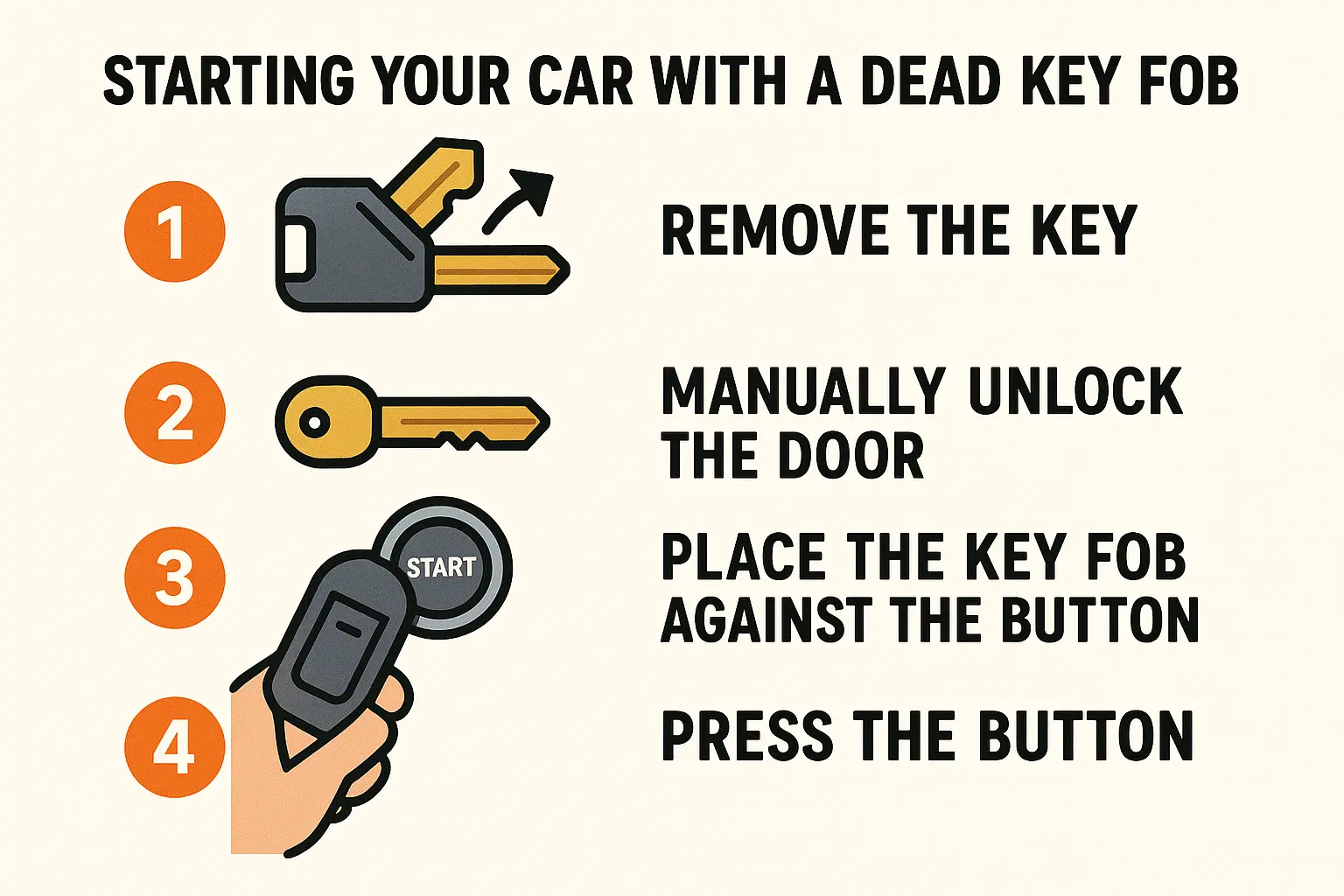
Remember these simple emergency steps if your proximity key battery dies: slide the hidden latch, pull out the emergency blade, unlock the door manually, and start the car by holding the fob against the start button.

  1. Locate the Latch: Slide the release latch on the back of your fob.
  2. Extract the Blade: Pull out the concealed physical emergency key blade.
  3. Unlock Manually: Insert this blade into the physical door lock (some door handles have a plastic cap hiding this slot; pop it off using the tip of the key).
  4. Start the Engine: Hold the key fob directly against the “Start” button and press it. The passive induction coil behind the button will power the dead fob’s chip to authorize the ignition.

Frequently Asked Questions


Can I program a replacement proximity key myself?

Generally, no. While some older vehicles allow manual on-board programming sequences, modern proximity and high-security transponder keys require specialized software linked directly to the car’s OBD2 diagnostic port to write the new key’s ID code to the immobilizer.

Why does my car turn over but refuse to start when using a newly cut key?

If the mechanical key turns the ignition but the engine immediately dies (or crank-no-starts), your car’s security system is not receiving the correct digital handshake from the transponder chip. The key blade was cut correctly, but the electronic chip has not been programmed to your car’s immobilizer.

How do I find the FCC ID on my car key?

The FCC ID is usually printed in tiny text on the back of your key fob casing or inside the emergency key blade slot. Matching this exact code is crucial when ordering a replacement key, as different model years use different frequencies to communicate with the vehicle.

The Programming Reality: Dealership vs. Locksmith vs. DIY


When you need a spare key or a complete car key replacement, you have three primary options:

  • The Dealership: Highly secure but incredibly expensive. Kelley Blue Book surveys show dealership replacements average $150 to $600+ depending on the model, often requiring you to tow your car to their service center.
  • DIY Programming: While tempting, self-programming tools bought online often fail on post-2010 vehicles. If the programming sequence fails, you risk locking up your immobilizer and rendering your vehicle completely inoperable.
  • Professional Mobile Locksmith: A specialized provider like sure lock and key can cut and program transponder, remote head, and proximity keys on-site. Using advanced mobile diagnostic vans, locksmiths match dealership programming equipment at a fraction of the cost—typically saving you 30% to 50% on key replacement fees, while also handling tricky lock repairs on the spot.

Need more information? Get a free quote

Call us now

Get A Free Call From Our Experts!

Floating Button Form