Smart Lock Installation: 6 Door Checks Before You Buy


Published: Sep 23, 2026

Deciding to upgrade your home security is an exciting step, but there is a hidden frustration plaguing the smart home market. Up to 30% of smart locks are returned not because the technology is defective, but due to physical door incompatibility discovered mid-installation. To prevent a failed DIY project or damaging your door, understanding what is a smart lock and evaluating your door’s physical properties beforehand is critical.

Before clicking “buy,” run through these six comprehensive physical and mechanical door checks to ensure a flawless installation.
Assessing Your Current Lock Anatomy


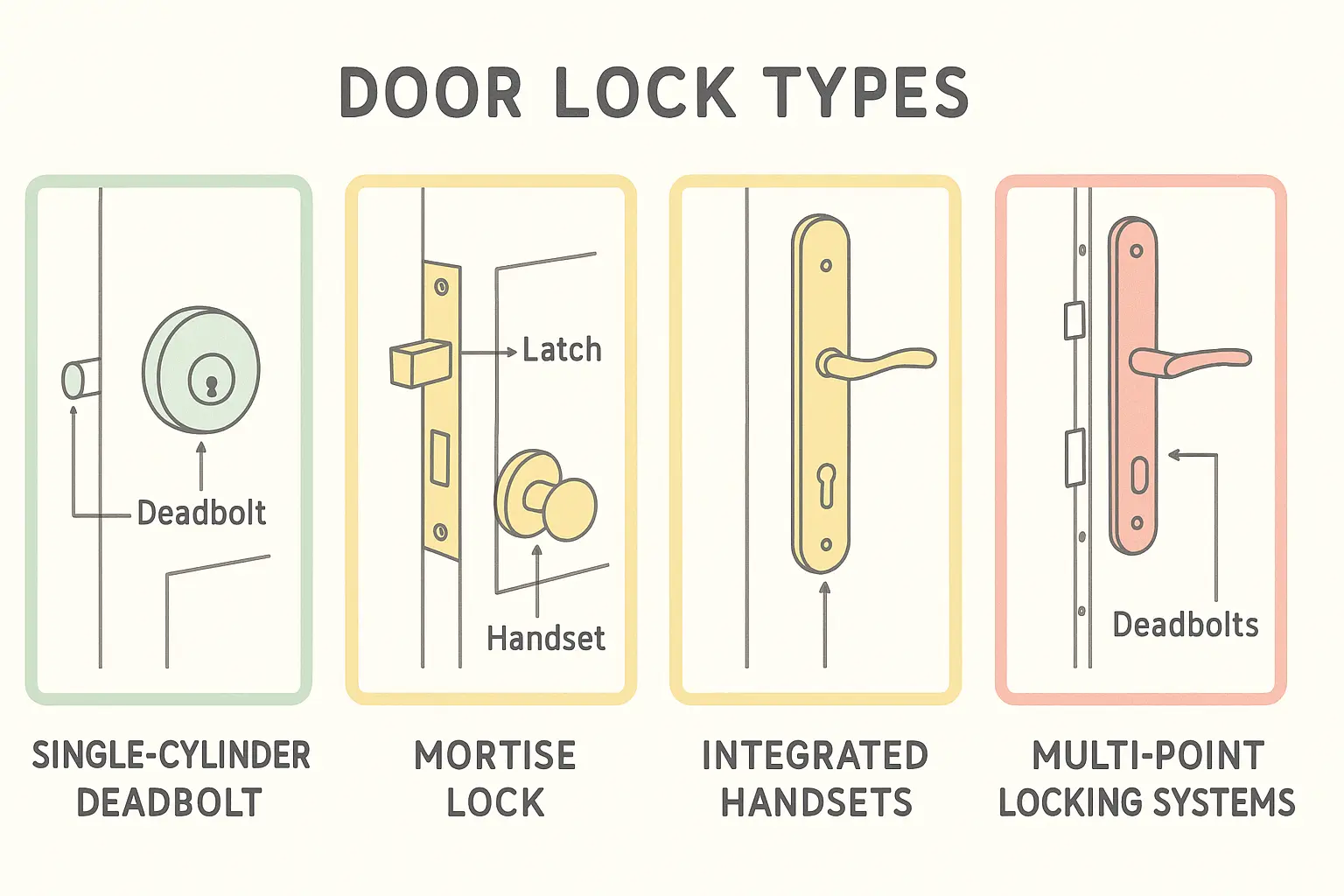
The first step in your pre-purchase diagnostic is identifying your existing lock type. Most residential smart locks are designed to replace standard, single-cylinder deadbolts.

If your door features a heavy-duty mortise lock (where the lock mechanism is housed in a large pocket inside the door’s edge), a standard smart lock will not fit without highly specialized hardware or extensive retrofitting. Similarly, integrated handsets require complete plate replacements, whereas standard cylinder locks are much simpler to upgrade.

Visual matrix clarifying the most common door lock types, showing which are fully compatible with standard smart locks and which require specialized hardware or workarounds.

Checking the 3-D Dimensional Gatekeepers


Smart locks rely on precise physical dimensions governed by ANSI standards. You must measure three key areas:

  • Borehole Diameter: The standard cross-bore hole is 2 ⅛ inches (54mm). If you live in an older home with a 1 ½-inch hole, you must widen it, or learn how to install a deadbolt on a door without hole to prep the door.
  • Backset: The distance from the door’s edge to the center of the borehole must be exactly 2 ⅜ inches (60mm) or 2 ¾ inches (70mm). Most modern smart locks adjust to fit both, but confirming this reduces friction during your schlage locks installation.
  • Door Thickness: Standard smart locks are built for doors between 1 ⅜ inches and 1 ¾ inches (35mm–44mm) thick. Custom designer doors exceeding this will require specialized tailpiece extension kits.

Verifying Interior Spatial Clearance


Many homeowners overlook the physical size of the smart lock’s interior casing (the battery box). High-security models are taller and wider than mechanical thumbscrews.

Measure the flat wooden surface above your deadbolt. You typically need at least 3.5 to 4.75 inches of flat clearance. If your door has decorative raised panels, ornate beveled glass frames, or deep trim, the interior lock chassis will sit crooked, compromising the security seal and mechanical function.

Preventing Outer Storm Door Collisions


If you have an outer glass storm door or a steel security screen, you must measure the clearance envelope between the two doors. When closed, does the distance measure less than 3.8 inches (96mm)? If so, a protruding smart lock keypad will collide with your storm door. For shallow gaps, low-profile retrofits are the safest path forward.

Running the Push-Pull Friction Test


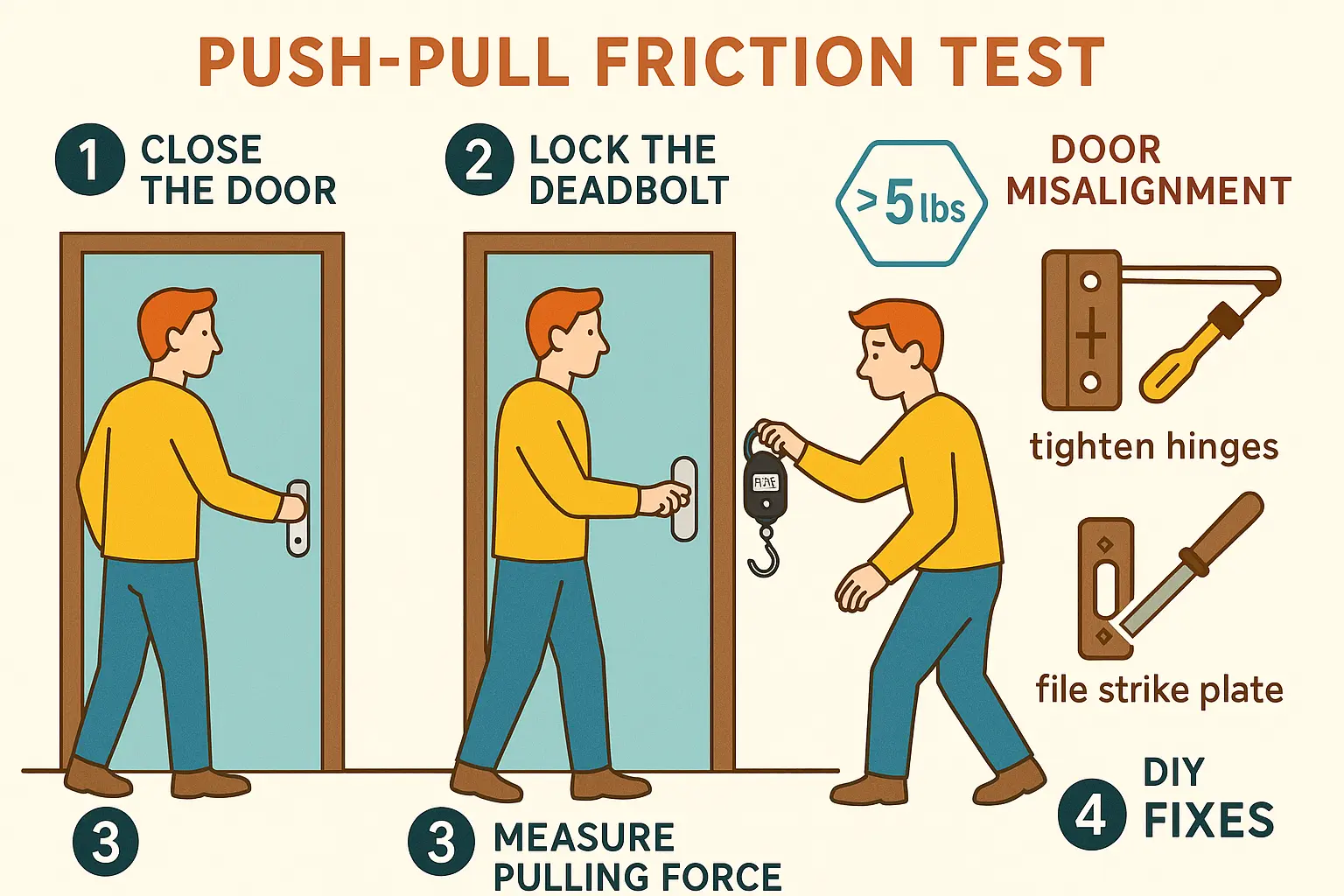
According to field data, over 65% of motor failures and rapid battery drain issues are caused by latch binding (physical resistance on the deadbolt from door misalignment), not software bugs.

To diagnose this, manually turn your key. Do you have to push, pull, or lift the door to get it to lock smoothly? If yes, you have a misaligned door lock. While a human can easily apply manual force, a small motorized smart lock will jam, trigger a failure code, and burn through batteries trying to overcome the friction.

Interactive guide to detect door misalignment causing latch binding, explaining how to measure door closing force and apply quick fixes before installing a smart lock.

Before initiating any smart lock installation, eliminate binding by filing the strike plate or tightening the door hinges to restore perfect alignment.

Evaluating Structural Material and Wireless Signals


The material of your door dictates your wireless strength and installation complexity:

  • Steel/Metal Doors: These act as RF shields, attenuating Z-Wave, Zigbee, or 2.4GHz Wi-Fi signals by up to 10–15 dB. Ensure your smart home bridge has a direct line of sight to the lock.
  • Wood and Fiberglass: These offer optimal signal conditions, but wood requires careful pilot drilling during keyless entry installation to avoid splitting.
  • Rental/Apartment Constraints: Standard replacements alter the exterior physical key. If renting, opt for retrofit smart locks that mount over existing interior cylinders, keeping landlord master keys intact.

Frequently Asked Questions


Will a smart lock drain its battery faster if the door is misaligned?

Yes. If the deadbolt experiences frictional resistance (latch binding), the internal motor must work significantly harder to turn the lock mechanism. This mechanical strain can deplete a fresh set of batteries in weeks rather than the standard 6 to 12 months, and may eventually cause the motor to burn out completely.

Can I install a smart lock on a door with a mortise lock?

Standard smart locks cannot be directly installed on doors with mortise lock pockets without deep modifications. To keep a mortise lock, you must purchase a specialized smart lock designed for mortise systems, or consult a professional locksmith to perform the necessary door retrofitting and patching.

How do I troubleshoot a smart lock that keeps jamming?

If you experience persistent jams, perform a physical diagnostic by operating the lock with the door open. If it functions smoothly open but jams when closed, the issue is door misalignment. Refer to a smart lock troubleshooting guide to learn how to adjust your strike plate and eliminate lock binding.

Choosing Your Perfect Smart Lock Compatibility Fit


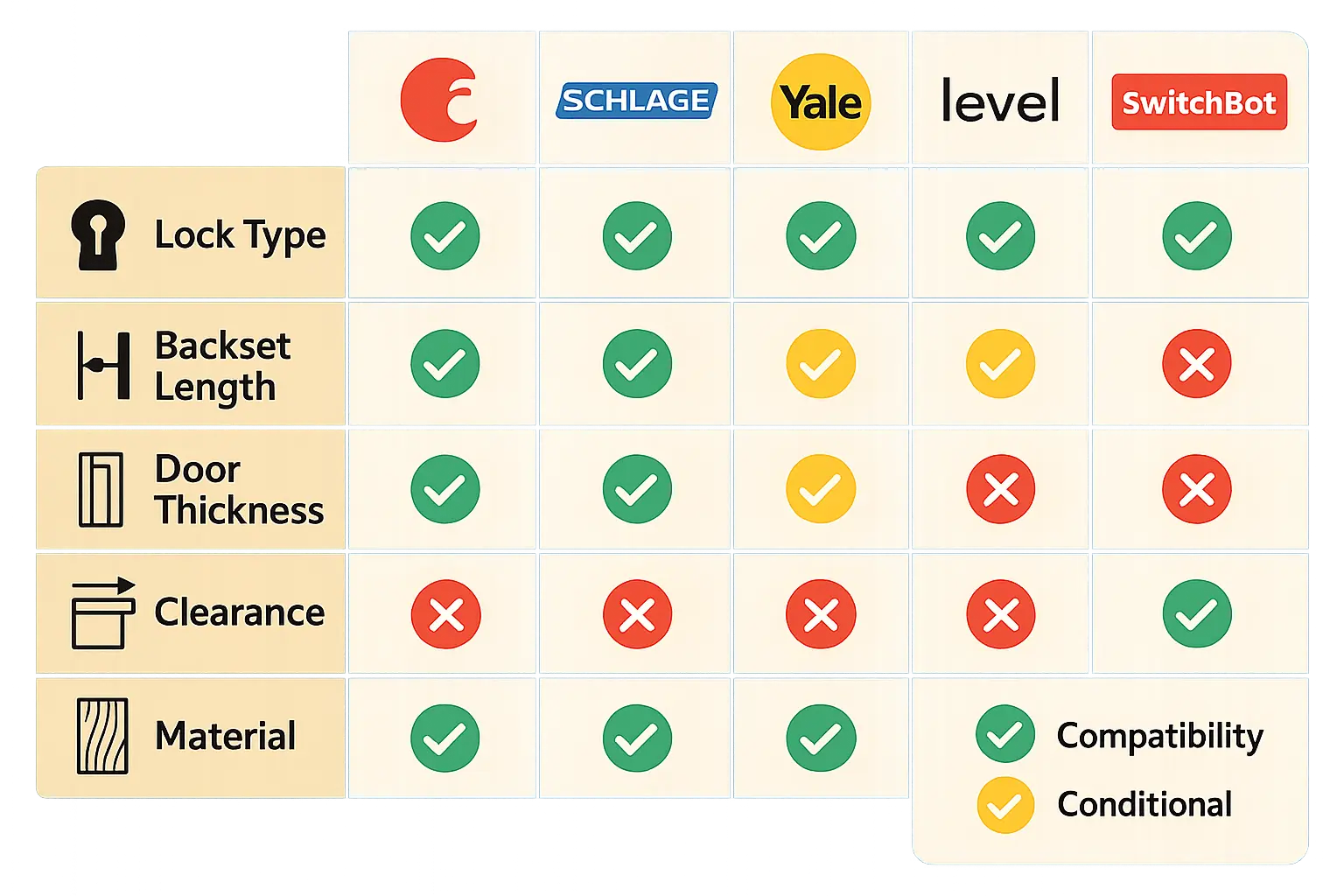
To select the right smart lock based on your measurements, consult this compatibility matrix:

Memorable compatibility matrix helping buyers match their door specifications to the best smart lock brands, simplifying purchase decisions.

Evaluating your doorway using these diagnostic checks ensures a seamless transition to keyless convenience. If you run into structural alignment challenges or need professional verification, consulting an experienced, licensed locksmith is the best way to safeguard your investment and guarantee peace of mind.

Need more information? Get a free quote

Call us now

Get A Free Call From Our Experts!

Floating Button Form