The Hidden Dangers of Over-Tightening Your Lock


Published: Jul 27, 2026 | Updated: Aug 14, 2026

It starts with a minor annoyance. The doorknob jiggles. The deadbolt feels a little loose in its housing. Your first thought is a classic DIY impulse: “I can fix that.” You grab a screwdriver, give the screws a few good turns until they won’t budge, and admire your handiwork. The wobble is gone. Problem solved, right?

Not so fast. In the world of locksmithing, that satisfyingly tight screw can be the start of a much bigger, more expensive problem. While a loose lock is a security risk, an over-tightened one can be just as bad, leading to hidden damage that compromises the very security you were trying to improve.

This is one of the most common missteps we see homeowners make. It comes from a good place—the desire to be self-sufficient and secure. But without understanding the delicate mechanics at play, that simple twist of the wrist can set off a chain reaction of problems. Let’s talk about why “tighter” isn’t always better and how to get it just right.

The Mechanical Symphony Inside Your Door


Before we can understand the damage, we need to appreciate the device. A door lock isn’t just a chunk of metal; it’s a small, precise machine where every part has a role to play. Think of it like a tiny, intricate clock.

At its core, a standard lock consists of a few key players:

  • Cylinder: This is where you insert your key. Inside, a series of pins must be perfectly aligned by the key’s unique grooves to allow the plug to turn.
  • Bolt or Latch: This is the piece of metal that extends from the door into the door frame, physically securing it.
  • Actuator/Tailpiece: A small bar that connects the cylinder to the bolt mechanism. When you turn the key, the cylinder turns this bar, which retracts or extends the bolt.

These components are designed to fit together with very specific tolerances. They need to move smoothly, without grinding or binding. The mounting screws that hold the lock to the door are there to keep everything perfectly aligned and secure—not to clamp it down with extreme force. For a closer look at each component, exploring the complete door lock mechanism can give you a deeper appreciation for this engineering.

Diagram showing the internal components of a door lock, including the cylinder, latch, and mounting screws.

The Fine Line Between 'Snug' and 'Stripped'


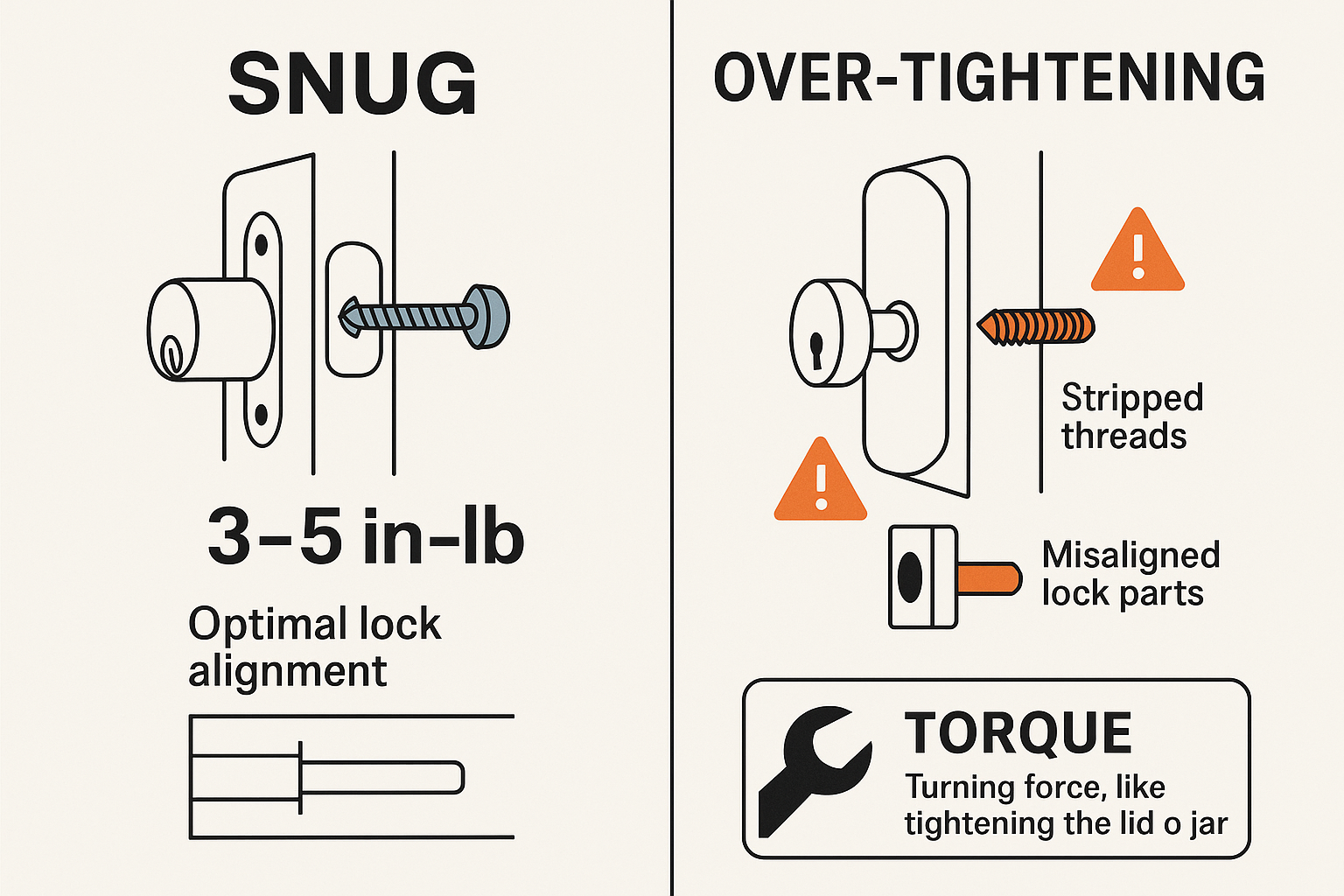
When you tighten a screw, you are creating tension. The goal is to create just enough tension—or “torque”—to hold the lock firmly in place, preventing it from shifting during use. Think of it like tuning a guitar string. Too loose, and it won’t play the right note. Too tight, and the string snaps.

Over-tightening a lock screw creates a similar “snapping” effect, but the damage is often less obvious at first.

  • Stripped Threads: The most immediate risk is stripping the threads, either on the screw itself or, more disastrously, in the lock housing or the door. The metal grooves that give the screw its grip are literally torn away. A stripped screw can no longer hold tension, leaving your lock even looser than when you started.
  • Warped Housing: The metal or plastic housing that contains the lock’s internal parts can be warped or even cracked by excessive pressure. This forces the internal components out of alignment.
  • Pinched Mechanism: The pressure can physically pinch the actuator or bolt mechanism, preventing it from moving freely. Your key might suddenly feel stiff or get stuck when you try to turn it.

Side-by-side comparison showing a correctly tightened screw flush with the lock plate, and an over-tightened, stripped screw that has damaged the surrounding material.

The Snowball Effect: How One Tight Turn Leads to Lock Failure


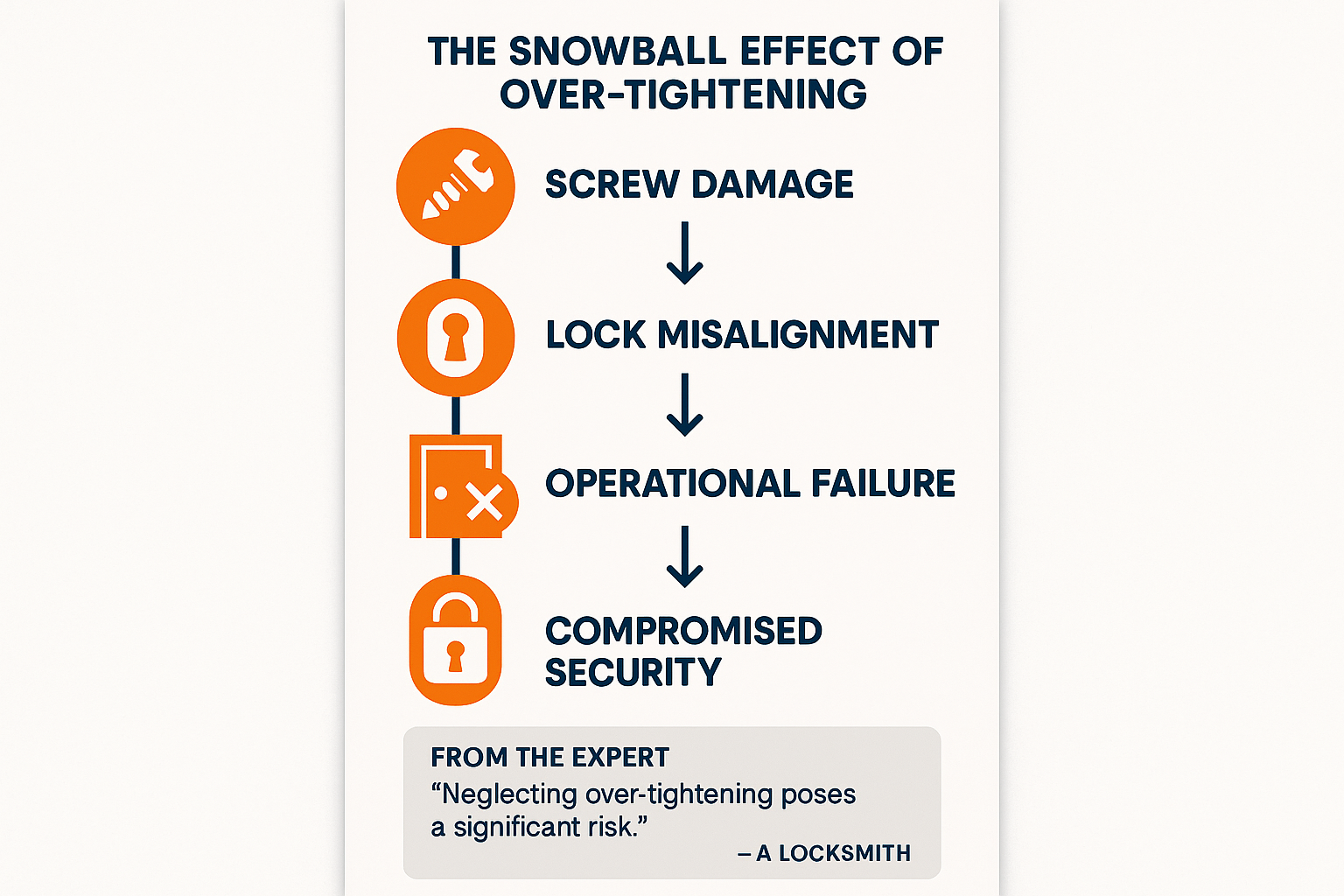
The real danger of over-tightening isn’t just a stripped screw; it’s the cascade of problems that follows. That initial bit of excessive force starts a snowball effect that can lead to a complete security failure.

  1. Initial Over-Tightening: You torque down the screw, slightly warping the lock’s housing.
  2. Misalignment Begins: The bolt is now slightly off-center. It doesn’t slide perfectly into the strike plate on the door frame anymore. You might notice you have to push or pull the door to get it to lock. This is the first sign of a misaligned door lock.
  3. Increased Wear and Tear: Every time you lock the door, the misaligned bolt grinds against the strike plate. This friction puts immense stress on the internal actuator and cylinder. Metal shavings can begin to gum up the mechanism.
  4. Key and Cylinder Damage: The new resistance makes turning the key difficult. You start forcing it, which can bend the key or, worse, damage the delicate pins inside the cylinder. One day, the key might snap off in the lock.
  5. Catastrophic Failure: After months of this grinding and stress, a critical internal component breaks. The bolt gets stuck in the extended or retracted position. Now you’re either locked out of your house or unable to secure it at all.

What began as a simple, two-minute fix has now become a major security vulnerability and a costly emergency call. This is why understanding the risks of what seems like a simple door lock repair is so crucial.

A flowchart or infographic showing the progression from an over-tightened screw to a misaligned latch, increased friction, internal mechanism damage, and eventual lock failure.

Your Guide to Getting it Just Right


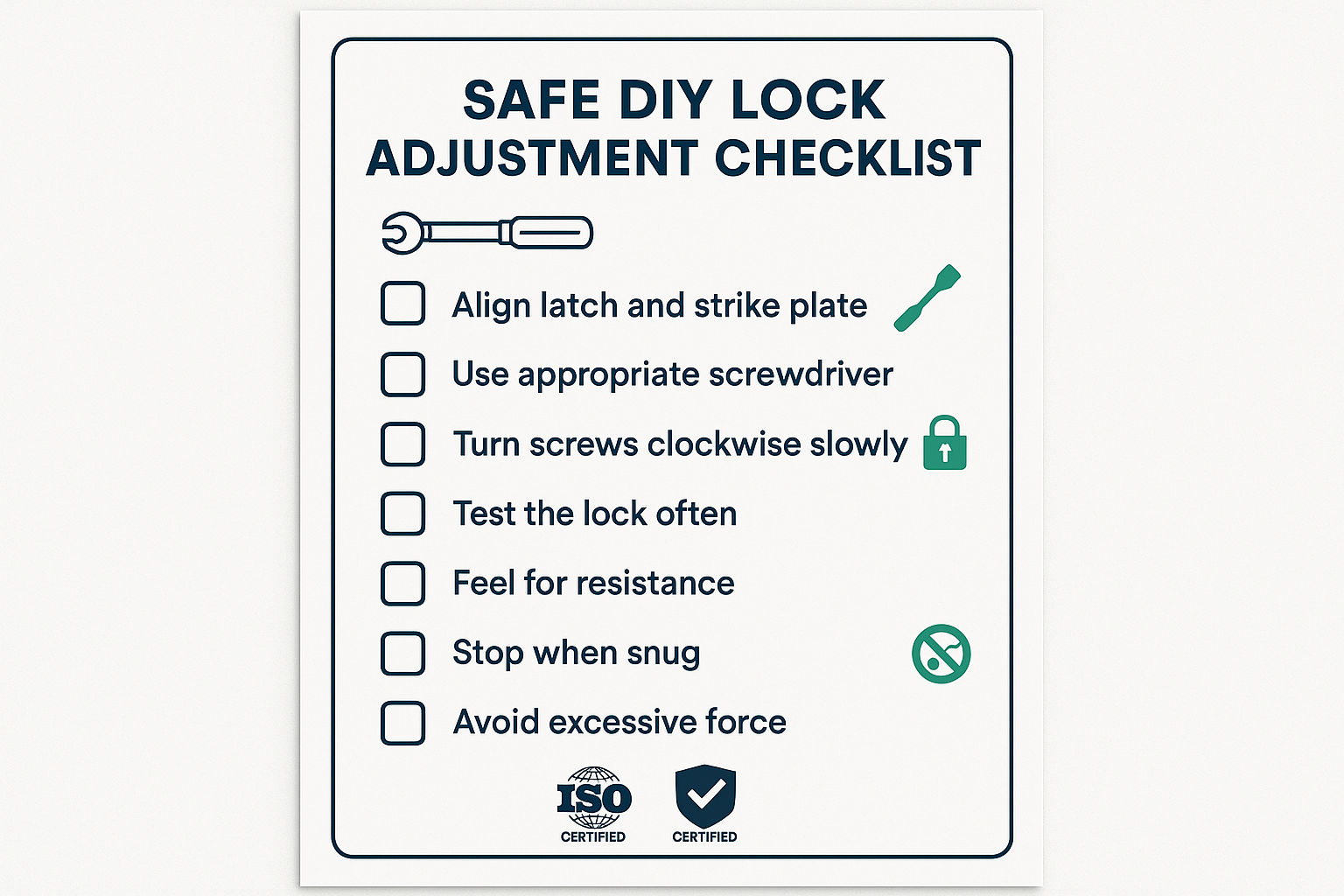
You can absolutely perform minor adjustments on your own locks. The key is to use finesse, not force. The next time you notice a loose handle or faceplate, follow this simple checklist to do it safely and effectively.

  • Use the Right Tool: Make sure your screwdriver head fits the screw perfectly. A poorly fitting driver is more likely to slip and strip the screw head.
  • The “Two-Finger” Rule: Don’t grip the screwdriver with your whole fist. Hold it with your thumb and first two fingers. This prevents you from applying too much torque.
  • Tighten to “Snug”: Turn the screw until you feel the first bit of resistance. That’s the point where the lock is flush against the door. Now, give it just a tiny extra nudge—no more than a quarter turn. This is “snug.”
  • Alternate Screws: If there are two or more screws, tighten them a little at a time, alternating between them. This ensures even pressure, much like tightening lug nuts on a car tire.
  • Test as You Go: After each adjustment, test the lock. Does the key turn smoothly? Does the latch operate without sticking? Does the deadbolt extend and retract easily? The lock’s performance is your best guide. If it suddenly becomes stiff, you’ve gone too far. Back the screw off a quarter turn and test again.

A visually appealing checklist graphic with icons for each step: using the correct screwdriver, the "two-finger" tightening technique, alternating screws, and testing the lock's function.

Frequently Asked Questions


What are the signs of an over-tightened lock?

The most common signs are a key that is suddenly hard to insert or turn, a deadbolt that doesn’t slide smoothly, or a latch that sticks. You might also have to jiggle the handle or push on the door to get the lock to engage.

How can I tell if I've stripped a screw?

A stripped screw will often keep turning without ever getting tighter. If you try to loosen it, it might spin in place without backing out. You’ve essentially destroyed the threads that give it grip.

Can I fix a stripped screw hole in a door lock myself?

There are DIY tricks like using toothpicks and wood glue for wood doors, but these are often temporary fixes. For the metal housing of the lock itself, a stripped hole is much more difficult to repair without specialized tools and can compromise the lock’s integrity. It’s best to consult a professional.

Your home’s security is built on a foundation of details. By understanding the importance of something as simple as proper screw tension, you’re taking a proactive step toward a safer, more reliable home. Regular lock maintenance and careful adjustments can prevent small issues from becoming big emergencies. And for everything else, the experienced team at Sure Lock & Key is always here to ensure the job is done right.

When DIY Becomes "Don't": Knowing When to Call a Pro


While minor tightening is manageable, certain situations signal that it’s time to put the screwdriver down and call a professional. The potential risks of DIY lock installation and repair far outweigh the cost of a service call if your home’s security is at stake.

Call an expert if:

  • You’ve already stripped a screw or the screw hole. A professional has tools and techniques to repair this damage properly.
  • The lock is still loose even after being snug. This often points to a problem inside the door itself or a worn-out internal lock component.
  • The key is difficult to turn, or the bolt sticks after your adjustment. This is a clear sign of misalignment or internal binding. Forcing it will only make it worse.
  • You’re unsure about any part of the process. Security isn’t the place for guesswork.

Need more information? Get a free quote

Call us now

Get A Free Call From Our Experts!

Floating Button Form