Repair, Replace, or Upgrade? A Door-by-Door Lock Decision Guide for Homes and Businesses
Published: Oct 28, 2026
A sticky key. A deadbolt that won’t throw smoothly. An emergency exit door that doesn’t fully latch shut.
Most security issues start as minor annoyances, and almost every door lock problem comes down to three choices: repair the lock, replace it with the same model, or upgrade to hardware built for how that door is actually used.
Choosing the wrong fix usually means paying twice. If you replace an entire lock assembly when all you needed was a quick cylinder rekey, you’ve overspent. On the other hand, repeatedly patching an entry lock on a high-traffic door means you’ll be calling a locksmith right back in a few months.
To help you balance security, compliance, and budget, this guide walks through your building door by door — from primary front entrances and commercial exit hardware to interior offices and multi-door facilities. Here is exactly where a professional lock repair is enough, and where upgrading your hardware actually pays off.
Upgrade when the lock works fine but no longer fits how you use the door.
Can it be repaired? Start here for any door
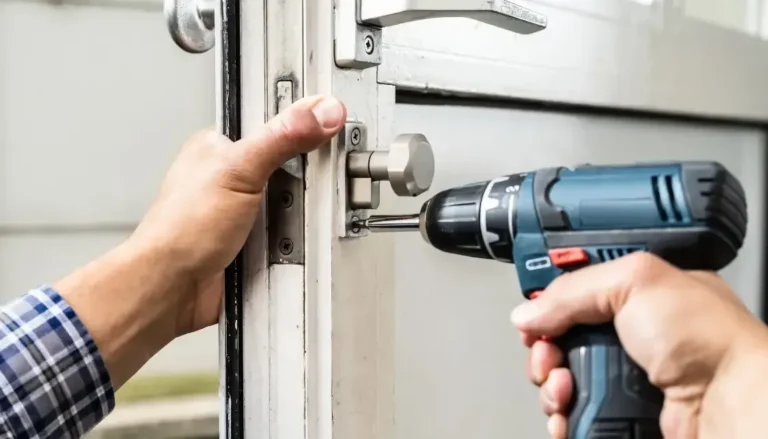
Before you buy anything new, find out whether the lock you have can be saved. Many common lock problems come down to one worn or dirty part, and a professional lock repair service can often fix them in one visit.
These problems are usually repairable:
Key stuck in lock or key won’t turn.Often caused by worn pins, debris, a bent key, or a door that has shifted and pulls the bolt out of line. Don’t force it — a snapped key turns a simple repair into an extraction.
Door knob or handle won’t latch. Usually a worn latch spring, a loose spindle, or a strike plate that no longer lines up with the latch.
Deadbolt is hard to lock. Typically a misaligned strike, a swollen door, or a dry bolt mechanism — especially common when the weather turns cold.
Lock cylinder is worn. The cylinder can often be swapped without replacing the whole lock. Lock cylinder replacement keeps your existing hardware and gives you new keys.
Loose or wobbly hardware. Stripped screws and loose trim are quick fixes, but leaving them can damage the lock body.
Commercial doors have their own common failures. Sagging levers, worn mortise lock bodies, and cylinders that get thousands of turns a month all wear out faster than residential hardware. If you manage a commercial property, our guide to diagnosing mortise lock failure covers what to look for.
When repair stops making sense
Repair is the right first call, but it isn’t always the best value. Consider replacement or an upgrade when:
The same lock has needed repair more than once in a year.
The lock body is cracked, rusted through, or bent from a forced-entry attempt.
Parts are no longer available for an older or discontinued model.
The lock works, but it doesn’t fit how you use the door anymore — too many keys, too many people, or not enough security.
That last point is where the rest of this guide comes in. A lock that works fine can still be the wrong lock.
Front entry doors: replace like-for-like or upgrade?
The front door gets the most use and the most attention from intruders. When its lock fails, a straight front door lock replacement or deadbolt replacement is the fastest fix. But a failed front door lock is also the cheapest moment to upgrade, because you’re already paying for the labor.
Upgrade to keyless entry when keys are the problem
If you’re dealing with lost keys, lockouts, or a steady stream of people who need access — kids, dog walkers, cleaners, contractors, rental guests — a keyless entry door lock solves the problem the old lock can’t. Professional smart lock installation covers:
Keypad door locks — a door lock with keypad lets you give each person their own code and delete it when they no longer need access.
Smart locks for the front door — Wi-Fi or Bluetooth deadbolts you control from your phone, with an access log of who came and went.
Retrofit smart locks — units that fit over your existing deadbolt, so you keep your current key.
Biometric locks — fingerprint entry for households that want no codes and no keys.
Smart locks for rental property and Airbnb — remote code changes between guests, no key handoffs.
A professional install matters more than people expect. Most smart lock troubleshooting calls trace back to a misaligned door or strike, not the lock itself. If the bolt drags, the motor strains, batteries drain fast, and the lock jams. Getting the door aligned during installation prevents most of that. Already have a keypad lock? Our guide to keypad lock security best practices covers code management.
Upgrade to high security when break-ins are the worry
If your concern is forced entry rather than convenience, a standard deadbolt may not be enough. Most residential locks can be picked or bumped with widely available tools. High security door locks are built to resist exactly those attacks:
Pick-resistant and bump-proof cylinders with extra security pins, sidebars, or rotating elements.
Anti-snap cylinders that resist being broken out of the door.
Hardened steel inserts that resist drilling.
Restricted keys that can’t be copied at a hardware store without authorization.
Reinforced strike plates with long screws that anchor into the wall framing, so a kick doesn’t split the jamb.
Look for locks rated to UL 437 for pick and drill resistance and ANSI/BHMA Grade 1 for durability. Brands like Medeco, Mul-T-Lock, ASSA, Abloy and Schlage Primus make high security deadbolts and cylinders for both homes and businesses.
You don’t have to choose between the two
Many smart deadbolts accept a high security cylinder for the key override. That gives you keyless entry for daily use and a pick-resistant cylinder as the backup — a practical middle ground for front doors.
Back doors and emergency exits: repair the panic bar or replace it?
For businesses, the most important doors are often the ones customers never think about. Emergency exit doors have to open instantly from the inside, latch securely from the outside, and keep doing both through years of daily use. When one stops working, it’s a security problem and a life-safety problem at the same time.
Signs your panic bar needs repair
The door doesn’t latch after it closes, so it can be pulled open from outside.
The push bar sticks, feels heavy, or needs a hard shove to release.
The latch catches at the top or bottom on a double door with vertical rods.
The bar rattles, sags, or has visible damage from carts or impacts.
The exit alarm sounds when it shouldn’t — or doesn’t sound when it should.
Most of these are fixable. Push bar and crash bar repair usually means replacing a worn latch, spring, rod, or strike, and adjusting the door closer and hinges so the door swings and latches cleanly. A technician with the right parts on the van can often complete emergency exit door repair in one visit.
When to replace or install new exit hardware
Repair isn’t the answer when the device is cracked, parts are discontinued, the door has been renovated, or the door never had proper exit hardware. Building and fire codes typically require panic hardware on exit doors in certain occupancies — for example, the International Building Code requires it in assembly and educational spaces with 50 or more occupants. Requirements vary by jurisdiction, so check with your local fire marshal or a commercial locksmith.
Rim, surface vertical rod, concealed vertical rod and mortise exit devices
Panic bars for glass doors in storefronts with narrow aluminum stiles
Panic bars for double doors, with or without a removable mullion
Panic bars with alarm for exits that shouldn’t be used day-to-day
Fire-rated exit devices for fire doors
Outside trim with a key cylinder so staff can enter through an exit door — which can also be keyed into your master key system
Some facilities need exits that slow egress for security, such as hospitals and memory care units. That’s a separate category with strict rules — see our guide to delayed egress locks.
Interior and office doors: match the lock to the room
Interior doors don’t all need the same lock. Matching each room’s lock to how it’s used is one of the easiest upgrades a business can make.
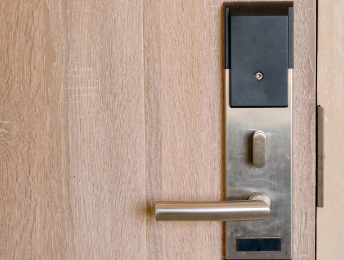
For businesses experiencing regular staff turnover, commercial keyless entry systems eliminate the ongoing expense and hassle of rekeying locks every time an employee departs — you simply revoke their permissions or delete their access code in seconds. For multi-tenant facilities and larger commercial buildings, this same streamlined efficiency easily scales up into networked keycard, smart fob, or smartphone-based cloud access control systems.
Many doors, many keys: when it's time for a master key system
If you carry a keyring the size of your fist, or your staff can’t tell which key opens which door, the locks aren’t the problem — the key system is. A master key system organizes every lock in your building into a hierarchy:
Change keys open one lock each — an employee’s office, a tenant’s unit.
Sub-master keys open a group of locks — one floor, one department, one wing.
The master key opens everything in the system, for owners, managers and maintenance.
A commercial master key system makes sense for offices, retail, restaurants, warehouses, schools and hotels. A master key system for an apartment building lets each tenant have their own key while management keeps one key for every unit, plus common areas. For homes, a residential master key or keyed alike locks let one key open the front, back, side and garage doors.
Keyed alike vs. master keyed: keyed alike means every lock uses the same key. Master keyed means each lock has its own key, plus one key that opens them all. Homes usually want keyed alike; businesses and rentals usually want master keyed.
In most cases, you don’t need new hardware. A locksmith can rekey your existing locks into a master key system by repinning the cylinders, as long as the locks are in good condition — another reason to repair worn locks first.
Protect the master key with high security
A master key system is only as secure as its keys. If anyone can copy the master at a hardware store, one lost key exposes the whole building. Building the system on a restricted keyway or high security cylinders means duplicates can only be cut with authorization. Pair that with a key management system — a log of who holds which key — and you’ll know exactly what to rekey if a key goes missing. Our guide to restricted keyways explains how this works.
What to weigh before you upgrade
Every door is different, but these questions point to the right choice:
How many people need access? One household: a good deadbolt or smart lock. Rotating guests, tenants or staff: keyless entry. Dozens of people across many doors: a master key system or access control.
What are you protecting against? Lockouts and lost keys call for keyless entry. Forced entry and key copying call for high security locks.
Is it an exit door? Exit doors need code-compliant panic hardware first, and security second.
What condition is the door in? A sagging door or loose frame will make any new lock fail. Fix alignment first.
Can you combine upgrades? A smart lock with a high security cylinder, or a master key system on restricted keys, often costs less than doing each separately.
Frequently asked questions
Is it cheaper to repair or replace a door lock?
Repair is usually cheaper when only one part has failed, such as a cylinder, spring or strike plate. Replacement makes more sense when the lock body is cracked, rusted or repeatedly failing, or when parts are no longer available.
What should I do if my key is stuck in the lock or won't turn?
Don’t force it. Try gently wiggling the key while pulling the door toward you or pushing it away, since door misalignment is a common cause. A dry graphite or lock-specific lubricant can help. If the key still won’t move, call a locksmith before it snaps inside the cylinder.
Can I replace just the lock cylinder instead of the whole lock?
Often, yes. Lock cylinder replacement keeps your existing hardware and gives you new keys. It’s also how many locks are upgraded to high security or restricted keys without replacing the whole lockset.
Are smart locks safe for a front door?
A quality smart lock from a major brand, installed on a properly aligned door with a reinforced strike plate, is as secure as a standard deadbolt. For extra protection, choose a model that accepts a high security cylinder for the key override.
What happens to a smart lock when the batteries die?
Most smart locks warn you days or weeks ahead. Many have a backup key cylinder or external terminals for a 9V battery so you can power the keypad and get in.
Do high security locks really stop break-ins?
No lock is unbreakable, but high security locks resist picking, bumping, drilling and snapping far longer than standard locks, and restricted keys stop unauthorized copies. Most burglars move on when a lock doesn’t give quickly.
Do "Do Not Duplicate" keys stop copying?
Not reliably. The stamp is a request, not a technical barrier. Restricted key systems use patented keyways, so blanks are only available through authorized locksmiths.
Can a panic bar be repaired, or does it need to be replaced?
Most panic bar problems — sticking, not latching, rattling — can be fixed by replacing worn parts and adjusting the door closer and hinges. Replacement is needed when the device is cracked, discontinued, or doesn’t meet current code.
Can a panic bar door be locked from the outside?
Yes. Exit devices can be fitted with outside trim and a key cylinder, so staff can unlock the door from outside while it still opens freely from inside. That cylinder can be part of your master key system.
Can I add a master key system to my existing locks?
Usually, yes. A locksmith can rekey existing locks into a master key system as long as they are in good working condition and compatible with the keyway.
What's the difference between keyed alike and master keyed locks?
Keyed alike locks all open with the same key. Master keyed locks each have their own key, plus one master key that opens all of them.
What should I do if a master key is lost?
Rekey every lock the master key opens. A lost master key exposes the whole system, so a new key alone isn’t enough.
Is a master key system the same as a Master Lock?
No. Master Lock is a padlock brand. A master key system is a way of keying many locks so one key can open all of them.
Get the right fix for every door
Whether you need a quick lock repair, a full front door upgrade, panic bar repair on a failing exit, or a master key system for an entire building, Sure Lock & Key can assess every door in one visit and tell you honestly what to repair, what to replace, and what’s worth upgrading.
Our licensed technicians are available 24/7 across Connecticut, New York, Rhode Island, Florida, Illinois, Alabama, Texas and Arizona, with vans stocked for most jobs in one trip. Call (855) 909-4011 for a free, no-obligation quote.