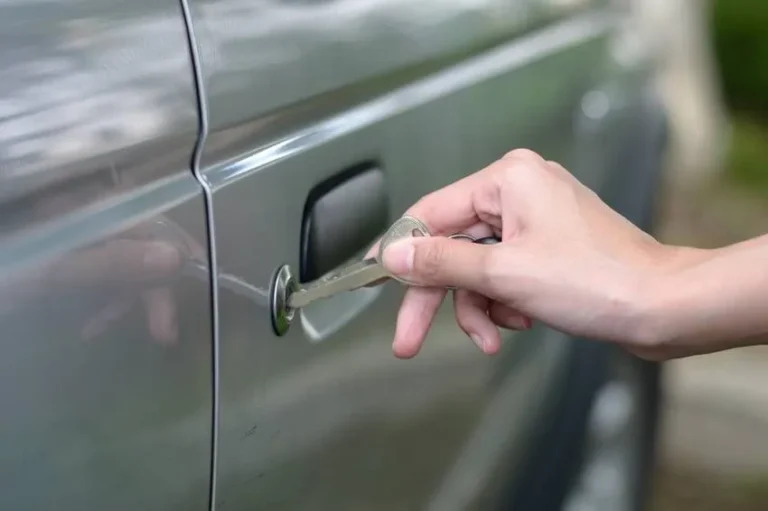
Transitioning to keyless access often raises critical questions regarding physical strength, digital vulnerability, and long-term reliability. Property owners need assurance that replacing a traditional deadbolt with Grade 1 commercial keypad locks enhances protection rather than introducing new security gaps. Evaluating these systems requires analyzing both mechanical resilience and electronic security architecture.
Security Features & Best Practices for Schlage Keypad Locks
Published: Oct 12, 2026 | Updated: Nov 5, 2026
Schlage Security Architecture: Decoding the Rating & Hardware
Schlage keypad lock architecture integrates mechanical engineering with electronic safeguards. At its core, the physical assembly carries an ANSI/BHMA Grade 1 certification—the highest residential security rating granted by the Builders Hardware Manufacturers Association. Achieving Grade 1 status requires enduring 800,000 operational cycles, standing up to 10 heavy hammer strikes directly to the exterior trim, and resisting 225 pounds of prying force without latch displacement.
Physical defenses center around a solid 1-inch deadbolt throw reinforced with an internal, hardened steel anti-saw roller pin. If an intruder attempts to cut through the door seam with a saw blade, the hardened pin spins freely to prevent cutting progression. Supplementing this structural deadbolt is an anti-pick shield surrounding a 5-pin solid brass C-keyway tumbler equipped with anti-pick spool pins. These physical barriers deliver protection on par with premium high security door locks against traditional picking and lock bumping techniques.
On the electronic front, Schlage incorporates an integrated 90dB tamper alarm featuring multiple alert settings. The system triggers an audible siren upon detecting four consecutive incorrect code entries or severe physical impact against the door face, creating an immediate localized deterrent against brute-force intrusion.
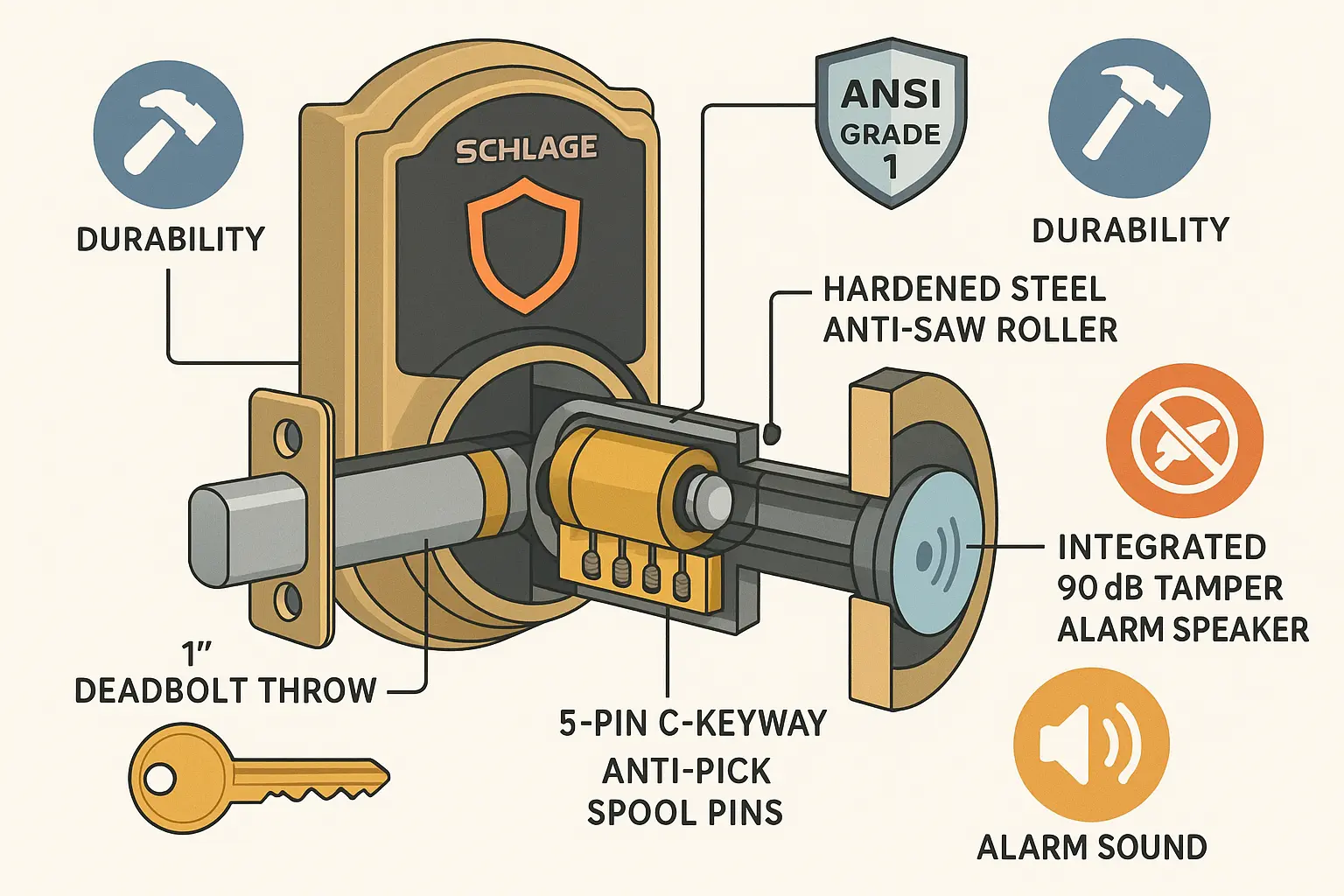 This diagram reveals the robust physical and electronic security architecture inside Schlage keypad locks, highlighting ANSI Grade 1 certification, hardened steel deadbolt throw, anti-pick shield, and integrated alarm features that together provide formidable defense against forced entry.
Comparing Schlage Models: Selecting Your Access Profile
Selecting the ideal lock profile requires balancing operational convenience with your specific entry point requirements. Understanding what is a smart lock and how different models control access is essential before making a long-term investment:
- Schlage BE365 (Keypad Deadbolt): A non-connected, standalone keypad entry system requiring manual turnbolt extension. Offers exceptional battery longevity and simple operation.
- Schlage BE375 (Touchscreen Deadbolt): Keyless design featuring a capacitive touchscreen with fingerprint-resistant coatings to eliminate physical button wear.
- Schlage FE595 (Flex Lock): Designed for garage doors or side entryways, featuring automatic re-locking options and an integrated lever.
- Schlage Encode (Smart WiFi): Built-in WiFi hardware enabling remote app administration, real-time activity tracking, and direct smart home ecosystem pairing.
Due to their robust build quality and field testing, Schlage models consistently rank among the best door locks for residential and light commercial security.
User Permission & Access Code Hygiene
An electronic lock is only as secure as its access code management protocol. Over time, rubber keypads can exhibit wear-pattern vulnerabilities where heavily used digits reveal worn surfaces, allowing observational code guessing.
To mitigate side-channel entry threats:
- Program 6-digit access codes rather than standard 4-digit PINs to increase mathematical combination entropy.
- Regularly perform a schlage keypad lock change code update to cycle key combinations across different digits.
- Assign unique, temporary guest credentials to service personnel rather than sharing master codes, revoking access immediately after work completion.
- Clean exterior keypads periodically to eliminate surface oil accumulation.
For step-by-step programming instructions, refer to our detailed walkthrough on how to change code on schlage lock hardware.
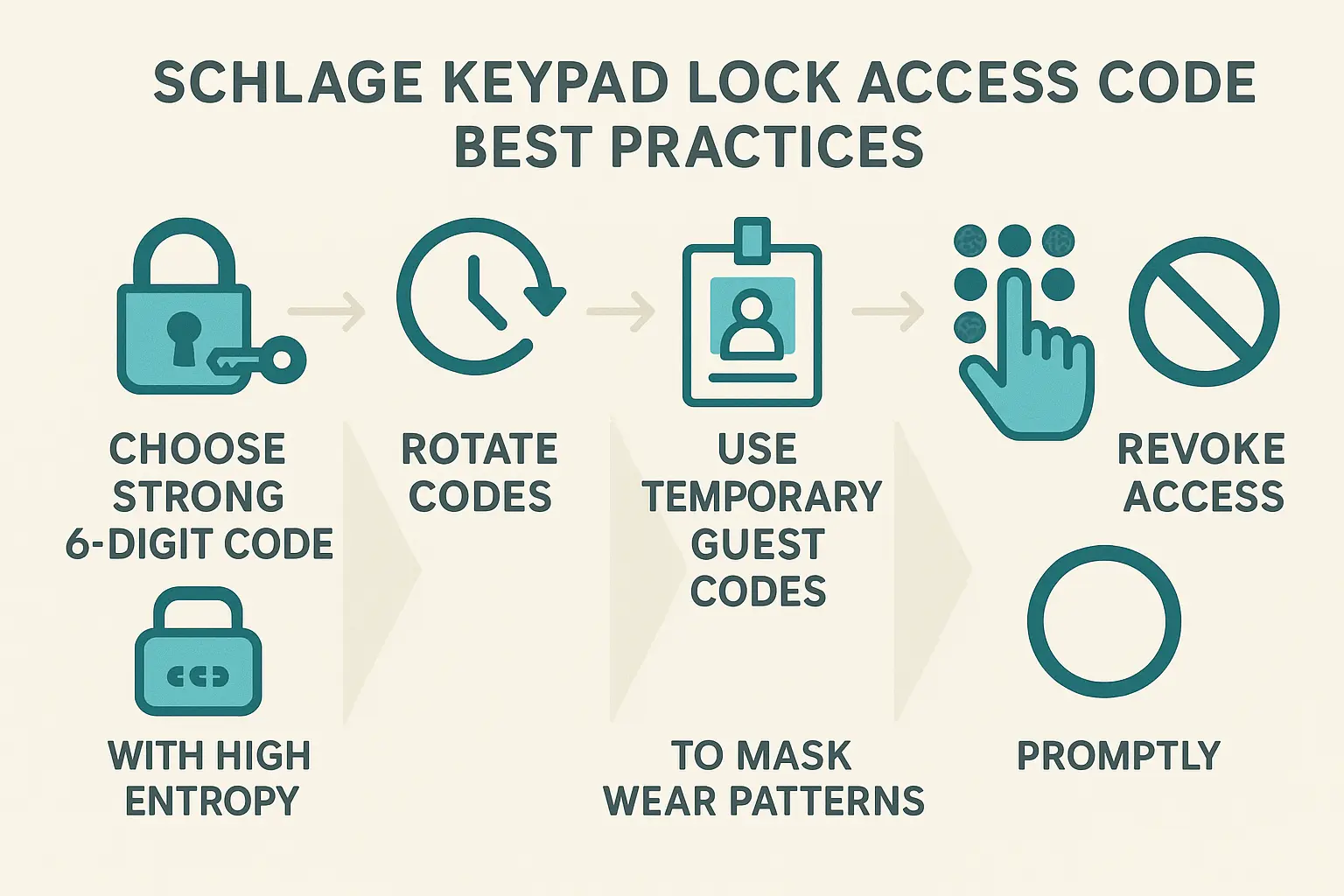 Follow these five best practices to create secure access codes and manage user permissions effectively on your Schlage keypad lock, significantly reducing the risk of unauthorized entry via code guessing or wear-pattern detection.
Installation Precision and Extreme Weather Tolerances
Mechanical fit directly determines the life expectancy of electronic locking components. Exterior Schlage assemblies feature silicone gaskets engineered to maintain structural integrity across weather extremes ranging from -31°F to 150°F (-35°C to 66°C).
However, improper installation remains a primary cause of premature motor and battery failure. During DIY schlage locks installation, avoid using power tools. High-torque drivers easily strip soft brass threads or flex internal mounting plates, misaligning the deadbolt track. Maintain a strict 1/16th-inch clearance margin around the door frame strike plate cutout. If a deadbolt binds against the frame, the internal drive motor draws triple its normal current, rapidly draining battery reserves. Correcting frame alignment is one of the most effective ways to improve home security.
Frequently Asked Questions
Can an intruder guess my access code by looking at wear marks on the keypad?
Physical wear on rubber keypads can reveal frequently used digits over extended periods. You can eliminate this threat by selecting capacitive touchscreen models, setting 6-digit access codes, and routinely rotating user PIN combinations across different numbers.
What happens if the internal battery dies completely while I am away?
Schlage keypad locks maintain a physical key override featuring a 5-pin solid brass cylinder. In addition, the lock provides visual low-battery warnings weeks before power depletes completely, preventing unexpected lockout scenarios.
Is an electronic keypad deadbolt as secure against forced entry as a traditional mechanical lock?
Yes, Schlage keypad deadbolts maintain full ANSI/BHMA Grade 1 structural certifications. They feature identical physical reinforcements to high-grade mechanical deadbolts, including solid brass cylinders, 1-inch bolt throws, and hardened steel anti-saw pins inside the bolt.
Systematic Troubleshooting & Diagnostic Flow Chart
When mechanical or electrical issues arise, utilize this systematic diagnostic process to resolve the problem:
- Symptom: Exterior turnbolt spins freely without extending deadbolt.
- Root Cause: Low system voltage or improper tailpiece spindle engagement.
- Resolution: Install a fresh 9V or 4xAA premium alkaline battery; verify correct tailpiece rotation during assembly.
- Symptom: Red light flashes repeatedly and deadbolt binds during extension.
- Root Cause: Strike plate friction caused by door frame settling or expansion.
- Resolution: Re-center strike plate placement and loosen mounting plate screws slightly to alleviate housing tension.
- Symptom: Keypad becomes unresponsive during winter freezing.
- Root Cause: Voltage drop within standard non-alkaline batteries.
- Resolution: Swap out power sources for high-drain, industrial cold-rated alkaline batteries.
Understanding how do schlage locks work allows property managers to distinguish quickly between mechanical binding issues and electronic power faults.
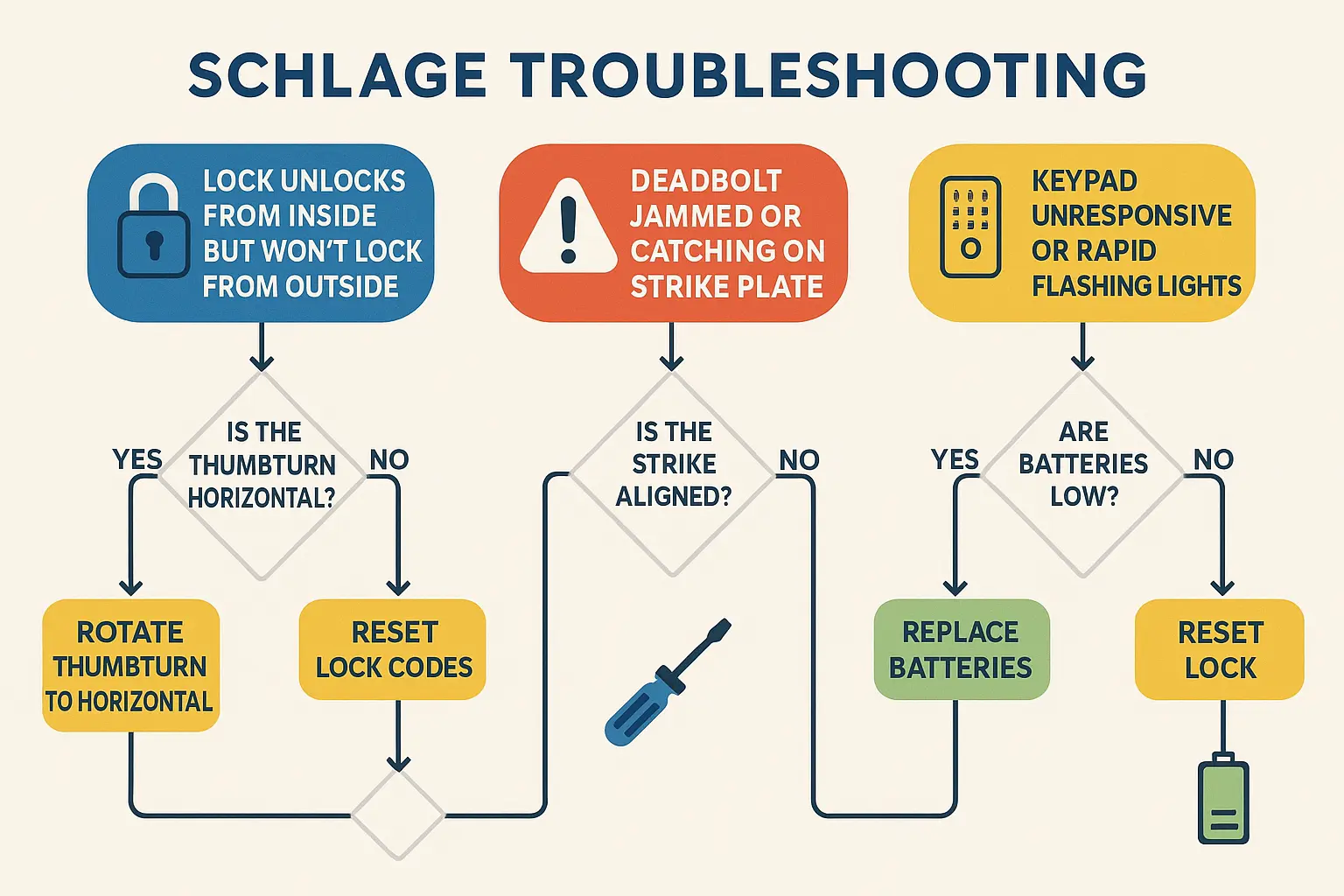 Use this step-by-step flowchart to identify and fix typical Schlage keypad lock issues efficiently, saving time and avoiding locksmith calls by addressing alignment, battery, and code problems systematically.
Need more information? Get a free quote