Managing property entry points poses a real logistical puzzle. Whether you are coordinating care for an aging relative or overseeing a busy construction site, you face the same fundamental challenge: how do you grant reliable, 24/7 access to trusted individuals without compromising physical security? A standard lock box for keys is often the default choice, but not all solutions are engineered equally.
Secure Access Simplified: Key Safe and Lockbox Strategies for Caregivers and Contractors
Published: Oct 2, 2026
The Critical Access Decision Matrix
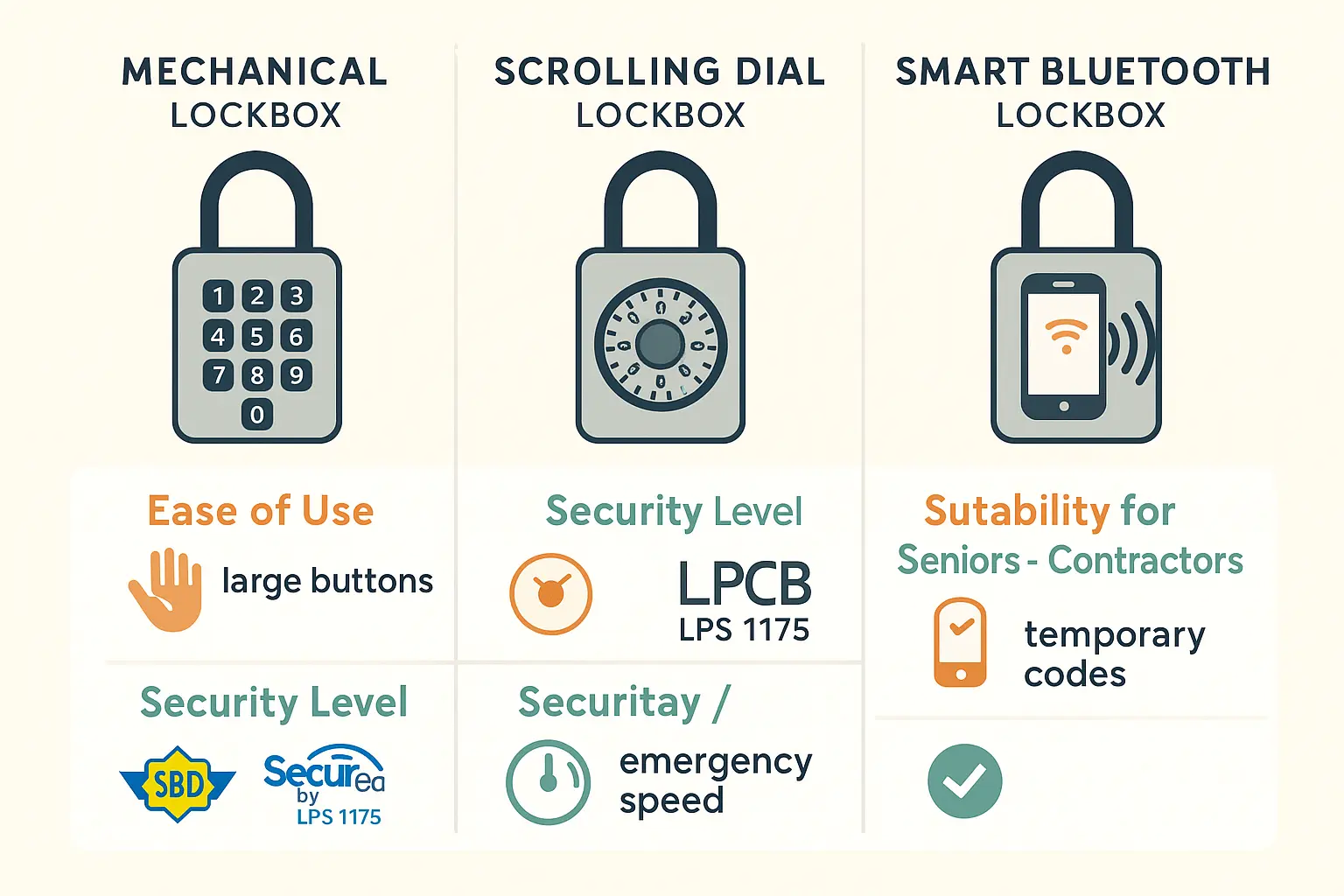
When choosing an entry system, you must weigh mechanical simplicity against digital control. Mechanical push-button models, like those certified to LPS 1175 standards, provide incredible physical attack resistance and do not rely on batteries. In contrast, scrolling dial wheels often present severe barriers for older adults dealing with osteoarthritis, hand tremors, or visual impairments. For dynamic work environments, modern smart Bluetooth options provide remote configuration capabilities, though they require routine battery maintenance and software updates.
Caregiver Blueprint: Safeguarding Aging Parents
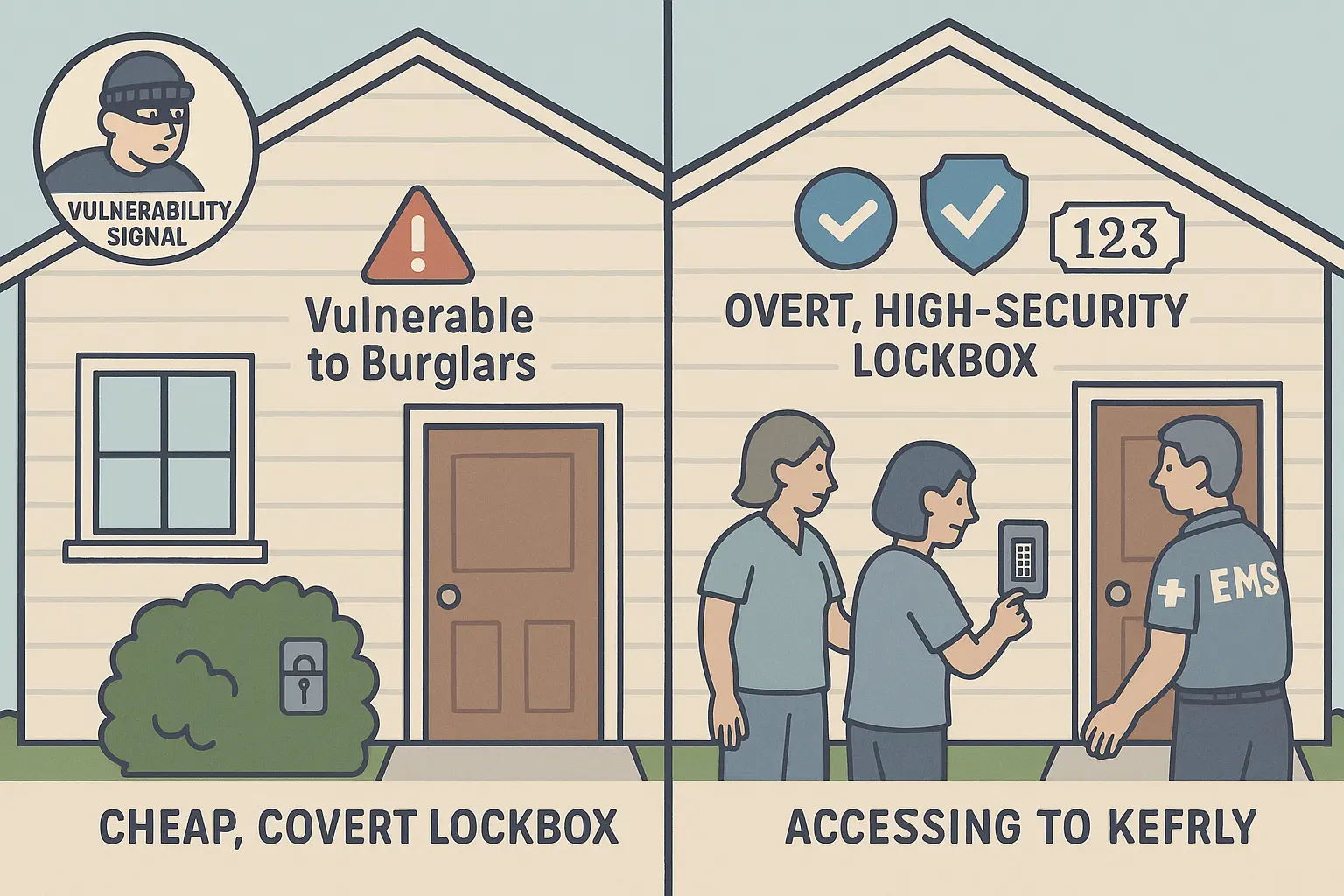
For families managing home health aides or emergency medical services (EMS), immediate home entry can be a matter of life and death. However, caregivers often worry that installing a key lock box for outside use acts as a beacon, signaling that a vulnerable senior lives inside.
Security experts debunk the traditional “covert placement” myth. Tucking a cheap, uncertified lockbox behind a flowerpot or a loose brick gives criminals a quiet, unobserved space to breach it using basic tools. Instead, a certified, robust key safe should be mounted in plain, overt sight where neighbors can see any tampering. If aesthetic discretion is necessary, consider low-profile designs that mount behind decorative house plaques or utility boxes that blend seamlessly into the building’s facade.
Furthermore, the logistical loop must be completed by registering your lockbox code directly with your local 911 dispatch. This ensures EMS personnel can access the key instantly during an emergency, saving both critical response time and your front door from being kicked in. Keep in mind that tight storm door clearances (frequently under 2.5 inches) can restrict mounting options, requiring smart, lateral jamb placement.
Contractor Protocol: Site Access and Control
For commercial projects, physical keys pose an inherent security threat: duplication. If a subcontractor takes a physical key off-site to a local hardware store, they can easily create an unauthorized copy and return later.
To eliminate this risk, many general contractors transition to digital systems that generate temporary smart lock codes. When paired with commercial locksmith services, managers can establish strict entry protocols. High-performance electronic keyboxes allow administrators to issue time-restricted, single-use PINs that expire immediately after use. This creates a detailed audit trail of who accessed the property and when. On busy job sites, look for heavy-duty metal casings with protective dust shields to prevent paint, sawdust, and grit from jamming the internal lock gears.
Frequently Asked Questions
How does an outdoor key safe work in extreme winter conditions?
Quality key safes use weather-resistant rubber covers and corrosion-resistant alloys. If you live in an area prone to freezing temperatures, choose mechanical push-button models over digital options, as lithium batteries can drain rapidly in severe cold. Applying a graphite-based dry lubricant annually will keep the internal mechanical gears moving smoothly.
Can a physical lockbox invalidate my homeowner's insurance policy?
Yes, if you use a cheap, uncertified shackle lockbox hung over a door handle, some insurance providers may deem it a security risk and invalidate burglary claims. To maintain coverage, choose a key safe with official security certifications (like LPS 1175 or Secured by Design) and have it professionally anchored directly into masonry.
How do I share temporary access codes safely with rotating staff?
Using smart keyboxes allows you to generate time-restricted PINs through a secure mobile app. You can assign specific window times for housekeepers, care providers, or trade contractors, which automatically deactivate once their scheduled shift ends, preventing unauthorized late-night access.
Step-by-Step Masonry Installation and Compliance
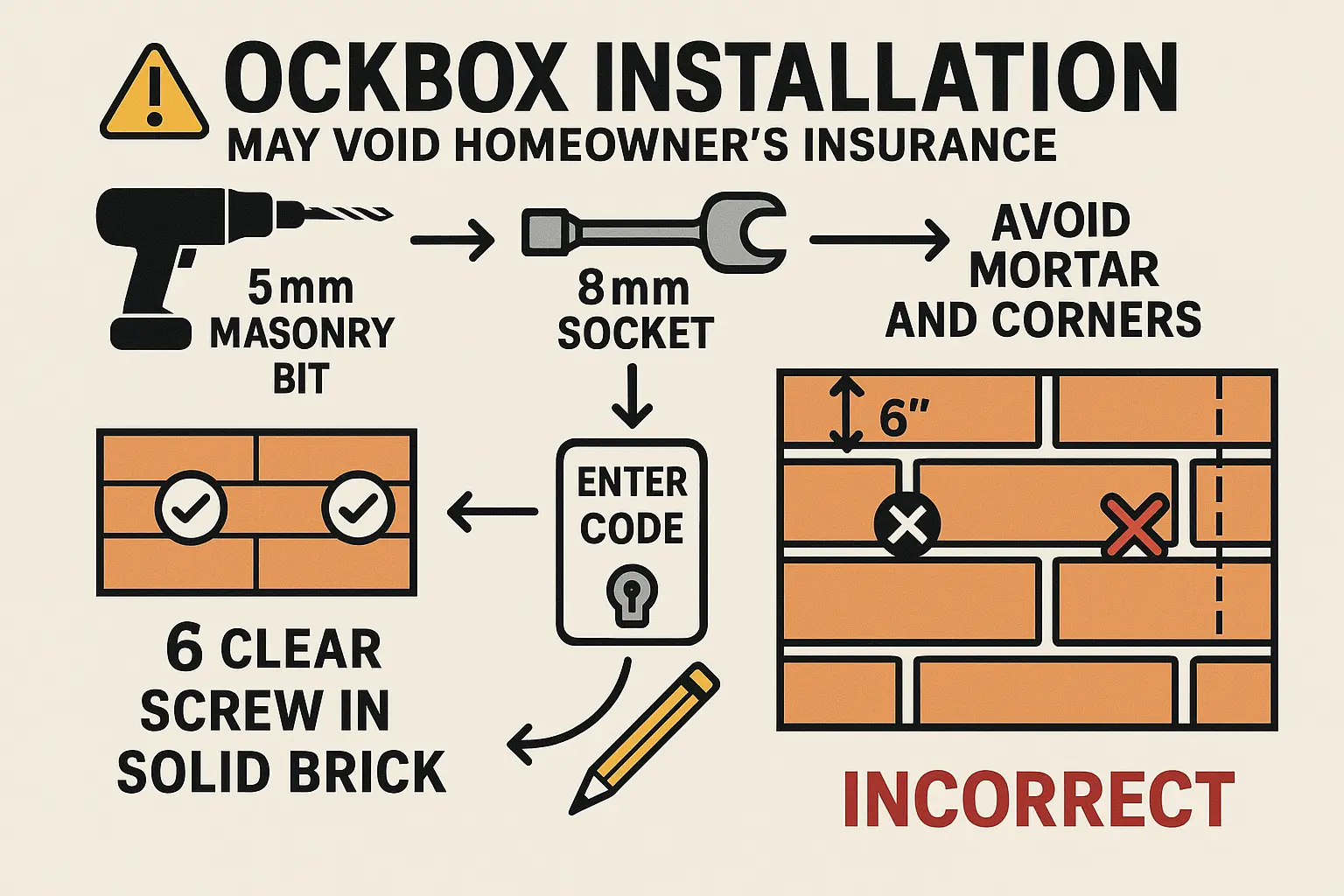
A key safe is only as strong as its anchor. To prevent intruders from prying the safe off the wall with a crowbar, you must install it directly into solid masonry—never into soft mortar lines.
Before beginning, secure a hammer drill, a 5mm masonry drill bit, an 8mm socket attachment, a level, and a pencil. Always program your access code and test the locking mechanism several times before anchoring the safe to the wall.
Follow the “6-inch rule”: mount the safe at least 6 inches (15cm) away from wall corners or joints to avoid fracturing the structural integrity of the brickwork. Use self-tapping masonry screws driven directly into the brick without rawl plugs. If you are unsure of your wall’s integrity or require expert guidance on alternative access systems, consulting a professional for a how to install keyless entry setup or a certified safe locksmith ensures your installation aligns with local security standards.
Need more information? Get a free quote