Commercial Keypad Locks: Choosing Grade 1 Hardware for Busy Doors


Published: Sep 30, 2026

For commercial facility managers, selecting door hardware is not just a cosmetic decision—it is a balancing act between durability, regulatory compliance, and operational efficiency. When high-traffic doors experience constant daily use, standard consumer-grade smart locks quickly deteriorate. Selecting the wrong hardware results in premature wear, safety liabilities, and costly emergency service calls.

To secure busy corridors, main office entrances, and shared utility rooms, understanding the engineering differences between residential and commercial hardware is essential. If you are questioning whether to implement a physical or digital key system, evaluating if is keyless entry safe and reliable begins with selecting Grade 1 hardware specifically built to withstand physical demands.

The Definitive ANSI/BHMA Testing Matrix


Understanding official testing standards is critical for choosing the right types of commercial door locks. While some distributors mistakenly state that Grade 1 cylindrical locks are only tested to 250,000 cycles, the Builders Hardware Manufacturers Association (BHMA) and ANSI dictate a much higher standard. Under ANSI/BHMA A156.2, a true Grade 1 cylindrical lock must survive a grueling 1,000,000 cycles. Grade 1 auxiliary deadbolts (A156.5) require 250,000 cycles, while Grade 1 mortise locks (A156.13) also demand 1,000,000 cycles. Additionally, Grade 1 hardware must survive extreme physical testing, including 10 severe blows from a 75 ft-lb ram and 450 in-lbs of twisting force applied directly to the lever.

When we analyze the math of wear, a busy door averaging 300 cycles per day will quickly expose cheap components:

  • Grade 2 Cylindrical Lock (400,000 cycle limit): Will experience wear-out failure in approximately 3.6 years.
  • Grade 1 Cylindrical Lock (1,000,000 cycle limit): Will perform reliably for 9.1 years before fatigue limits are met.

ANSI/BHMA Durability ChartThis chart clarifies the exact durability testing standards for commercial keypad lock grades, correcting common industry misunderstandings and establishing a technical foundation for choosing the right lock.

Form Factors and Physical Security


The physical chassis determines how well a lock resists wear. Cylindrical options are cost-effective and easy to install, but high-frequency doors often benefit from heavy-duty mortise bodies or exit device trims.

To protect these units from structural wear or malicious damage, look for hardware featuring clutched or “free-wheeling” exterior levers (such as Vandlgard). When locked, a clutched lever rotates freely up and down without engaging the internal latch mechanism. This prevents vandals from breaking internal hubs by hanging or stomping on the handle. To extend your hardware’s lifespan further, routine commercial lock maintenance ensures door alignment issues are caught before they strain the latch.

Electronic & Code Management


Choosing how to manage access across your facility influences both labor costs and operational reliability. Keypad locks generally fall into three main categories within broader types of access control systems:

  • Offline Standalone Locks (e.g., Alarm Lock Trilogy DL2700): Programmed directly on the keypad. These robust units operate without networks, maximizing battery life. A set of 5 AA batteries can power up to 200,000 cycles—often lasting up to 5 years. The downside is high administrative effort, as codes must be updated manually at each door.
  • Smart Bluetooth & Wi-Fi Managed Locks: These offer remote programming and detailed audit trails. However, native Wi-Fi connections are highly power-hungry. On a busy door with over 100 cycles per day, a native Wi-Fi connection can drain batteries in 3 to 6 months.
  • Gateway-Bridged Networks: By utilizing Z-Wave, Zigbee, or Bluetooth connections routed through a localized Ethernet gateway, you achieve remote real-time control while preserving battery life on high-traffic entryways.

Lock Management FlowchartThis flowchart guides buyers through choosing the right commercial keypad lock management system, making complex trade-offs in power consumption and administrative effort simple to grasp.

Compliance and Life Safety Regulations


Commercial installations must satisfy strict building codes. First, ADA Section 404.2.7 requires that operable hardware must not require tight grasping, pinching, or twisting of the wrist, demanding less than 5 lbs of operating force. Knobs are prohibited; levers are mandatory.

Second, NFPA 101 (Life Safety Code) requires single-motion egress: turning the inner handle must immediately retract both latch and deadbolt to guarantee quick escape. Lastly, fire code door locks on fire-rated assemblies must hold a UL 10C Positive Pressure Listing to prevent heat and smoke from bypassing the door during an emergency.

Frequently Asked Questions


Can I use a high-end residential smart lock for a light-commercial office door?

No. Residential locks are rated to lower cycle counts and lack the structural reinforcements required for commercial egress routes. They also violate fire-rated door assemblies because they rarely carry the necessary UL 10C Positive Pressure Listing.

What is the difference between SFIC and LFIC systems on commercial keypads?

SFIC (Small Format Interchangeable Core) utilizes a standardized size across multiple brands, enabling instant mechanical core removal with a control key. LFIC (Large Format) is brand-specific and larger, typically requiring more labor to integrate across mixed-brand systems.

How do we prevent lockouts when the keypad batteries die?

Grade 1 locks feature dual fail-safes: a physical mechanical key override (often utilizing an SFIC cylinder) and external 9V backup power pins. Touching a standard 9V battery to these contacts provides instant temporary power to enter your digital code.

Power Fail-Safes and Interchangeable Core (IC) Systems


A major operational concern for facility managers is battery failure. High-quality commercial keypads solve this with physical and electronic fail-safes. Look for models featuring external 9V battery terminal jump-contacts on the outer face, allowing temporary power to be applied externally to enter a valid code.

Additionally, choosing locks with Small Format Interchangeable Core (SFIC) mechanical key overrides provides unparalleled security flexibility. Standardizing on an SFIC system (such as the Best “A” keyway) allows your team to perform a manual commercial lock replacement or rekeying in under 5 seconds using a single control key, without removing the lock body from the door.

Security Features InfographicThis infographic visually anchors the critical security features that protect commercial keypad locks against vandalism and power failures, aiding quick recall of essential buying criteria.
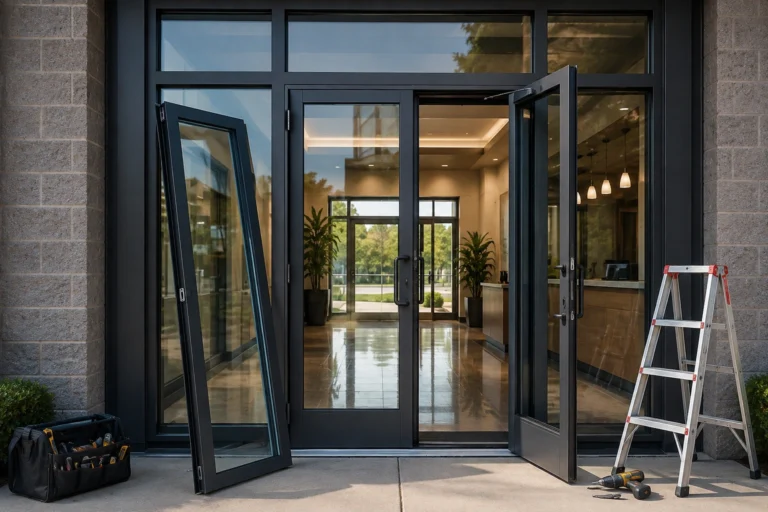
For outdoor installations, check for a minimum NEMA 3R weather rating to ensure electronic components survive extreme rain, ice, and dust. Partnering with a professional commercial locksmith service ensures your Grade 1 electronic keypads are perfectly aligned, code-compliant, and built to last.

Need more information? Get a free quote

Call us now

Get A Free Call From Our Experts!

Floating Button Form