Garage Tool Equipment Organization Blueprint


Published: Aug 25, 2026

Modern residential garages have evolved from simple vehicle parking bays into highly complex, multi-functional spaces. According to a national survey by Stanley Black & Decker, 53% of U.S. homeowners actively use their home workshop or garage for DIY projects. This shift has driven a massive demand for smart spatial planning. Market research from Grand View Research shows the global garage organization and storage market was valued at $28.2 billion in 2025 and is projected to reach $55.0 billion by 2033, registering a healthy compound annual growth rate (CAGR) of 7.4%. Additionally, The Freedonia Group projects that sales of residential garage organization products in the US will reach $3.8 billion by 2028.

To transform your garage from a cluttered storage sink into a highly efficient, professional-grade workspace, you need more than simple storage tips. You need a systematic layout strategy that balances accessibility, physical protection, and safety.
The Golden Rule of Workshop Layout: The 3-Tier Reach Zone Framework


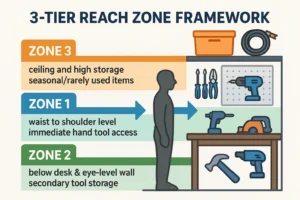
3-tier reach zone frame

An ergonomic workspace minimizes wasted motion and physical fatigue. By categorizing your gear into three distinct physiological “Reach Zones,” you can optimize efficiency and keep your workflow fluid.

  • Zone 1: Primary Work-Circle (Waist to Shoulder): This is your high-value physical real estate. Reserved for your most frequently used hand tools—such as screwdrivers, pliers, utility knives, and measuring tapes—placed within immediate arm’s reach.
  • Zone 2: Secondary Work-Circle (Below Desk & Eye-Level Wall): Reserved for cased power tools, protective gear, and diagnostic instruments. These are tools you use during almost every project but don’t need in hand constantly.
  • Zone 3: Tertiary Storage (Ceiling, High Walls, & Deep Drawers): Reserved for seasonal items, bulk materials, and heavy, infrequently used equipment.

Innovative Storage Ideas for Hand Tools (Maximizing Density & Speed)


To organize hand tools effectively, you must choose the right mounting substrate. The table below outlines the trade-offs of the most popular vertical storage systems:

Criteria Pegboard (Metal or Wood) Slatwall Systems French Cleat Walls (DIY)
Material Cost Low High Medium (Timber + Labor)
Load Capacity Low to Medium (approx. 20 lbs/sq ft) High (up to 75 lbs/sq ft) Very High (dependent on fasteners)
Flexibility Medium (hook placement is fixed) High (easy-slide commercial hooks) High (customizable wooden holders)
Installation Easy Moderate Advanced

For small, high-density components like sockets, wrenches, and driver bits, use modular organization systems. Implement magnetic socket trays, labeled plastic compartment dividers, and custom dual-color foam liners (Kaizen foam) in your toolbox drawers to spot missing items instantly.

For valuable specialized tools, utilize a commercial storage cabinet with locking doors to keep tools safe from theft and moisture. If you are retrofitting existing cabinets, learning how to install cam lock systems will provide an affordable and reliable way to secure your equipment.


Power Tool Storage and Charging Station Solutions


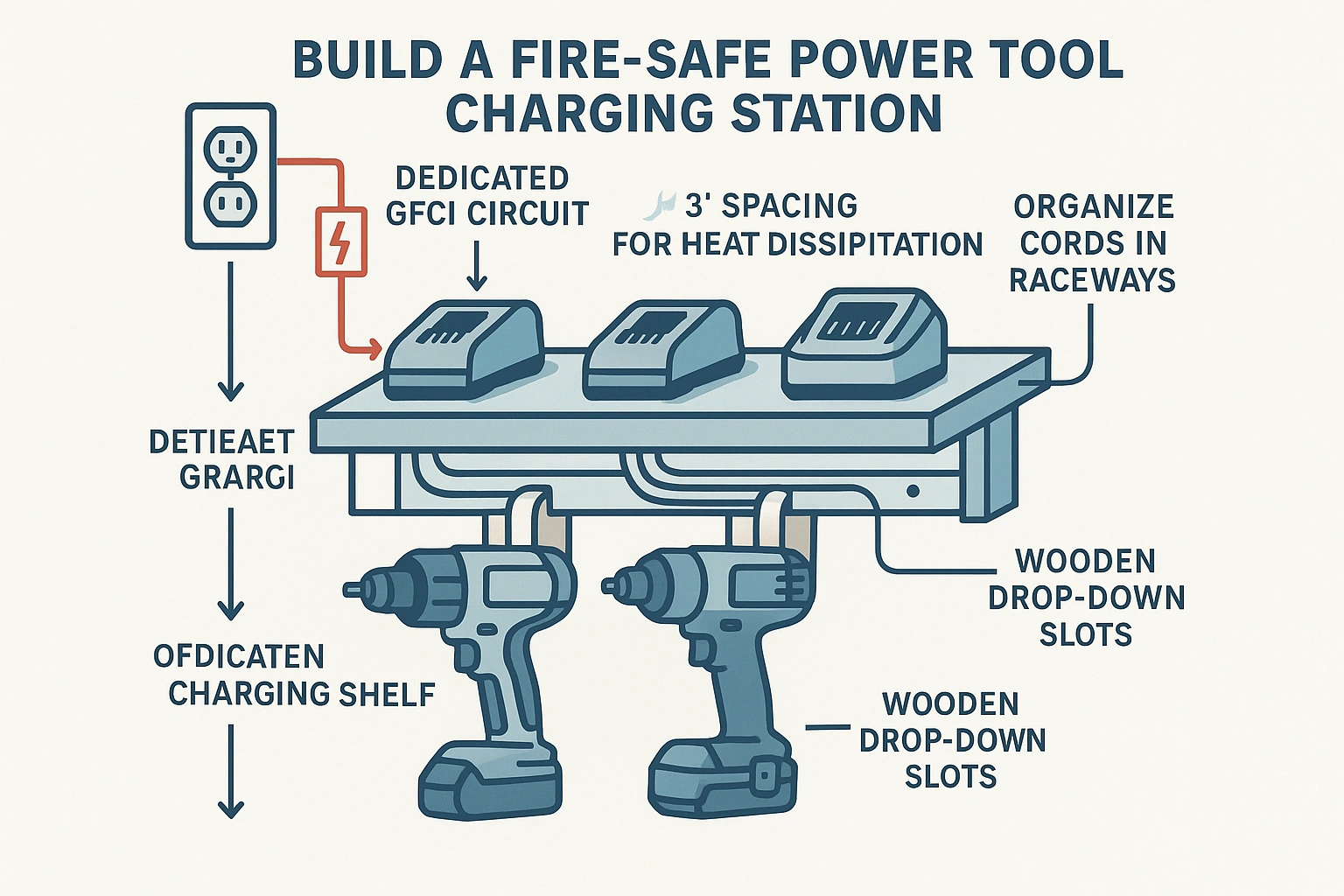
build a free-safe power charging station


Cordless power tools require dedicated infrastructure. Throwing chargers onto a random extension cord is a safety hazard and degrades battery life.

A professional power tool station requires a dedicated 20-amp GFCI-protected electrical circuit to handle multiple rapid-charger units simultaneously. Position battery chargers on open shelves spaced at least 3 inches apart to facilitate natural convection cooling, as heat is the primary enemy of lithium-ion battery longevity. Underneath the shelf, integrate custom drop-down hanging slots to cradle drills, drivers, and grinders by their handles, keeping the workspace clear.


Organizing Automotive Repair and Maintenance Equipment


Automotive tools present unique storage challenges due to their weight and the hazardous liquids involved.

  • Fluid & Chemical Containment: Store motor oils, brake cleaners, paints, and coolants in dedicated, ventilated steel cabinets. Always use chemical-resistant plastic drip trays to catch leaks before they damage your garage floor.
  • Heavy Tool Anchoring: Floor jacks, heavy-duty jack stands, and creeper boards should be hung on heavy-duty, stud-mounted steel utility hooks rated for at least twice the weight of the tool.
  • Pneumatic Control: Mount an overhead retractable hose reel to eliminate tripping hazards and keep air lines clean. For valuable mobile diagnostic tools or compressors parked in shared areas, using a heavy-duty alarm padlock offers an active deterrent against unauthorized use or theft.

Best Practices for Storing Large Workshop Machinery


reccomended clearence space

Large shop machinery like table saws, bandsaws, and jointer-planers must be organized to allow for maximum flexibility within a standard garage footprint.

First, equip every major stationary tool with heavy-duty locking swivel casters. This allows you to roll heavy machinery to the center of the garage for long stock cuts, and tuck them back against the wall to park vehicles. Second, implement a structured dust extraction layout. Keep run paths short and use smooth-walled PVC piping instead of ribbed corrugated hoses, which drop air velocity and collect static charges.


Environmental Preservation: Tool Rust Prevention and Security


Organizing your workshop is only half the battle; you must also protect your investments from moisture and security threats.

To prevent cast-iron tool beds and carbon steel hand tools from rusting, maintain relative humidity (RH) inside the garage below 50%. This can be achieved through a commercial dehumidifier, proper wall vapor barriers, and mini-split climate control systems.

Finally, a highly organized workshop is an attractive target for burglars. Ensure your primary access points are secured. Upgrading your entry doors with grade-1 high security door locks and learning how to lock a garage door using physical side locks or smart automatic lock bolts will protect your workshop assets.


Frequently Asked Questions


What is the best way to prevent tools from rusting in an unconditioned garage?

Keep the relative humidity below 50% using a dehumidifier. Wipe down steel surfaces with a thin coat of corrosion-inhibiting oil, and store highly sensitive instruments in sealed plastic cases with silica gel packets.

How do I determine the load capacity of my garage walls for tool storage?

Always fasten heavy racks, cabinet rails, and heavy-duty hooks directly into structural wall studs using structural wood screws, rather than drywall anchors. Standard wood studs can easily support heavy loads when weight is distributed evenly.

How can I secure my high-value tools without making them inaccessible?

Use modular locking storage cabinets or rolling tool chests with master key systems. This allows you to unlock your primary workspaces during active projects while ensuring everything is locked up securely when you are away.


Securing Your Investment


An organized garage workshop increases productivity, safety, and tool longevity. However, physical organization is only as good as your perimeter security. If you want to evaluate your garage’s entry points, padlock systems, and cabinet lock security, schedule a professional home security audit with a licensed security specialist to ensure your valuable tools remain exactly where they belong.

Need more information? Get a free quote

Call us now

Get A Free Call From Our Experts!

Floating Button Form