DIY Sliding Glass Door Lock Installation: Guides, Tools & Warnings


Published: Sep 16, 2026

According to the FBI Uniform Crime Report, roughly 21% of residential burglaries occur through first-floor sliding glass doors. Their hidden positioning and notoriously weak factory latches—which are often simple, friction-reliant clasps easily bypassed with a flathead screwdriver in under ten seconds—make them primary targets for opportunistic intruders.

Security.org reports that visible, secondary physical locking mechanisms reduce attempted patio break-ins by 44%. To protect your home, you must transition from factory clasps to a layered security setup. Whether you are a renter needing damage-free barriers or a homeowner ready for heavy-duty upgrades, this guide outlines how to evaluate, troubleshoot, and install patio locks safely.
Diagnostic Step Zero: Is Your Lock Broken, or is Your Door Sagging?


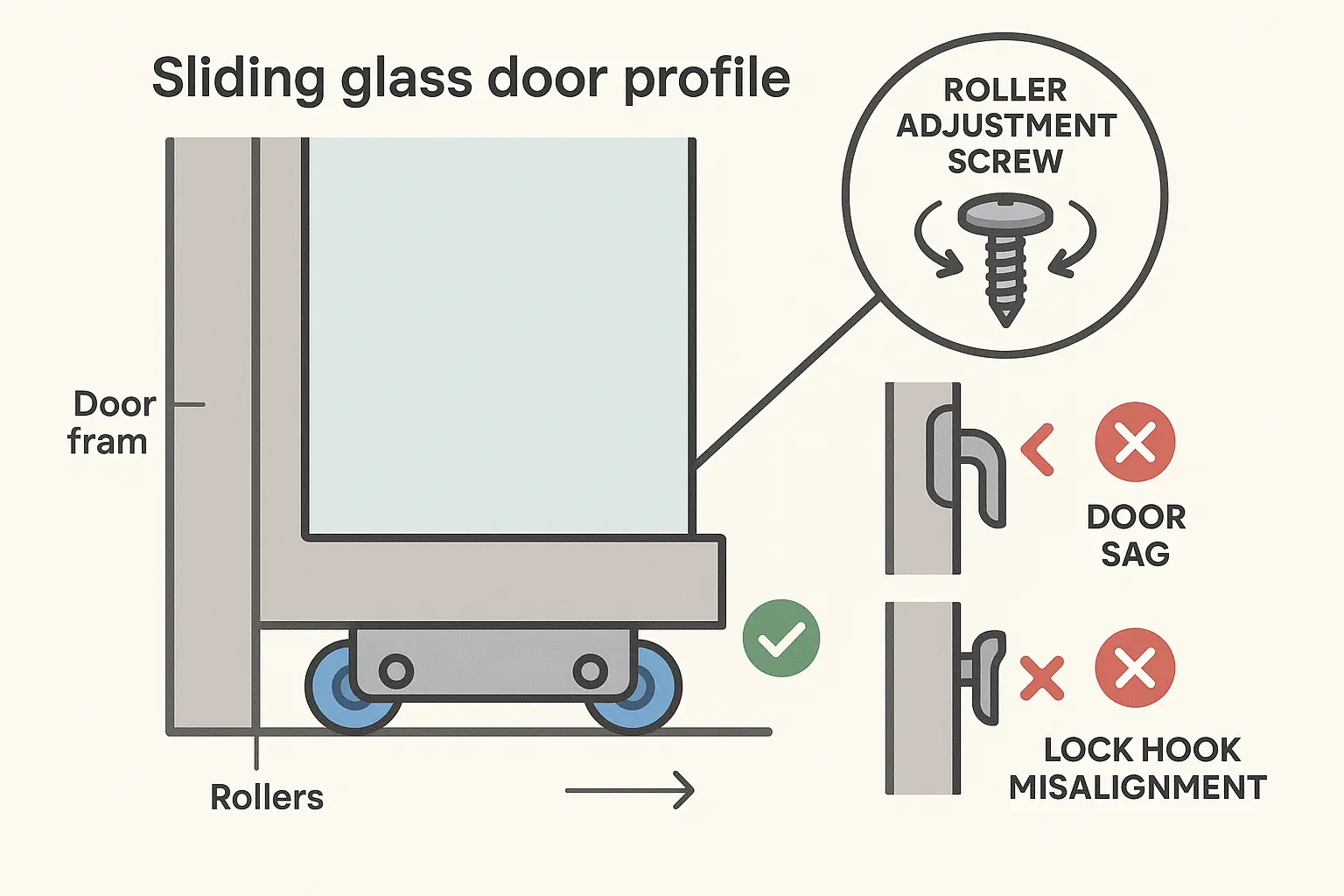
Before purchasing new hardware, perform a quick mechanical check. Almost 40% of sliding door lock failures are actually caused by worn-out rollers or misaligned door frames rather than a faulty lock cylinder. Over time, heavy glass doors sag, preventing the latch hook from aligning with the frame keeper.

To diagnose this, inspect the bottom corners of your door sash. Locate the small roller adjustment screws near the bottom edge. Using a screwdriver, turn these screws clockwise to raise the door or counterclockwise to lower it until the door rests completely level.

Illustration of adjusting roller screws

If adjusting the rollers does not restore alignment, you may need a dedicated sliding glass door lock repair to address deep-seated mechanical or track damage.

Choosing the Right Aftermarket Lock


If your alignment is correct but your security is still lacking, choosing the right aftermarket upgrade depends on your living situation and security goals. Renters require zero-damage solutions, while homeowners can opt for permanent, high-security structural additions to improve sliding door security.

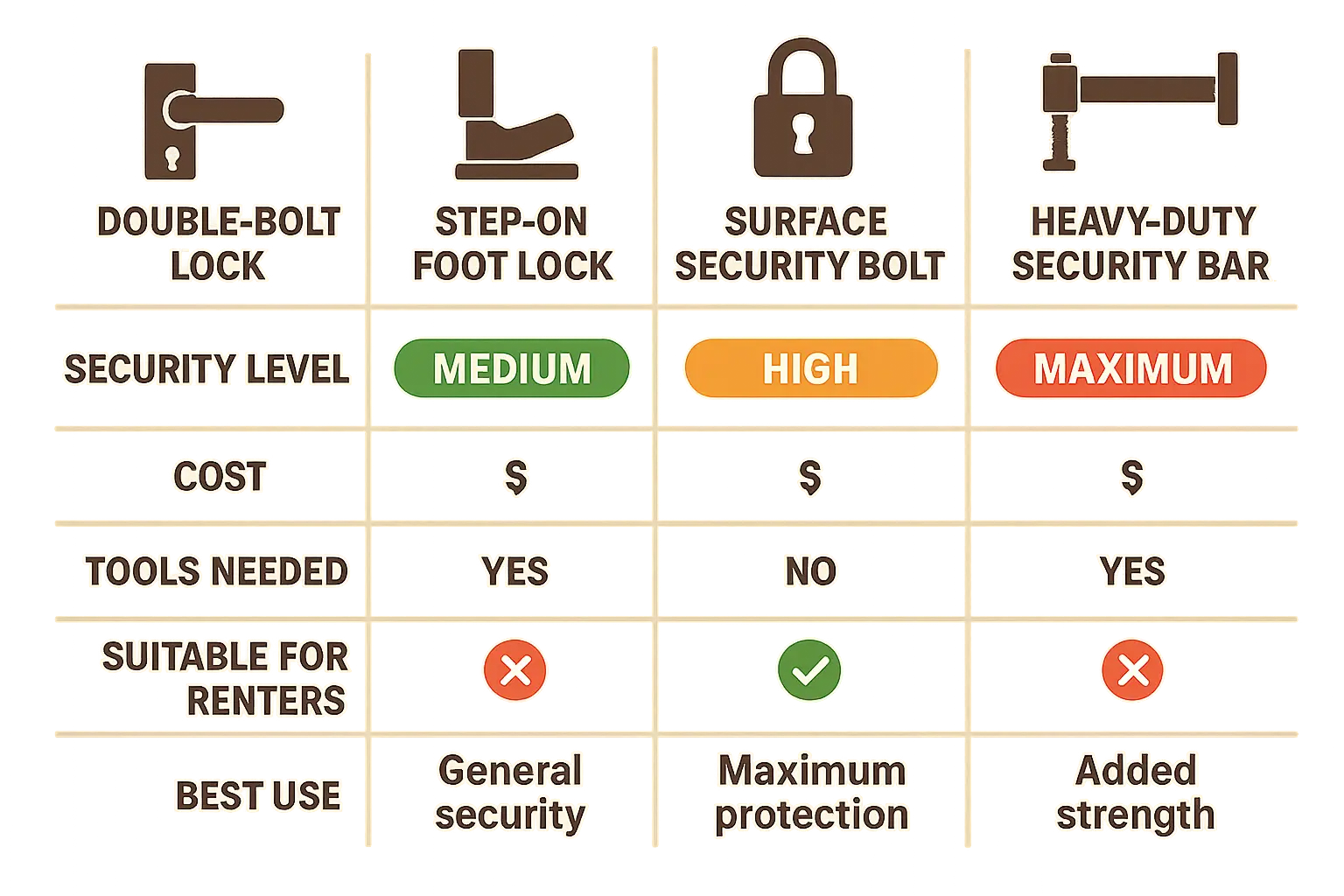
Lock Category Security Level Est. Cost Tools Needed Best For Renter Safe?
Double-Bolt Lock (e.g., LockiT!) High $25 – $35 Power Drill, Metal Punch Homeowners, Toddler Proofing No (Requires drilling)
Step-On Foot Lock (e.g., Prime-Line) Medium-High $10 – $15 Drill, Screwdriver Quick, daily foot-actuated security No (Requires frame screws)
Surface Security Bolt (e.g., Toledo TDP02) Maximum $20 – $30 Drill, Metal Punch, Level Heavy-duty, key-locked protection No (Requires deep drilling)
Heavy-Duty Security Bar High $15 – $40 None (Tension-fit) Renters, quick vacation lockdowns Yes (100% Damage-Free)

If you are renting, a tension-fit security bar or track clamps allow you to learn how to secure sliding doors effectively without violating your lease terms or losing your security deposit.

Step-by-Step DIY Installation Blueprints


Ready to proceed with an upgrade? Below are the installation methods for the most common permanent security lock upgrades.

Visual comparison of popular sliding door locks

Option A: Replacing an Internal Mortise Latch

  1. Unscrew the interior handle set and pull the old latch out of the door pocket.
  2. Ensure you have an exact-match replacement by measuring the screw-hole spacing (typically 3-15/16 inches).
  3. Insert the new mortise lock, tighten the mounting screws, and reinstall the handle.
  4. If your lock remains loose, follow a guide on how to change a sliding door lock to resolve cylinder alignment issues.

Option B: Installing a Keyed Surface-Mount Bolt (e.g., Toledo TDP02-S)

  1. Position the lock body on the interior frame of the sliding panel.
  2. Mark the mounting holes and the deadbolt entry point on the fixed door frame.
  3. Use a center punch to prevent your drill bit from wandering on vinyl or aluminum.
  4. Drill the pilot holes, mount the lock body, and install the keeper bracket on the opposite frame. Learn the standard patio door lock installation steps if you encounter non-standard frame sashes.

Safety Protocols: The "Never-Drill" Glass Zone


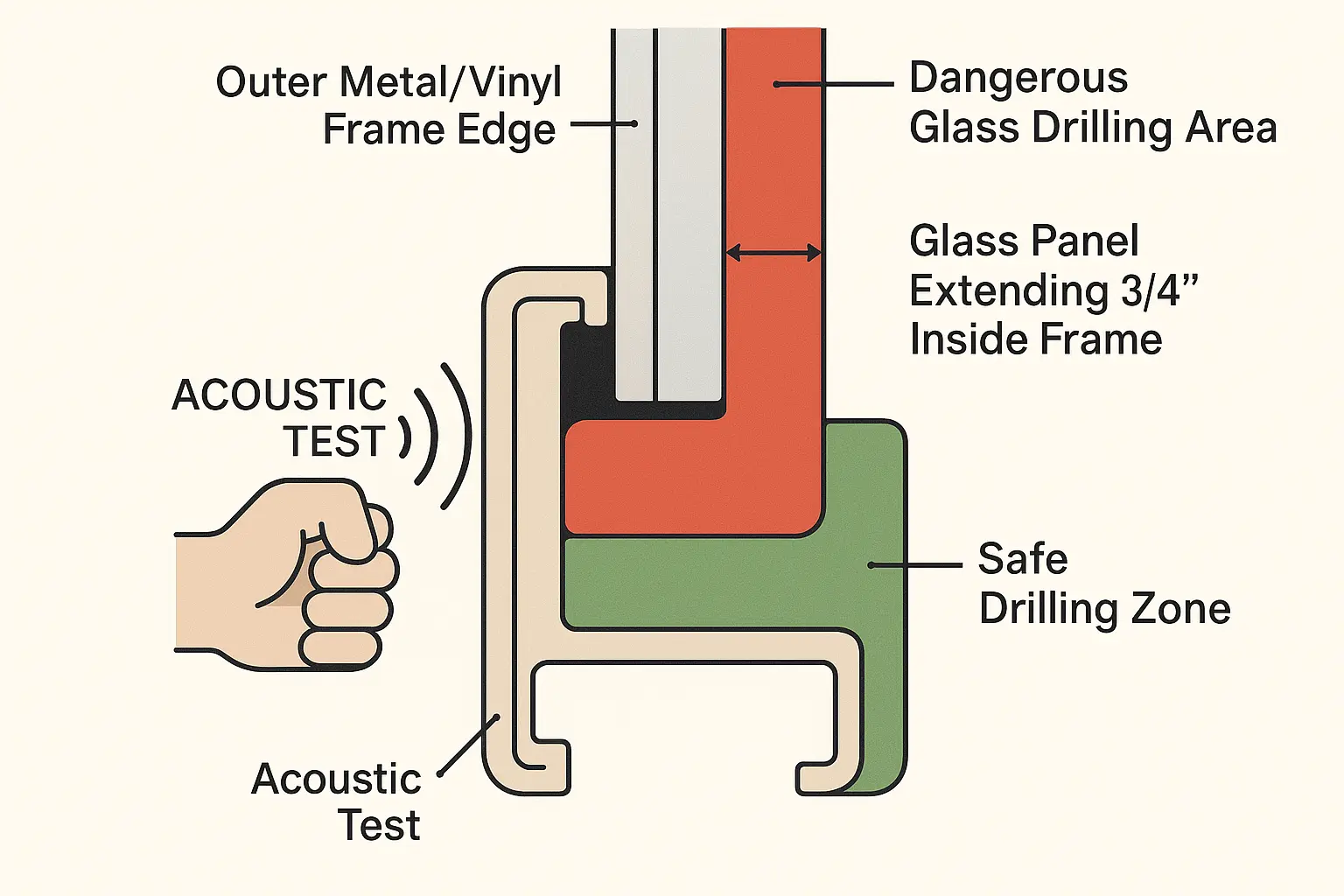
The single most costly DIY mistake is shattering the tempered glass hidden inside your door’s frame. In sliding doors, the glass pane actually extends up to 3/4 of an inch inside the metal or vinyl sash. Drilling even a fraction of an inch too deep or too far inward will instantly shatter the entire pane.

Visual guide to safe drilling zones

To avoid this:

  • The Knuckle Tap Test: Gently tap the frame with your knuckles starting from the center of the glass and moving outward. The sound will change from a hollow ring to a solid thud once you transition past the hidden edge of the glass.
  • Drill Stops: Always use a physical drill stop or wrap masking tape around your drill bit to limit your drilling depth to no more than 1/2 inch.

Fire Safety Codes and Emergency Egress Compliance


Physical security must never compromise life safety. The National Fire Protection Association (NFPA 101 Life Safety Code) requires that all doors along an emergency escape route must be easily openable from the inside without keys, tools, or special knowledge.

If you install a double-keyed surface-mount bolt (which requires a physical key to unlock from both inside and outside), you must keep the key inserted in the interior cylinder whenever the home is occupied. In a fire, dense smoke makes searching for a misplaced key deadly. For optimal safety, opt for heavy-duty thumb-turn or foot-operated locks that maintain secure, keyless egress.

Frequently Asked Questions


Can I install a smart lock on my sliding glass door?

While traditional smart locks are designed for standard swing doors, specialized slimline smart locks and automated latch systems designed for sliding glass doors do exist. However, because sliding doors require a precise interlocking pull rather than a simple deadbolt throw, professional installation is highly recommended to ensure the electronic sensors align perfectly with the physical latch.

What is the strongest type of sliding glass door lock?

A dual-bolt lock or a heavy-duty surface-mounted security bolt is generally considered the strongest secondary option. These locks physically lock the sliding panel directly to the structural metal frame of the stationary door, making it nearly impossible for an intruder to lift the door off its tracks or pry it open.

Will drilling into my sliding door frame void my warranty?

Yes, drilling unauthorized holes into the vinyl or aluminum sash of your door frame will almost certainly void your manufacturer's structural and draft-resistance warranties. If your doors are still under warranty, opt for non-destructive, tension-fit security bars or track clamps to preserve your coverage.

When to Call a Professional Locksmith


While basic surface bolts and security bars are highly manageable DIY projects, complex scenarios require professional training and specialized tools. You should call in a certified locksmith if you encounter:

  • Warped or Misaligned Metal Frames: Standard DIY drills cannot easily square a bent commercial-grade aluminum frame.
  • Dual-Point Mortise Configurations: These heavy-duty systems require precise mortising inside the sash pocket where a fraction of a millimeter off-alignment will ruin the mechanism.
  • Persistent Lock Failures: If simple adjustments fail, you likely need a professional patio door lock repair to rebuild the lock cavity.

With over 35 years of industry experience across multiple states, the fully equipped mobile units of Sure Lock & Key are available 24/7 to secure your home. Whether you need a simple lock change or a high-security upgrade, we deliver reliable, prompt, and precise solutions.

Need more information? Get a free quote

Call us now

Get A Free Call From Our Experts!

Floating Button Form