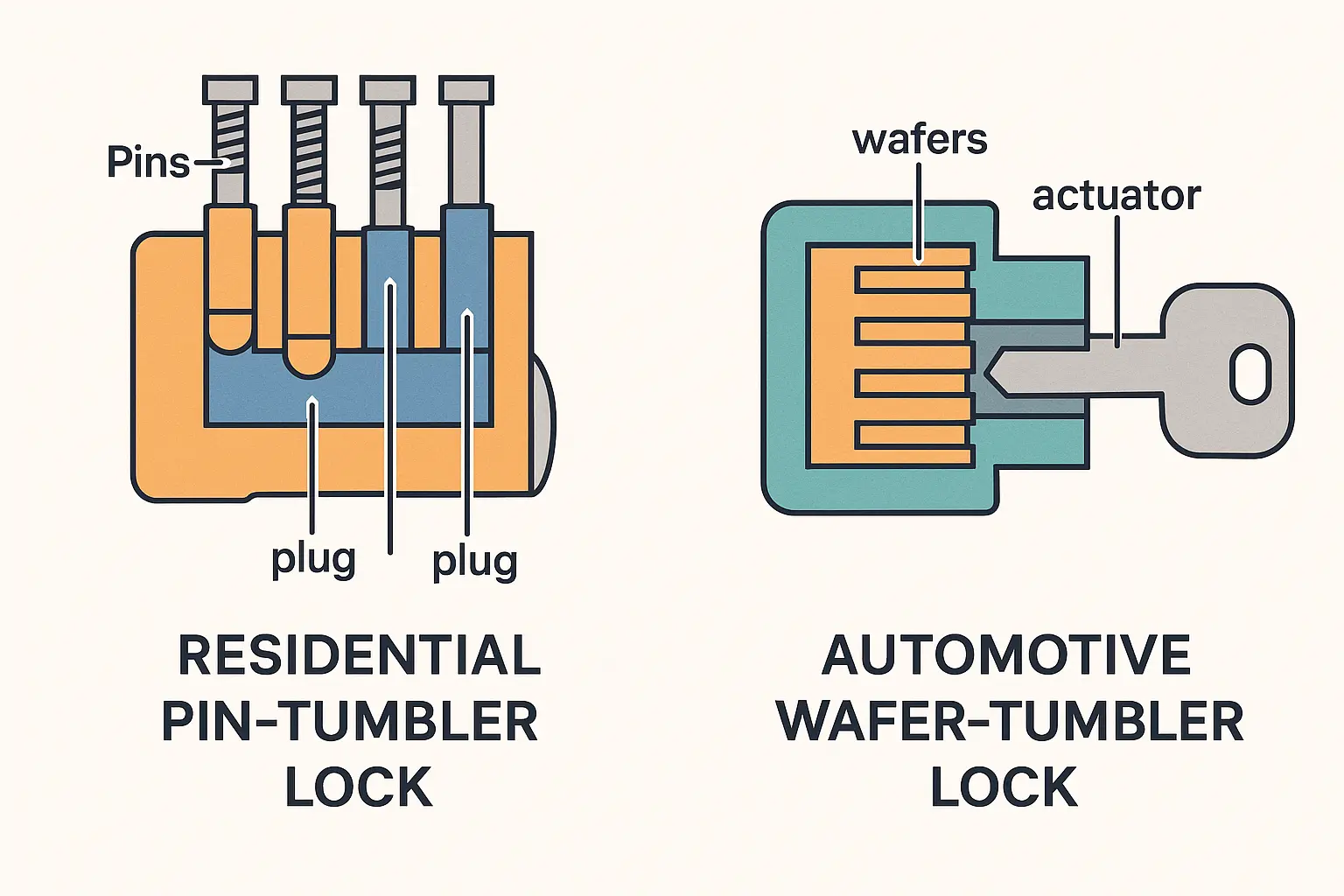
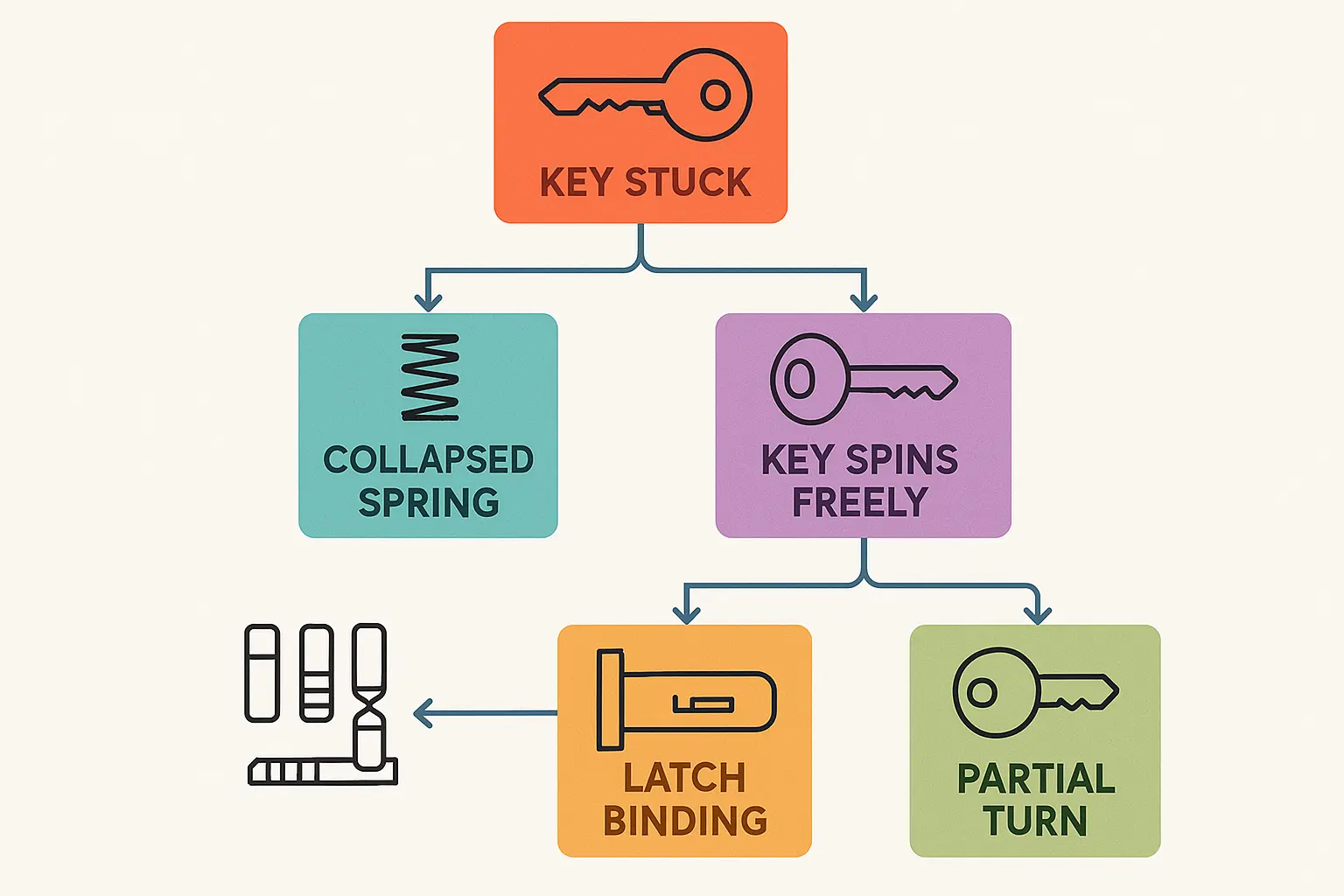
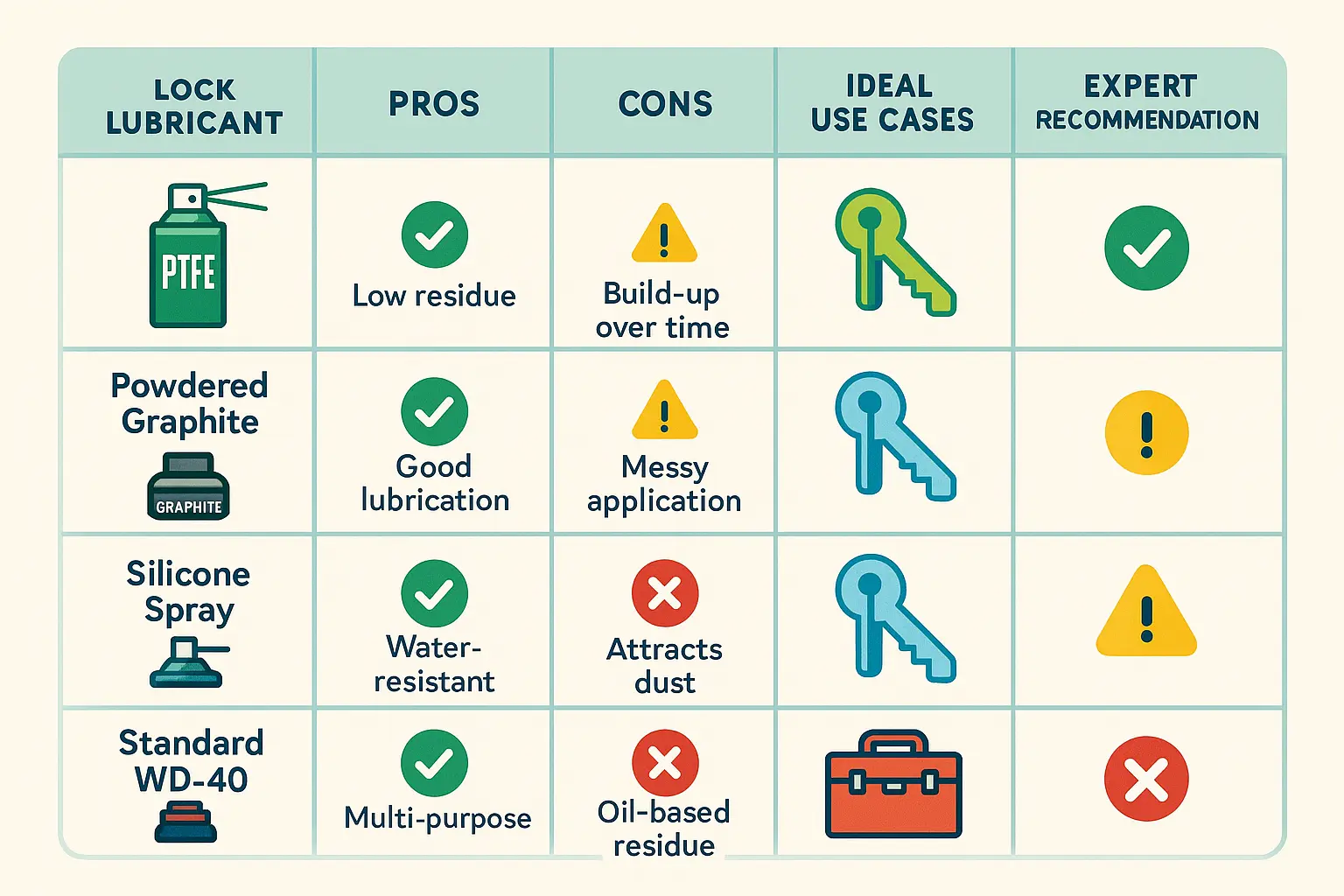
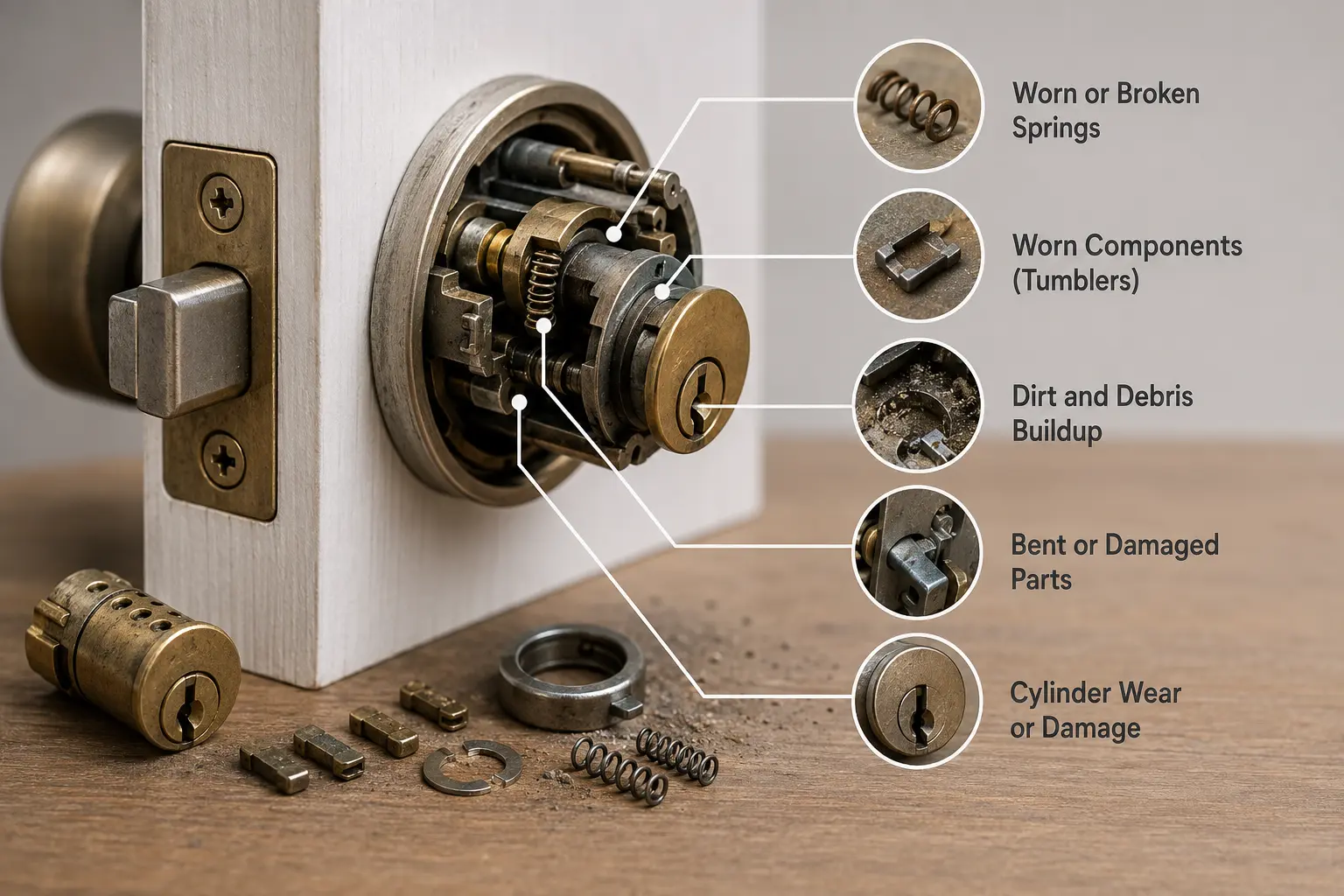
When a door lock fails, the immediate response is often panic. You are either locked out or left wondering if your home security is compromised. However, a lock is a precise instrument. To pinpoint why a lock is sticky, seized, or spinning, you must look past the handle and diagnose the internal mechanics.
If you are currently facing an active crisis, take a breath. Before applying force—which can snap your key inside the plug—try these triage techniques:
- The “Push-Pull” Strike Plate Test: Relieve latch tension by applying physical pressure inward or upward on the door knob while gently wiggling the key.
- The Vibration Technique: If your key won’t turn, tap its head lightly with a plastic screwdriver handle. This vibration can temporarily bounce stuck pins back above the shear line.
- The “Slight Withdrawal” Trick: Pull the key out by roughly 0.5mm. If the lock turns, your brass pins or key bitting have worn down, and pulling back slightly helps them align.
If you are trying to resolve an immediate physical blockade, forcing a jammed system can cause permanent damage. Read our expert guide on how to get key out of lock or review safe broken key extraction strategies to prevent destroying your lock cylinder. If you are dealing with general system degradation, our hub on troubleshooting malfunctioning locks offers broad context.