Why Deadbolts Stick in Cold Weather and How to Fix Them


Published: Sep 28, 2026 | Updated: Sep 30, 2026

Few home security issues are as frustrating as standing on your doorstep in freezing temperatures, struggling to turn your key. When a deadbolt suddenly begins to stick, bind, or seize during the winter months, it is easy to assume the lock is broken.

However, seasonal lock failure is rarely random. It is the direct result of thermal dynamics, changing humidity levels, and materials reacting to extreme temperatures. To resolve the issue permanently, you must first isolate whether you are dealing with a frozen lock cylinder or a misaligned door frame.
Emergency Action: How to Safely Turn a Frozen Lock Right Now


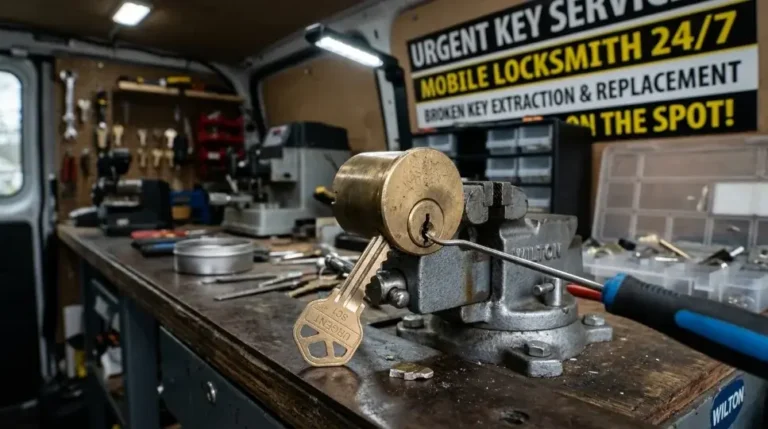
If you are currently locked out, do not force the key. Forcing a cold, brittle key into a seized lock cylinder is a primary cause of mechanical failure and often leads to an emergency broken key extraction. Instead, resolve the immediate issue using these safe bypass methods:

  • Use an Alcohol-Based De-Icer: Spraying a commercial lock de-icer directly into the keyway melts internal ice crystals instantly. The alcohol absorbs moisture and then evaporates without leaving a sticky residue.
  • Heat the Key Tip: Use a lighter or match to gently heat the metal blade of your key. Insert the warm key into the keyway and let it rest for 30 seconds to transfer heat to the frozen internal pins.
  • Avoid Boiling Water: Never pour hot water over a frozen lock. While it might melt the ice temporarily, water will seep deeper into the mechanical assembly, freeze again, and lead to a more severe door lock jammed situation.

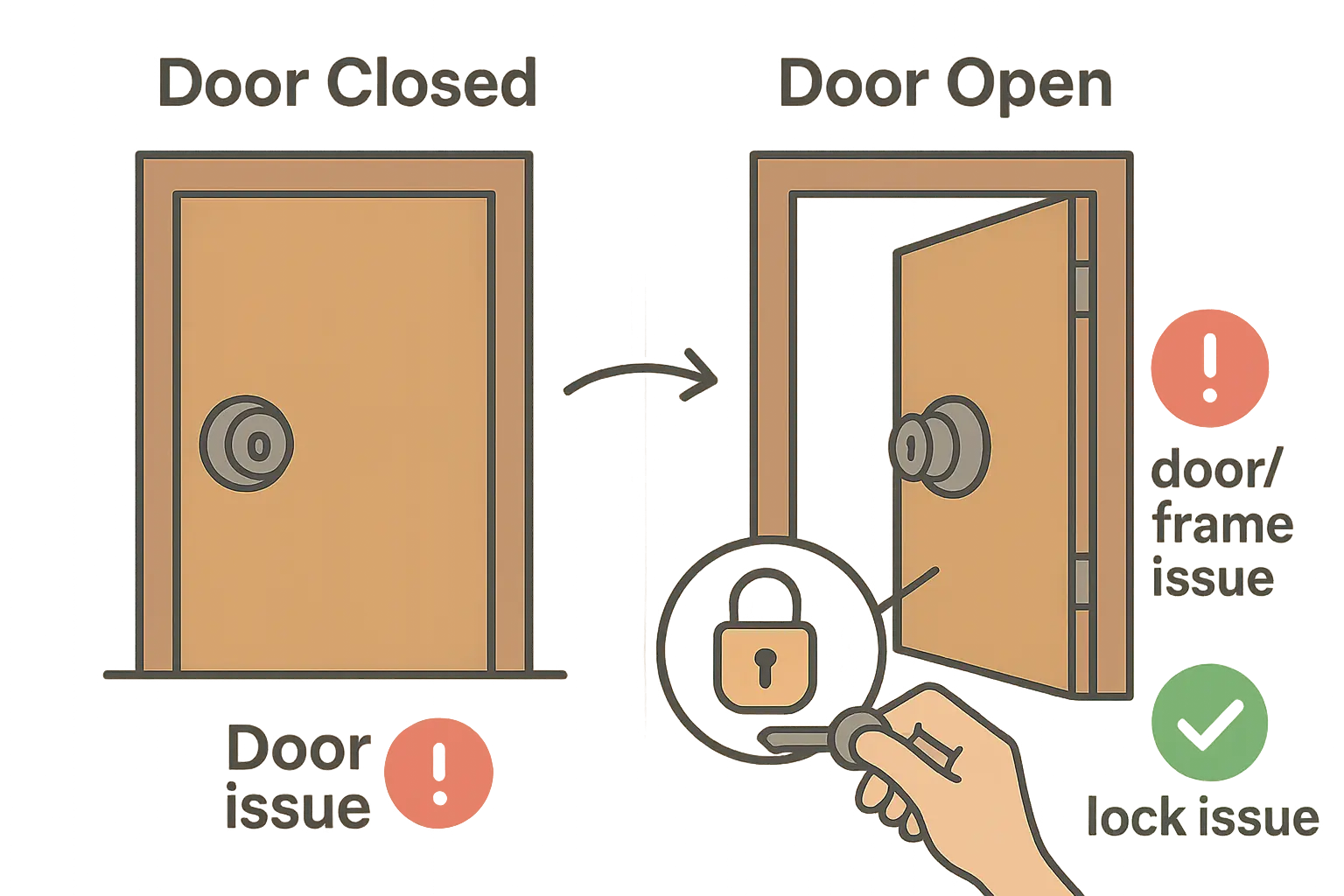
The 5-Second Isolation Test


Before purchasing lubricants or adjusting your door frame, you must determine the root cause of the sticking. Open your door and turn the thumbturn or key with the door completely open.

The 'Open-Door Test': A fast, visual method to distinguish if deadbolt sticking arises from mechanical lock issues or door frame alignment shifts, empowering homeowners to diagnose correctly in seconds.

  • If the lock operates smoothly while open: Your issue is structural. Seasonal wood shrinkage and metal frame contraction have misaligned the deadbolt and the strike plate.
  • If the lock still sticks or binds while open: Your issue is mechanical. You are dealing with frozen condensation, dirt build-up, or hardened grease inside the cylinder. Identifying this early prevents a completely door lock stuck emergency.

Why Winter Causes Cylinder Seizing


When a cylinder fails the open-door test, physics is at play. Inside your lock, brass pins and steel housing contract at different rates as temperatures drop. Tolerances shrink by micro-inches, making old grease, dirt, and dust act like adhesives.

Simultaneously, winter air is dry outdoors, but indoor heating creates a warm, humid interior environment. When this moisture-rich indoor air drafts through micro-gaps around the door frame into the cold lock, it undergoes dew point condensation inside the cylinder. This forms microscopic ice crystals that lock the pin-tumbler mechanism in place. Knowing how to keep door locks from freezing requires avoiding standard dry graphite. While traditionally popular, graphite powder clumps when exposed to freezing winter moisture, creating a gritty paste that permanently ruins lock cylinders.

Troubleshooting Door Frame and Hinge Alignment


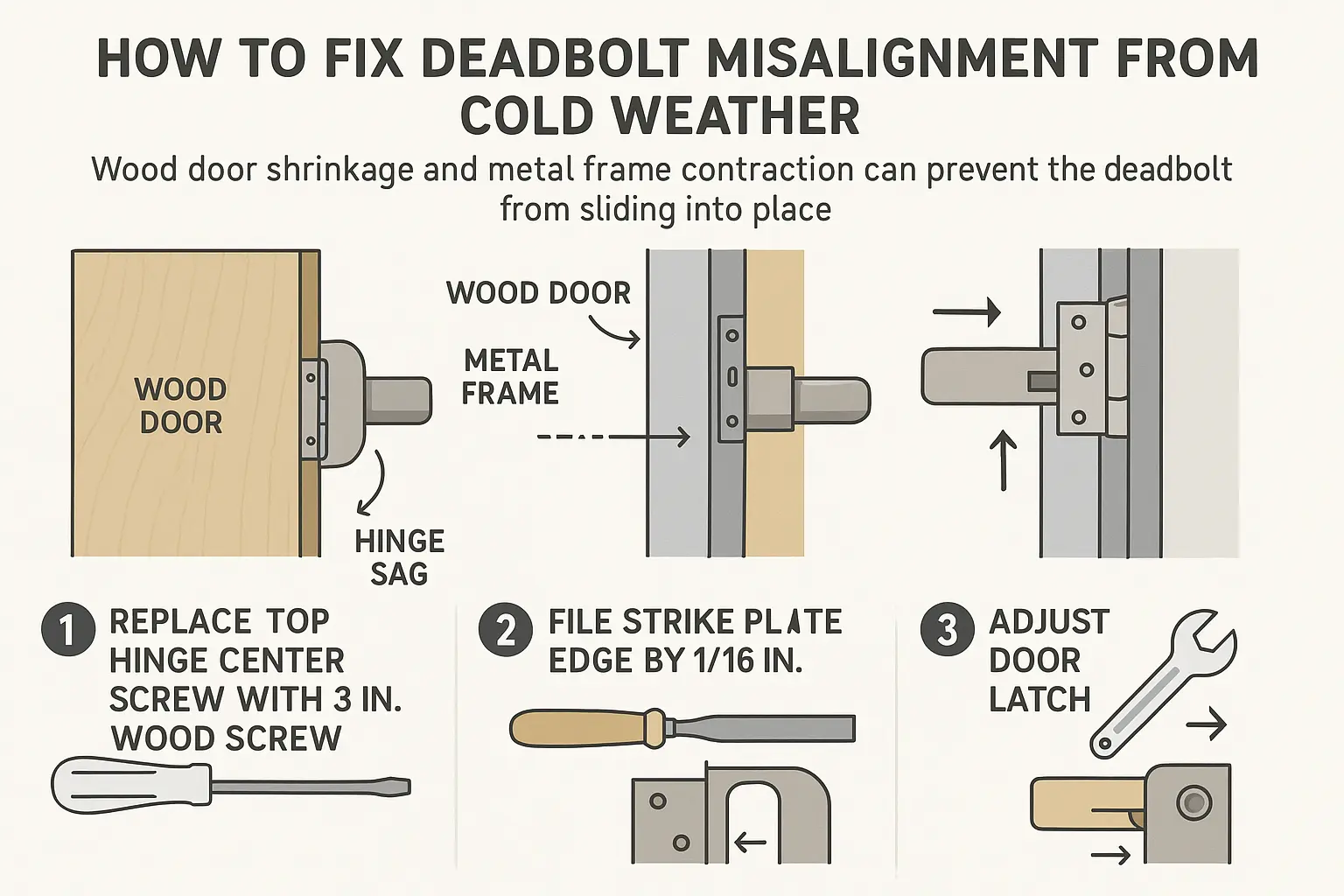
If your deadbolt works smoothly when the door is open but binds when closed, the winter weather has shifted your door frame. Dry winter air causes wooden doors to lose moisture and shrink, while metal frames contract, shifting the deadbolt out of alignment with the strike plate by even a fraction of an inch.

Fixing Deadbolt Alignment: A clear, 3-step DIY guide to realigning doors and strike plates for smooth deadbolt operation during winter, reducing the need for costly locksmith services.

To resolve this without calling a professional:

  1. The Long Screw Hinge Pull: Replace the center screw of your top door hinge with a 3-inch wood screw. Driving this deep into the wall framing studs pulls the door upward and outward, instantly lifting a sagging deadbolt back into alignment. This is the first step in successful door lock repair.
  2. The Strike Plate File Down: Instead of mortising a new strike plate pocket in cold wood, use a small metal hand file to widen the binding edge of the strike plate opening by 1/16 of an inch.
  3. Adjust the Door Latch: Tighten or adjust the primary door latch so that the door sits snugly against the weatherstripping. This ensures the deadbolt can slide cleanly into its pocket without resistance.

Frequently Asked Questions


Why does my deadbolt only stick during the winter?

Winter weather causes wood doors to shrink due to drop in humidity, while metal lock components and frames contract at different rates due to freezing temperatures. This physical shifting creates misalignment between the deadbolt and the strike plate. Additionally, warm indoor humidity drafts outward and condenses inside the cold lock cylinder, freezing the pins in place.

Can I use WD-40 to fix my stuck lock?

No, you should avoid standard WD-40. It is a temporary water displacer rather than a long-term lubricant. It leaves behind a thin, organic oil residue that thickens in freezing temperatures and attracts dirt, dust, and metal shavings, which accelerates mechanical failure.

When should I replace a freezing deadbolt?

If your lock cylinder continues to bind after being thoroughly cleaned with contact cleaner and lubricated with a PTFE dry spray, the internal pin-tumbler system may be worn down or damaged. If you notice signs of heavy physical wear or deep corrosion, it is time to replace deadbolt lock assemblies to preserve your home’s security.

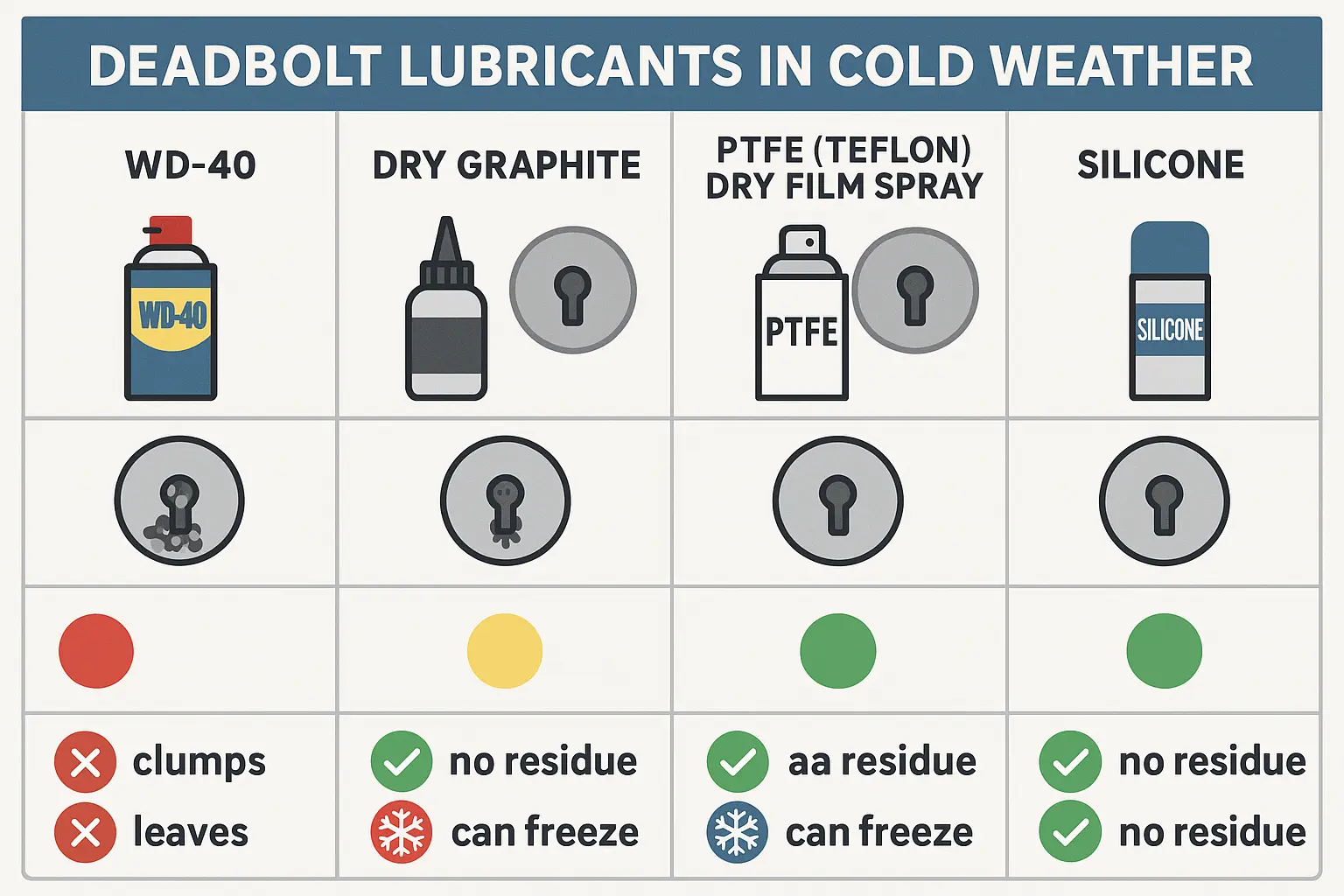
The Winter Lock Lubricant Comparison


To prevent future freezing and binding, proper door lock maintenance is vital. Selecting the wrong lubricant can damage your lock’s internal mechanics.

Choosing the Right Lubricant: A memorable visual comparison guiding homeowners to avoid damaging lubricants like WD-40 and graphite, and instead select effective, professional-grade PTFE sprays for winter deadbolt maintenance.

Lubricant Type Performance in Cold Pros Cons Verdict
Standard WD-40 Poor Readily available; fast water displacement. Leaves an organic oil layer that thickens at 32°F; attracts dust. AVOID
Dry Graphite Moderate Excellent dry lubrication in dry environments. Clumps when mixed with winter condensation; stains clothing. CAUTION
PTFE (Teflon) Dry Spray Outstanding Penetrates wet; dries to a hydrophobic film; rated down to -40°F. Slightly higher initial cost. BEST CHOICE
Silicone Spray Good Waterproof; excellent for exterior latches and weatherstripping. Can remain slightly wet, attracting heavy debris over time. GOOD FOR LATCHES

To apply PTFE dry spray, first flush the cylinder using an electronic contact cleaner to wash away old graphite or grease. Once dry, spray the PTFE lubricant directly into the keyway and work your key in and out to coat the internal pins.

Need more information? Get a free quote

Call us now

Get A Free Call From Our Experts!

Floating Button Form