
Losing a commercial master key creates an immediate security emergency that forces facility managers, property owners, and security directors to balance physical security, regulatory compliance, and budget realities. Real-world key breaches demonstrate how quickly costs escalate—ranging from $10,000 in emergency responses for facilities like Chicago’s O’Hare Airport to over $250,000 for government and educational campuses. Whether designing tiered key hierarchies or rekeying compromised cylinders, implementing master key systems for Norwalk businesses provides strict access management while containing breach exposure. Evaluating your remediation options quickly and methodically protects your facility while preventing costly over-corrections.
Master Key Compromised: Commercial Rekeying & Decision Framework
Published: Oct 13, 2026 | Updated: Nov 5, 2026
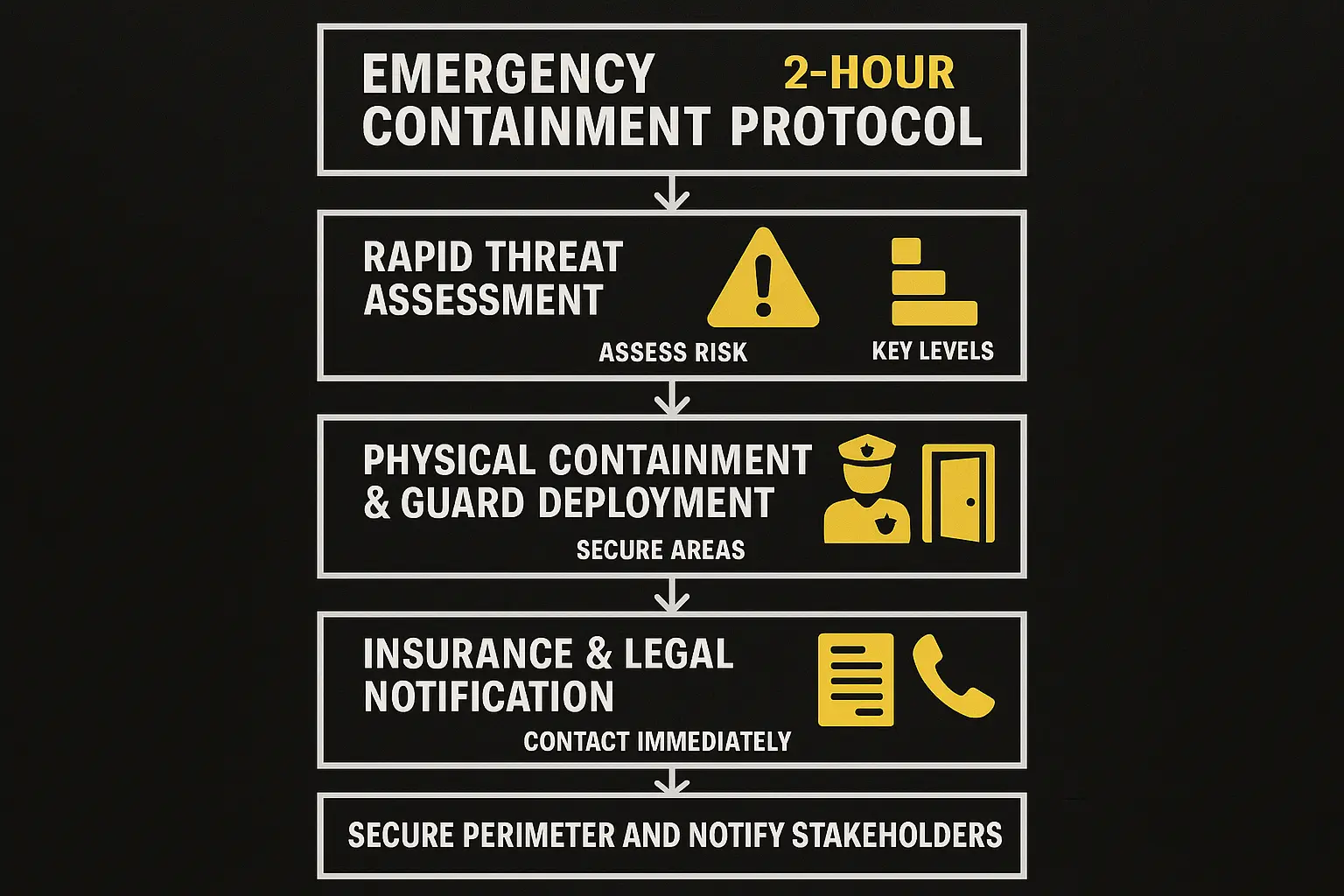
Immediate Action Plan: The 0–2 Hour Lost Master Key Protocol
When a master key is unaccounted for, taking rapid containment measures stabilizes your facility before hardware changes begin:
- Assess System Scope: Identify whether the lost key is a Great Grand Master, Grand Master, or Sub-Master key to determine the exact compromised access boundary.
- Contain Critical Assets: Deploy temporary security guards or physical site checks around high-risk zones, such as server rooms, executive suites, and main exterior perimeters.
- Notify Legal & Insurance Carriers: Document all incident timelines and immediate remediation actions to maintain compliance with commercial liability insurance policies.
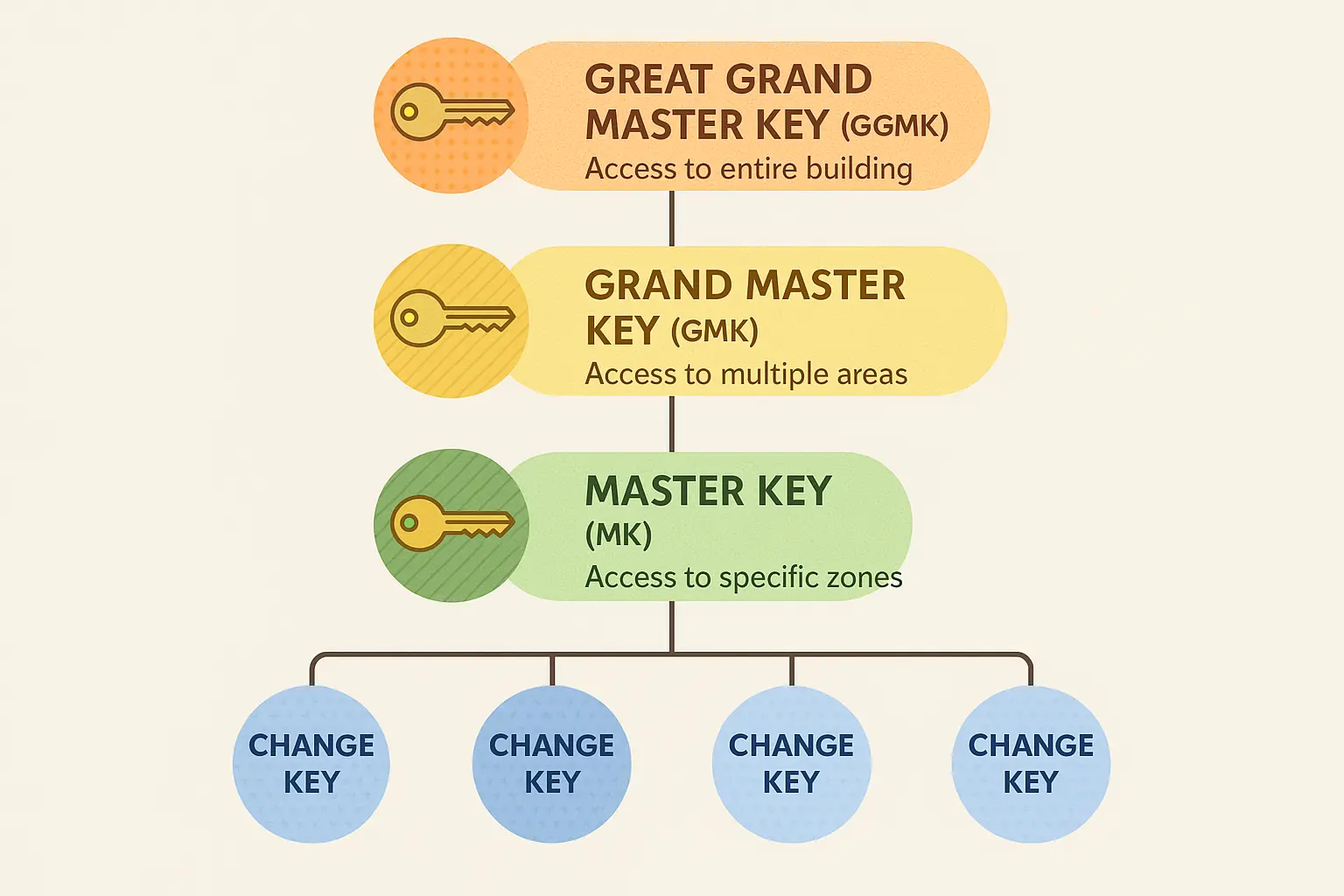
Decoding Master Key System Hierarchies
Understanding key propagation prevents unnecessary rekeying. Compromising a single departmental Master Key does not automatically require repinning lower-level tenant locks. However, losing a Great Grand Master Key compromises every cylinder in the facility architecture.
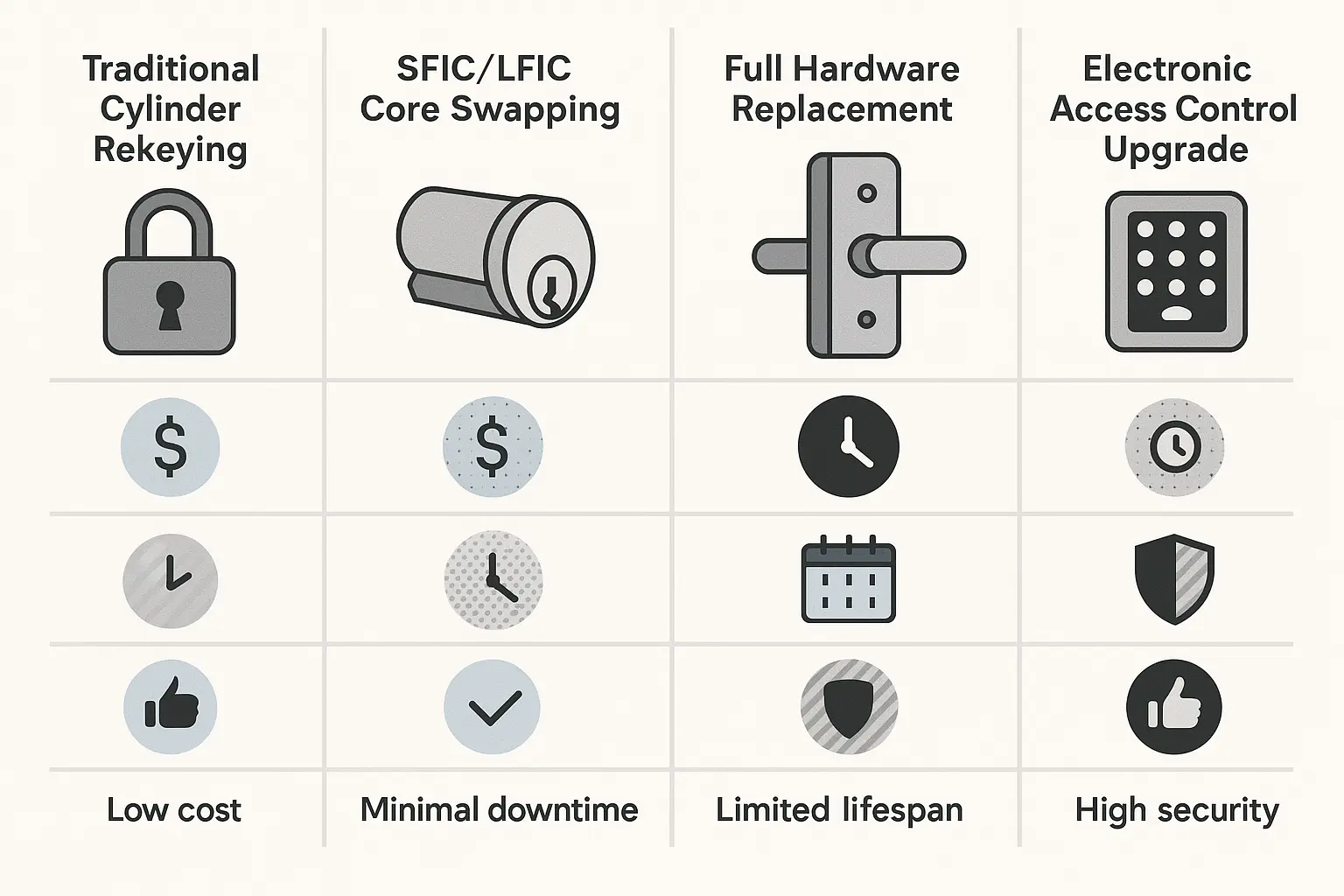
Strategic Decision Framework: Rekeying vs Core Swapping vs Replacement vs Access Control
Facility leaders evaluating remediation strategies should analyze four distinct pathways:
- Standard Cylinder Rekeying: Repinning existing standard mortise or cylindrical locks. Costs average $20–$50 per cylinder plus standard trip fees ($95–$150). Best suited for static, single-tenant properties.
- Interchangeable Core (SFIC/LFIC) Swap: Swapping figure-8 cores using a Control Key takes under 30 seconds per door compared to 15–30 minutes for standard lock disassembly, minimizing labor downtime during a breach crisis.
- Total Hardware Replacement: Full commercial Grade 1 lock replacement averages $200–$500 per opening—representing a 4x to 10x cost increase over core swapping. Save this option for physically degraded door hardware.
- Electronic Access Control Upgrade: Eliminates physical key security risks permanently. Facility managers can evaluate whether is keyless entry safe for sensitive perimeters or perform a keyless keypad lock install to establish real-time audit trails.
To estimate operational expenditure accurately, calculate your expected outlay:
Total Budget = Service Trip Fee + (Doors × Core/Rekey Rate) + (Keys Cut × Unit Price) + Master Mapping Fee
Calculating the exact cost to rekey against replacement costs gives administrative decision-makers concrete data for internal approvals.
Frequently Asked Questions
How much does it cost to rekey a commercial master key system?
Standard commercial lock repinning typically ranges from $20 to $50 per cylinder, while Small Format Interchangeable Core (SFIC) re-combinating costs $30 to $65 per core. Service call rates generally range from $95 to $150. Total pricing depends on total door count, key duplication needs, and master key hierarchy complexity.
Do I need to replace all door locks if a master key is lost?
No. In most circumstances, existing mechanical cylinders can be repinned or swapped with new cores configured to a new bitting combination. This restores total security while saving up to 80% compared to full hardware replacement.
What is the fastest way to rekey a commercial facility?
Utilizing Small Format Interchangeable Cores (SFIC) offers the fastest turn-around. Certified technicians can extract and replace cores using a Control Key in under 30 seconds per door without removing locksets from the door frame.
Implementing Long-Term Key Control Policies
Preventing future breach exposure requires strong key management frameworks. Patent-protected restricted keyways prevent unauthorized high security key duplication at retail hardware stores. Installing commercial Grade 1 high security locks pairs structural attack resistance with strict key distribution management.
When partnering with certified professionals for commercial locksmith services, technical experts map bitting charts, manage offboarding key logs, and ensure seamless system re-combinating. Knowing when to rekey a lock versus understanding complex procedures for how to rekey a cylinder lock hierarchy keeps your facility secure, compliant, and within budget.
Need more information? Get a free quote