Best Portable Door Lock Buyer Guide for Travel and Renters


Published: Aug 20, 2026

When you are staying in an unfamiliar hotel room, rental apartment, or college dorm, a lock with physical keys in circulation represents an active security vulnerability. Standard hotel door swing-bar latches can be bypassed in under 10 seconds using a simple plastic folder or clothes hanger slipped through the door gap.

Whether you are part of the growing wave of solo travelers where personal safety is a top priority, a college student trying to secure a shared apartment, or a renter looking for extra peace of mind, choosing the right secondary lock requires balancing physical security with real-world practicality. This guide translates professional locksmith expertise into an actionable framework to help you choose the best portable door lock.

The Locksmith’s Truth - Understanding the Two Core Security Mechanisms


To find the right device, you must first understand how does a portable door lock work mechanically. Portable security hardware generally falls into two core categories, each relying on different structural foundations:

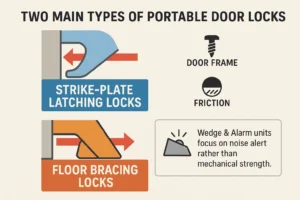
This visual clarifies how portable door locks protect your room differently: strike-plate locks secure by anchoring to door frame screws, while floor bracing locks transfer force to the floor. Understanding this distinction helps you pick a lock that suits your door type and security needs.

  • Strike-Plate Latching (Claw & Plate): These devices hook directly into the existing door jamb’s strike plate, preventing the latch from being retracted even if someone has a master key. However, a standard residential door frame with 3/4-inch screws will split and fail under approximately 100 to 150 pounds of force—roughly a single strong kick. To truly secure a door frame long-term, upgrading to heavy-duty security strike plates for doors is ideal, but when traveling, claw-and-plate locks offer vital key-bypass protection.
  • Floor Bracing (Jammers & Bars): Instead of relying on the door frame, these tools redirect horizontal forced entry downward into the floor. This makes them physically stronger than strike-plate locks, but their effectiveness depends heavily on floor friction. They perform exceptionally well on carpets but can slip on wet tile or highly polished hardwood.

An alternative is a wedge alarm, which combines a physical barrier with an auditory warning system designed to wake you and deter intruders. Knowing how to lock door from inside using these mechanisms is your first line of defense.


Standardized Product Evaluation - The 6-Factor Decision Matrix


Selecting a reliable travel door lock means evaluating products across a strict 6-factor performance framework:

  1. Use this 6-Factor Decision Matrix as your step-by-step guide to compare portable door locks comprehensively, balancing security, ease of use, portability, and rental compliance to find the best fit for your lifestyle.Forced Entry Resistance (1-5): How much physical impact can the device withstand?
  2. Intruder Bypass Prevention (1-5): How effectively does it stop physical keycard or lock-picking attempts?
  3. Panic Egress Speed: Can you remove the lock in under two seconds in complete darkness? Under high-stress emergency conditions, fine motor skills degrade rapidly. Locks that require complex manipulation fail to meet safety needs, especially when compared to commercial standards like fire code door locks.
  4. Floor Friction Dependency: Does the lock require specific flooring to work?
  5. Packability & Weight: Is it light enough for carry-on luggage?
  6. Rental Agreement Compliance: Can it be used without causing any cosmetic or structural damage to the door?

The College Student’s Guide - The Away-from-Room Dorm Issue


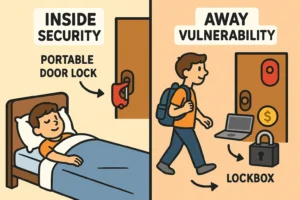
Remember the unique dorm security dilemma: portable locks protect you while inside but don’t secure your belongings when you’re away. This visual anchors practical alternatives like lockboxes to secure valuables in your absence.

College dorms present a unique double-sided challenge. You need physical protection while asleep inside your room, but you also need to secure your personal belongings when you head out to class.

Because portable door locks only function when you are physically inside the room, securing your room while away requires a different approach. You cannot use a temporary internal lock; instead, you must find a way to secure a bedroom door lock from outside without violating housing agreements. Practical solutions include utilizing personal lockboxes, requesting official lock maintenance, or using temporary keyhole blockers if permitted by campus policies.


The Solo Traveler's Guide - Unlocking Peace of Mind Safely


For solo travelers, personal safety is paramount. When packing, look for lightweight, solid-metal strike-plate claws that slip easily into a backpack. Additionally, remember to protect your possessions in transit by learning how to keep your luggage safe while travelling.

When staying in hotels, always prioritize devices that can be disengaged instantly in a panic or a fire. Avoid multi-part locks that require fine-motor precision to release in the dark.


The Renter & Shared Apartment Guide - Deadbolt Strength Without Damage


Renters living in shared apartments often face strict lease terms that forbid modifying hardware, drilling holes, or changing deadbolts.

To bypass these limitations while retaining maximum defense, opt for temporary, non-damaging mechanical braces or premium door wedges. These systems deliver reliable physical resistance without leaving marks on the door frame, keeping you completely compliant with your lease while avoiding standard apartment keyless entry installation hassles.


Frequently Asked Questions


Do portable door locks damage the door or frame?

High-quality temporary locks are engineered with protective padding and smooth edges to prevent damage. However, cheap imitations or forced-entry attempts can scratch paint or dent wood.

Will a portable lock prevent first responders from entering during an emergency?

Yes. Any device designed to keep intruders out will also delay emergency personnel. If you suffer from severe medical conditions, prioritize easily disengaged wedge-style alarms over heavy mechanical jammers.

Do portable door locks work on doors that swing outward?

Most standard portable locks only work on inward-swinging doors. For outward-swinging doors, security bars or specialized commercial door jammers are required.


Securing Your Space with Professional Confidence


Choosing the right portable security device can significantly reduce your vulnerability to unauthorized entry. If you are ready to upgrade your home, rental, or business security with robust, permanent locking solutions, Sure Lock & Key is here to help. Backed by 35 years of industry experience and 24/7 mobile service vans across multiple states, our licensed technicians can install professional grade hardware tailored specifically to your security needs. Contact us today to explore our residential and commercial locksmith services.

Need more information? Get a free quote

Call us now

Get A Free Call From Our Experts!

Floating Button Form