
Property managers and real estate developers face a delicate balancing act. According to the National Multifamily Housing Council (NMHC), 62% of renters state that smart locks and keyless entry are highly desired or “must-have” amenities. Yet, implementing these systems introduces unexpected friction between digital convenience and physical security.
Modernizing Multifamily Entry: The Operational Reality of Fobs, Intercoms, and Keys
Published: Oct 2, 2026
The Access Triad Framework
To build a secure, efficient property, you cannot look at entry solutions in isolation. An optimized entry system relies on the “Access Triad”—the integration between visitor intercoms, resident credentials, and physical keys.
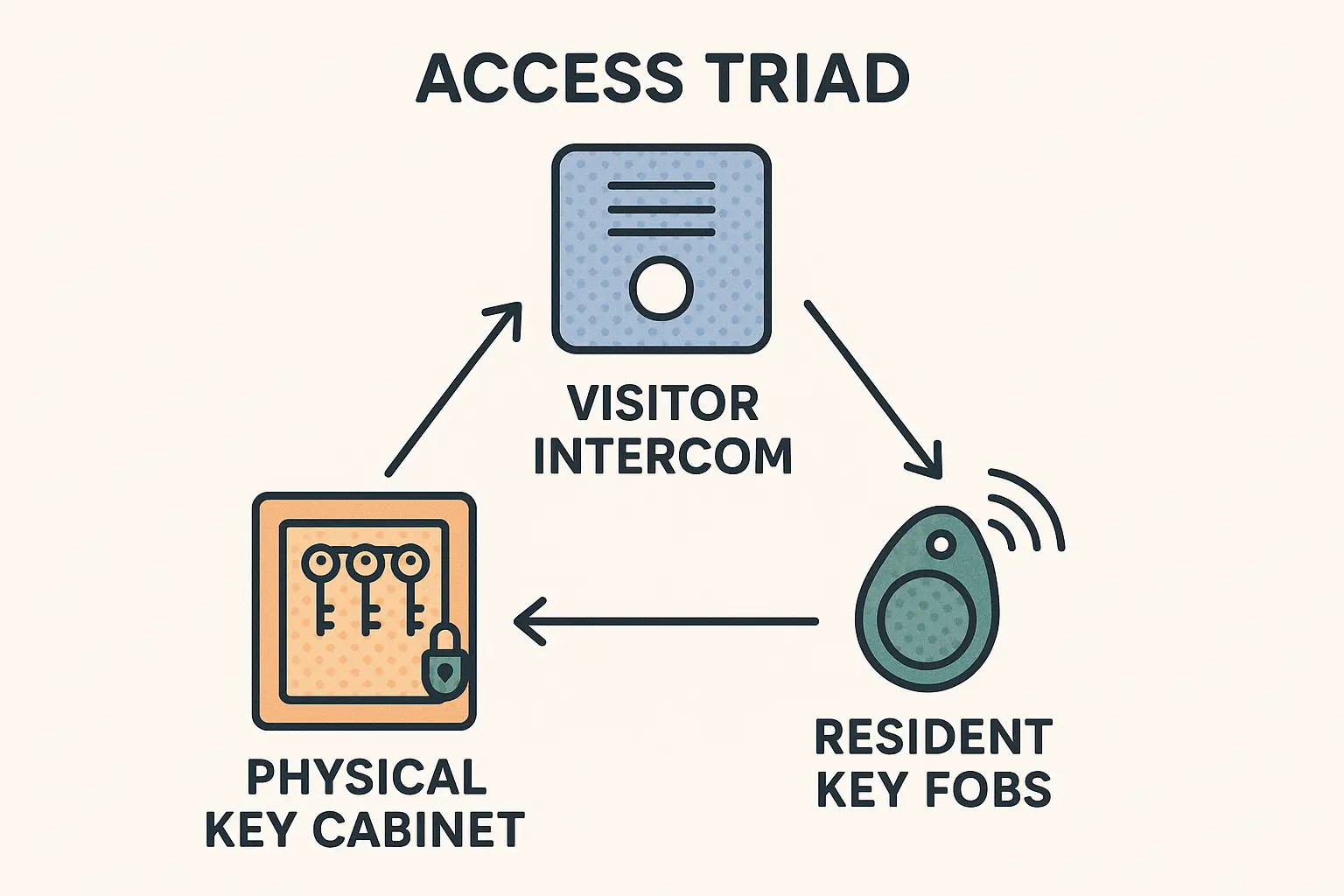
When these components fail to communicate, operational efficiency drops. Managing this infrastructure requires a unified strategy, which starts at the front door.
Demystifying Intercom and Fob Integration Compatibility
A common industry pitfall is assuming that a “key fob compatible” video intercom means resident fobs will work seamlessly out of the box. Often, a built-in reader on an intercom panel cannot communicate directly with the building’s backend access controllers.
To bridge this gap, properties must deploy a comprehensive door access control system that links peripheral readers with centralized controllers. Whether managing primary doors or perimeter gate access control devices, understanding how readers communicate with control boards is vital.
Historically, hardware relied on legacy Wiegand wiring, which transmits data unencrypted and is limited to 500 feet. Modern installations leverage Open Supervised Device Protocol (OSDP). Utilizing AES-128 encryption, OSDP prevents inline sniffing attacks and provides constant health monitoring of every reader.
The Security Blindspot: RFID Fob Cloning and Protocol Realities
Many property managers are unaware of a massive security loophole: cheap, unencrypted RFID credentials. Unencrypted 125kHz legacy proximity cards account for roughly 60% to 70% of multifamily access systems nationwide. Unfortunately, these can be copied instantly at retail kiosks or with inexpensive online tools, rendering building access logs useless.
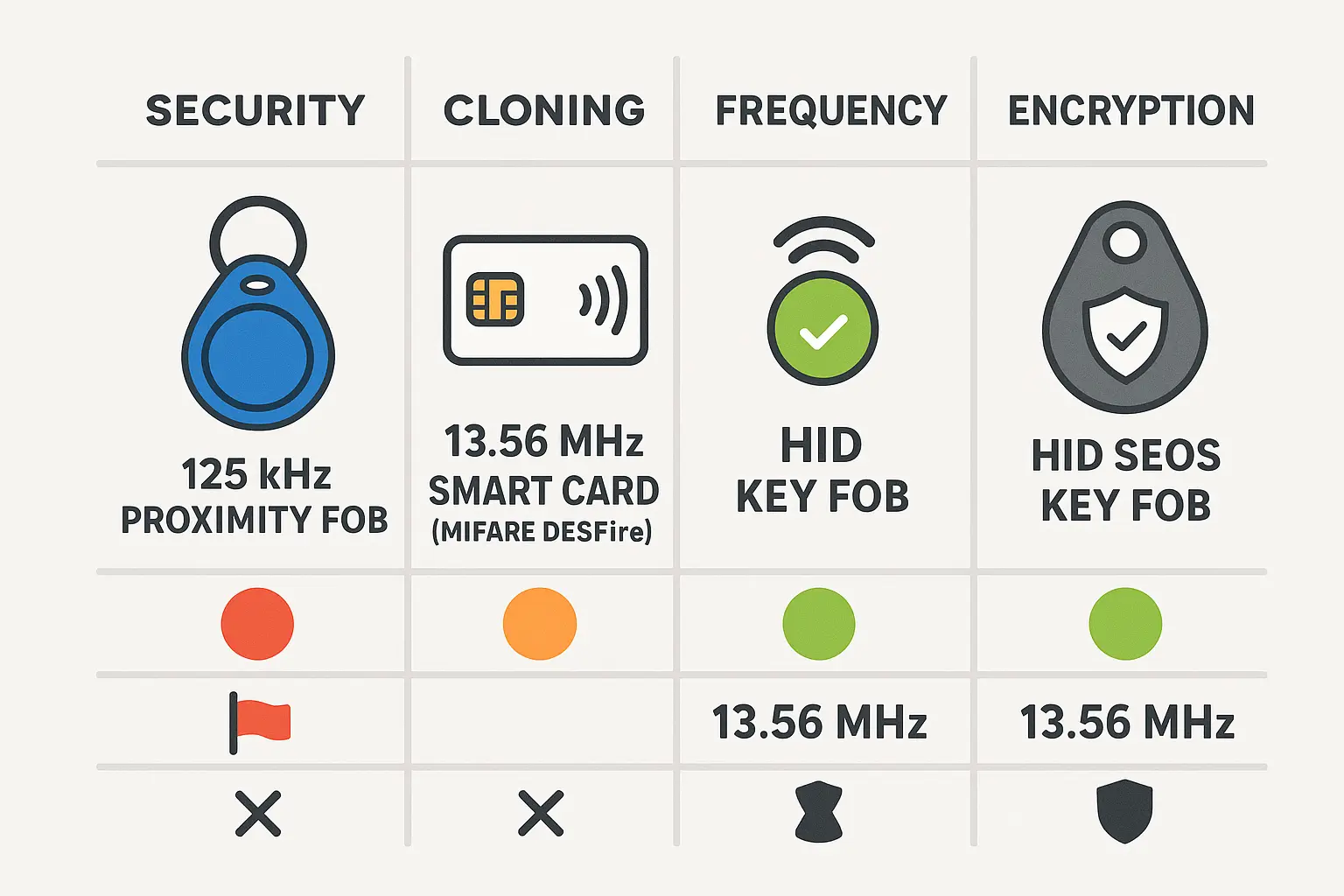
Upgrading to high-frequency 13.56MHz (such as MIFARE DESFire) or premium HID Seos credentials ensures that credentials cannot be cloned, preserving the integrity of your security logs.
Bridging the Analog Gap: Electronic Key Management
Even in a highly digital property, physical keys do not completely vanish. Mechanical overrides are necessary for fire panels, utility closets, and unit lockouts. Left unmanaged, physical master keys pose a severe liability.
Implementing a dedicated master key system establishes tiered physical access, while electronic key cabinets introduce an audit trail. Instead of loose keys in a desk drawer, smart cabinets restrict key access to authorized vendors and staff, tracking every checkout in real time.
Streamlining Operations and Overcoming the PMS Double-Entry Nightmare
While physical fob hardware costs only $3 to $8, the labor to program, issue, and revoke credentials during tenant turnover costs an estimated $35 to $50 per event. Much of this administrative overhead stems from manual data duplication across multiple systems.

Integrating your access system directly with your Property Management System (PMS)—such as Yardi, RealPage, or AppFolio—via cloud APIs automates credential provisioning. When a lease is signed or terminated, tenant data syncs instantly, eliminating human error.
Frequently Asked Questions
What is the difference between fail-safe and fail-secure locks?
Fail-safe locks automatically unlock during a power outage or fire alarm activation, ensuring residents can escape safely. Fail-secure locks remain locked from the outside when power is lost, maintaining perimeter security while still allowing mechanical egress from within.
Can we reuse our existing building wiring when upgrading to a modern video intercom?
In many retrofits, you can leverage existing wiring or transition to a wireless, IP-based system. Utilizing modern intercom systems with camera capabilities often reduces installation complexity while significantly improving property security and visitor management.
How do we prevent master keys from being duplicated?
To secure mechanical overrides, you should implement professional master keying protocols utilizing restricted, patented keyways. These specialized key blanks are not distributed to retail kiosks, meaning only authorized administrative personnel can order duplicates directly from the locksmith.
Navigating Life-Safety and Code Compliance
Upgrading door hardware requires strict adherence to building and fire codes. When integrating electronic locking elements, hardware must comply with NFPA 101 and International Building Code (IBC) regulations.
Doors along path-of-egress routes often require a specialized keypad access lock for panic bars to guarantee immediate, unhindered exit. Working alongside a certified commercial locksmith service ensures your system is properly configured as fail-safe or fail-secure, maintaining code compliance and protecting resident safety.
Need more information? Get a free quote


