The Modern Door Access Landscape: Bridging Physical and Digital Security


Published: Jul 21, 2026 | Updated: Aug 14, 2026

Evaluating physical security often reveals a frustrating operational disconnect. While IT departments protect digital networks with automated identity workflows, facility managers are often left dealing with manual key handoffs, physical badge printing, and static logs.

Leaving interior doors on mechanical keys while securing the building perimeter creates a major security gap. Every time an employee leaves, mechanical locks must be rekeyed—a process costing between $300 and $1,500 per door. For a 100-unit facility with a typical 30% annual turnover rate, moving to a centralized digital system saves $3,000 to $15,000 annually in direct locksmith expenses alone.

Understanding how a modern door access control system operates is the first step in replacing fragile physical loops with secure, cloud-connected gateways.
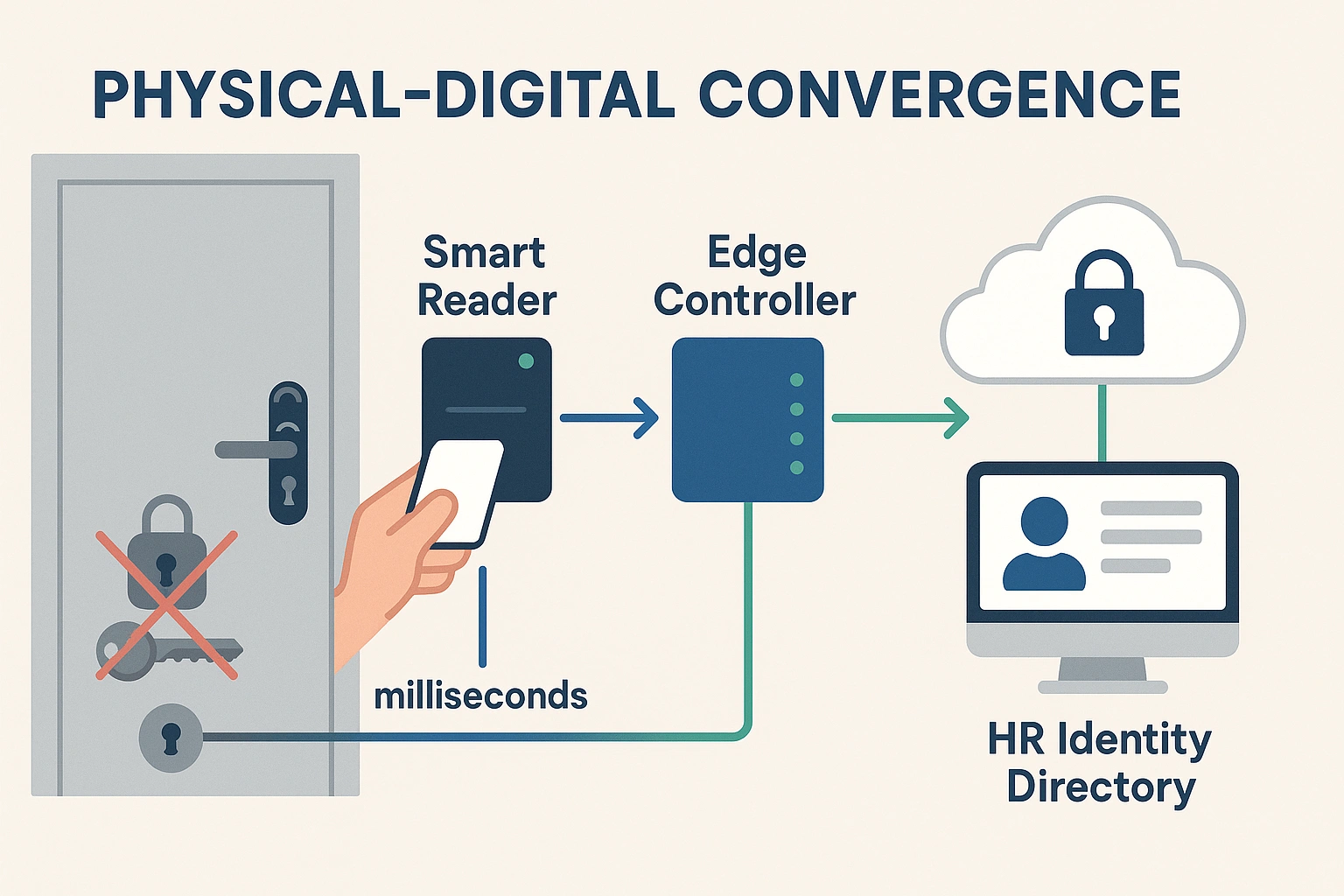
This visual clarifies how modern access control systems integrate physical hardware with cloud-based identity management, transforming traditional door locks into intelligent, AI-powered security gateways.


Decoupling the Hardware: Readers, Credentials, and Real Costs


Designing a resilient access system requires balancing user experience, hardware reliability, and deployment budgets. Modern installations rely on diverse credential options tailored to specific access tiers:

  • Proximity Cards: Cost-effective and highly reliable, proximity access control remains an industry standard for rapid tap-and-go access.
  • Mobile Bluetooth (BLE): Leverages smartphones to grant touchless entry, removing the logistical overhead of managing physical credentials.
  • Biometrics: Analyzes unique physiological traits for high-security areas, reducing the risk of credential sharing.

Organizations deploying these systems can utilize wireless access control systems to avoid invasive and costly wall-routing. However, core infrastructure still depends on robust physical hardware. For instance, facilities must understand how do electromagnetic door locks work to ensure they fail-safe during power loss while maintaining physical structural integrity.

A standard installation typically ranges from $150 to $2,500 per door for hardware, $200 to $1,500 for professional retrofitting, and $5 to $40 per door in monthly cloud licensing fees.

Note on Biometric Legal Compliance: Deploying biometrics requires careful alignment with local laws, such as Illinois’ BIPA and Texas’ CUBI. Organizations must implement written consent forms, establish explicit data retention policies, and configure systems to automate the purging of user data upon termination.


The AI Revolution: Automating the Joiner-Mover-Leaver Cycle


Manual security administration struggles to keep pace with changing workforces. Industry data highlights a major offboarding gap: only 34% of organizations revoke physical systems access on the day an employee leaves, and for 50% of companies, complete de-provisioning takes three days or longer. This administrative delay has serious consequences: 1 in 5 organizations (20%) have suffered a security breach caused by unauthorized access from a former employee.

As the average enterprise scales to manage over 371 SaaS applications alongside physical facilities, manual oversight is no longer practical.

Joiner, Mover and Leaver Explained

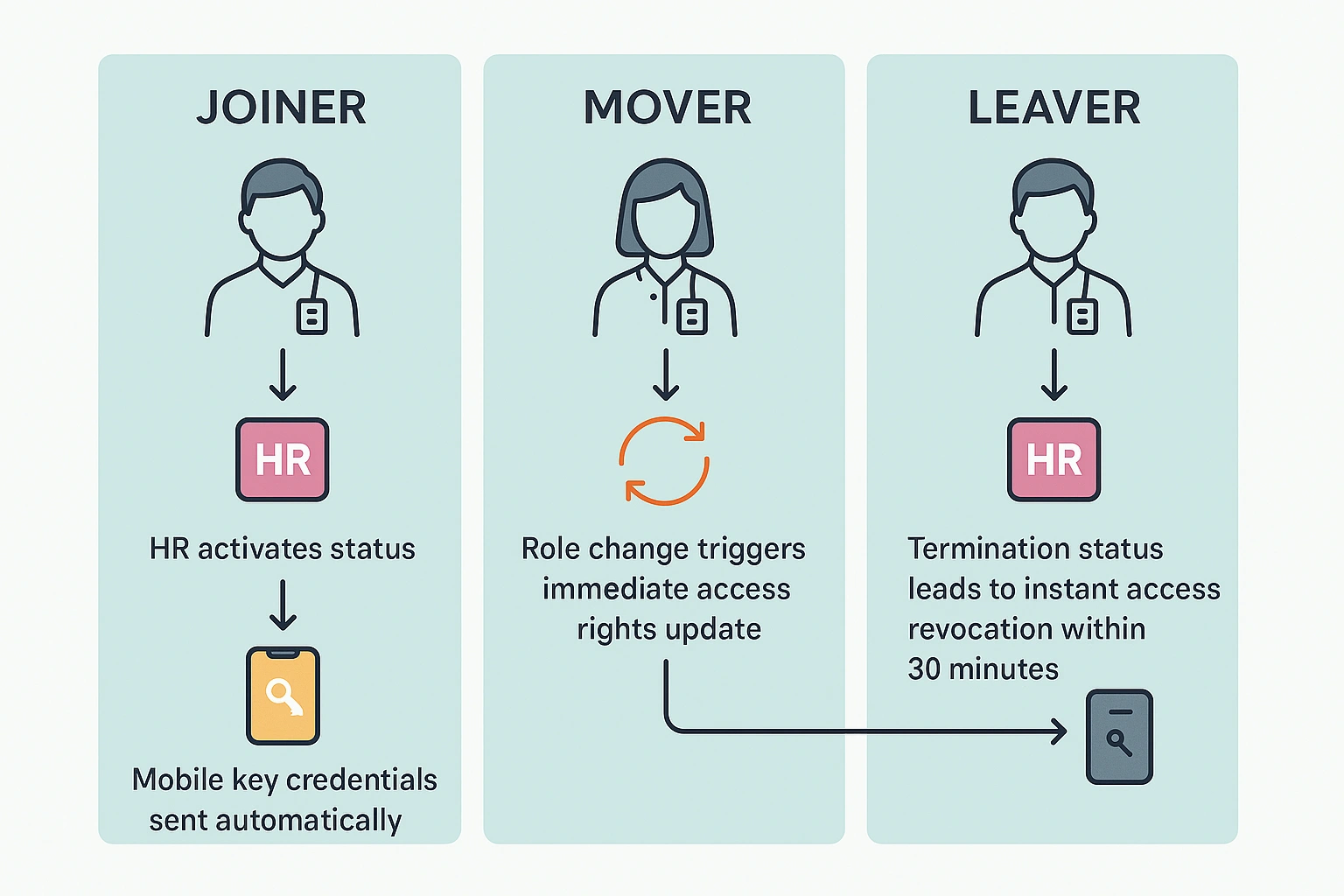
By connecting HR platforms (like Workday or BambooHR) directly to on-premise hardware using SCIM protocols, AI automates the entire lifecycle:

  • Joiner: Onboarding triggers the automatic delivery of encrypted mobile credentials to a new employee’s device before their first day.
  • Mover: A change in department or role immediately updates permissions, stripping legacy rights and granting new access to prevent privilege creep.
  • Leaver: Marking an employee as “Terminated” in the HR system revokes both digital directory access and physical door credentials globally within 30 minutes.

Machine Learning at the Gate: Threat Detection and Self-Healing Access


Modern, ai powered access control systems turn static doors into active security assets. The global Access Control Market size, valued at USD 12.8 billion in 2025, is projected to reach USD 28.41 billion by 2035 at an annual growth rate (CAGR) of 8.3%, largely driven by the demand for intelligent, automated threat mitigation.

Defferent Ways Of AI Security

By shifting from static configurations to machine learning models, enterprises can deploy advanced defensive layers:

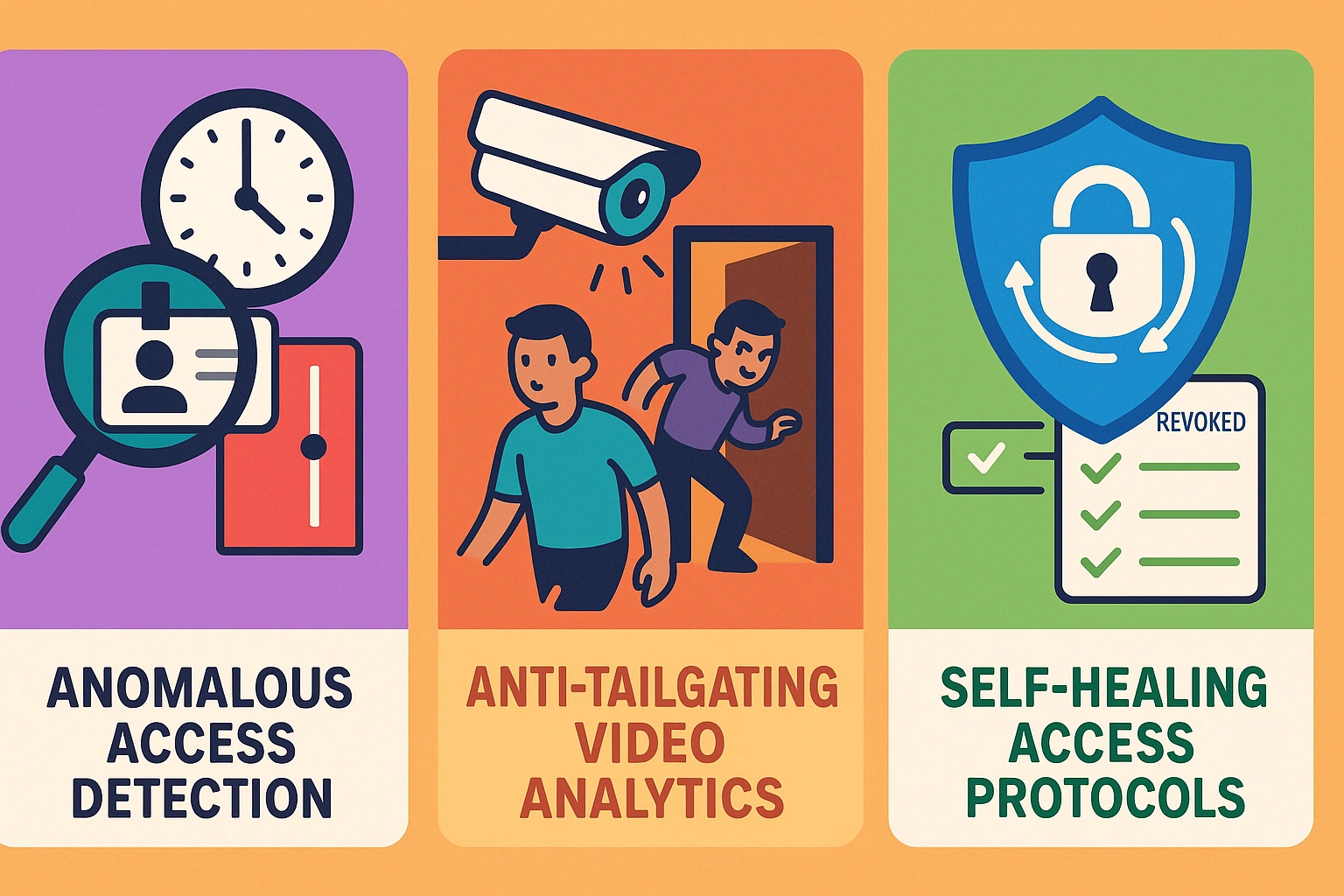
  • Anomalous Access Detection: ML analyzes standard usage patterns. If an employee who normally works 9-to-5 attempts to enter a sensitive server room at 2 AM, the system blocks entry and demands immediate multi-factor authentication (MFA).
  • Anti-Tailgating Video Analytics: Smart edge cameras process footage in real-time, cross-referencing badge taps with the actual number of individuals passing through a door to flag piggybacking incidents.
  • Self-Healing Access Protocols: AI constantly scans the entire system directory, highlighting dormant profiles or orphaned credentials, and recommending their removal to keep permissions lean and audit-ready.

The Frontline and Shift-Worker Paradigm


Standard security models assume a “one-user, one-device” setup. However, in high-turnover, shift-based settings—such as hospitals, manufacturing facilities, and distribution centers—workers regularly share terminal devices and work in rapid cycles.

To maintain security without slowing down operations, enterprises deploy advanced access control integration with biometrics. These configurations allow workers to unlock shared terminals, log tool usage, and cross internal barriers via rapid, passwordless verification, reducing authentication friction while keeping secure records.


FAQs


Are digital access solutions legally compliant?

Yes, but biometric options require proactive management. Compliance with regional standards like BIPA and CUBI requires written consent policies, secure encryption of credential data, and automated retention policies that purge biometric records when employees leave.

Can digital locks be overridden during power outages?

Yes. Professional installations feature battery backups and are configured with fail-safe hardware (like magnetic locks) that release during fire alarms or power outages, ensuring exit paths remain clear.

How secure are keyless entry options?

When evaluating are keyless entry door locks safe, they are significantly more secure than mechanical brass keys. Cloud-based keys leverage end-to-end encryption, cannot be physically duplicated, and can be revoked instantly.

Specialized Spotlight: Cockpit Access Security Systems (CDSS)


The ultimate example of physical-digital security integration is found in the aviation sector. Post-9/11 Cockpit Door Security Systems (CDSS) combine heavy-duty mechanical locking systems, digital keypad controls, and emergency access overrides.

If pilot intervention is impossible, the digital logic system governs emergency entries, balancing life-safety protocols with uncompromising physical barriers. This high-security model shows how physical locks and digital controls can work together to secure critical areas under extreme pressure.


Need more information? Get a free quote

Call us now

Get A Free Call From Our Experts!

Floating Button Form